Advertisements
Advertisements
Question
Read the poem once again carefully and identify the figure of speech that has been used in each of the following lines from the poem.
“All the world’s a stage,
And all the men and women merely players;
They have their exits and their entrances;
And one man in his time plays many parts,
His acts being seven ages. At first the infant,
Mewling and puking in the nurse’s arms;
Then the whining school-boy, with his satchel
And shining morning face, creeping like snail
Unwillingly to school. And then the lover,
Sighing like furnace, with a woeful ballad
Made to his mistress’ eyebrow. Then a soldier,
Full of strange oaths, and bearded like the pard,
Jealous in honour, sudden and quick in quarrel,
Seeking the bubble reputation
Even in the cannon’s mouth. And then the justice,
In fair round belly with good capon lin’d,
With eyes severe and beard of formal cut,
Full of wise saws and modern instances;
And so he plays his part. The sixth age shifts
Into the lean and slipper’d pantaloon,
With spectacles on nose and pouch on side;
His youthful hose, well sav’d, a world too wide
For his shrunk shank; and his big manly voice,
Turning again toward childish treble, pipes
And whistles in his sound. Last scene of all,
That ends this strange eventful history,
Is second childishness and mere oblivion;
Sans teeth, sans eyes, sans taste, sans everything.”
- “All the world's a stage”
- “And all the men and women merely players”
- “And shining morning face, creeping like snail”
- “Full of strange oaths, and bearded like the pard,”
- “Seeking the bubble reputation”
- “His youthful hose, well sav’d, a world too wide”
- “and his big manly voice, turning again toward childish treble”
Advertisements
Solution
- Metaphor
- Metaphor
- Simile
- Simile
- Metaphor
- Alliteration
- Metaphor
APPEARS IN
RELATED QUESTIONS
Why were the secret galleries bare?
Why did the narrator feel helpless?
What is the creeper compared to?
How does a man play a lover’s role?
Bring out the features of the fourth stage of a man as described by the poet.
Why is the last stage called second childhood?
Read the given line and answer the question that follow.
Then a soldier,
full of strange oaths, and bearded like the pard,
Jealous in honour, sudden and quick in quarrel,
Seeking the bubble reputation
Even in the cannon's mouth.
- What is the soldier ready to do?
- Explain ‘bubble reputation’.
- What are the distinguishing features of this stage?
Complete the table based on your understanding of the poem.
| Stage | Characteristic |
| crying | |
| judge | |
| soldier | |
| unhappy | |
| second childhood | |
| whining | |
| old man |
What has Ulysses gained from his travel experiences?
What does Ulysses yearn for?
Read the set of line from the poem and answer the question that follow.
This is my son, mine own Telemachus,
To whom I leave the sceptre and the isle Well-loved of me,
- Who does Ulysses entrust his kingdom to, in his absence?
- Bring out the significance of the ‘sceptre’.
Read the set of line from the poem and answer the question that follow.
One equal temper of heroic hearts,
Made weak by time and fate, but strong in will
To strive, to seek, to find, and not to yield.
- Though made weak by time and fate, the hearts are heroic. Explain.
- Pick out the words in alliteration in the above lines.
Explain with reference to the context the following line.
The long day wanes: the slow moon climbs:
the deep Moans round with many voices.
‘A tough will counts.’ Explain.
How would his being alone help the boy?
Why does the poet advise his son to have lazy days?
Here are a few poetic device used in the poem.
Antithesis- It is a literary device that emphasises the idea of contrast.
Read the line given below and answer the question that follow.
“Life is a soft loam; be gentle; go easy.” And this too might serve him.
- Why does the poet suggest to take life easy?
- Identify the figure of speech in the above line.
Explain the following line with reference to the context.
Yet learning something out of every folly
hoping to repeat none of the cheap follies
How according to the poet is it possible for his son to bring changes into a world that resents change?
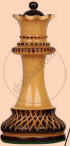
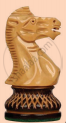
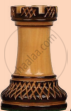
Have you played chess or watched the game carefully?
Now identify the chess pieces and complete the table below. Discuss the role of each piece in the game.
 |
|
 |
|
 |
|
 |
|
 |
|
 |
Describe the posture of Napoleon.
What did the rider do when he reached Napoleon?
Why did the rider keep his lips compressed?
What was Napoleon’s reaction on hearing the news of victory?
Read the line given below and answer the question that follow.
A film the mother eagles eye When her bruised eaglet breathes
- Who is compared to the mother eagle in the above lines?
- Explain the comparison.
Explain the following line with reference to the context.
‘I’m killed, Sire!’ And, his Chief beside, Smiling, the boy fell dead.
What is the role of the young soldier in the victory of the French at Ratisbon?
