Advertisements
Advertisements
Question
Read the given line and answer the question that follow in a line or two.
Our gates were strong, our walls were thick,
So smooth and high, no man could win.
- How safe was the castle?
- What was the firm belief of the soldiers?
Advertisements
Solution
- The castle had high and smooth walls. No enemy could think of climbing it as soldiers were ready to shoot the enemy at sight. The moat was deadly and deep.
- The soldiers had the firm belief that their castle was invincible. They felt safe and secure behind the castle.
APPEARS IN
RELATED QUESTIONS
Have you ever visited a fort or a castle?
What was the ‘shameful act’?
Read the given line and answer the question that follow in a line or two.
| Oh then our maze of tunneled stone Grew thin and treacherous as air. The castle was lost without a groan, The famous citadel overthrown, |
- Bring out the contrast in the first two lines.
- What is the rhyme scheme of the given stanza?
Identify the figure of speech used in the following line.
Our only enemy was gold,
What is the creeper compared to?
Identify the figure of speech used in each of the extract given below and write down the answer in the space given below.
“ A creeper climbs, in whose embraces bound
No other tree could live. But gallantly
The giant wears the scarf, and flowers are hung......”
What is the world compared to?
Why is the last stage called second childhood?
Describe the various stages of a man’s life picturised in the poem “All the World’s a stage."
Introduction
The poem ‘Ulysses’ is a dramatic monologue that contains 70 lines of blank verse. Ulysses, the King of Ithaca, gathers his men together to prepare for the journey and exhorts them not to waste their time left on earth. Ulysses has grown old, having experienced many adventures at the battle of Troy and in the seas. After returning to Ithaca, he desires to embark upon his next voyage. His inquisitive spirit is always looking forward to more and more of such adventures.
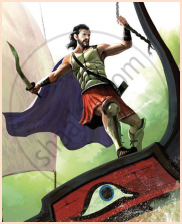
What does he think of the people of his kingdom?
Read the set of line from the poem and answer the question that follow.
… I mete and dole
Unequal laws unto a savage race,
That hoard, and sleep, and feed, and
know not me.
- What does Ulysses do?
- Did he enjoy what he was doing? Give reasons.
Explain with reference to the context the following line.
I cannot rest from travel: I will drink Life to the lees:
Explain with reference to the context the following line.
How dull it is to pause, to make an end,
To rust unburnished, not to shine in use!
Explain with reference to the context the following line.
The long day wanes: the slow moon climbs:
the deep Moans round with many voices.
What is Ulysses’ clarion call to his sailors? How does he inspire them?
What has twisted good men into thwarted worms?
Where are the final decisions taken?
Why does the poet advise his son to have lazy days?
Here are a few poetic device used in the poem.
Transferred Epithet- It is a figure of speech in which an epithet grammatically qualifies a noun other than the person or a thing, it is actually meant to describe.
Explain the following line with reference to the context.
Brutes have been gentled where lashes failed.
Describe the posture of Napoleon.
Why was the rider in a hurry?
Literary Devices
Mark the rhyme scheme of the poem. The rhyme scheme for the first stanza is as follows.
| With neck out-thrust, you fancy how, | a |
| Legs wide, arms locked behind, | b |
| As if to balance the prone brow | a |
| Oppressive with its mind. | b |
Read the line given below and answer the question that follow.
‘You’re wounded!’ ‘Nay’, his soldier’s pride Touched to the quick, he said:
- Why did the boy contradict Napoleon’s words?
- Why was his pride touched?
Explain the following line with reference to the context.
Then off there flung in smiling joy, And held himself erect
The young soldier matched his emperor in courage and patriotism. Elucidate your answer.
