Advertisements
Advertisements
Question
Why did Napoleon’s eyes become soft as a mother eagle’s eyes?
Advertisements
Solution
As Napoleon saw the young soldier severely wounded his eyes became soft as a mother eagle’s eyes.
APPEARS IN
RELATED QUESTIONS
Have you ever visited a fort or a castle?
Fill in the following empty boxes.
| Name | Location |
| Fort St. George | Chennai |
| Gingee Fort | ______ |
| Golconda Fort | ______ |
| Red Fort | ______ |
Why were the soldiers in the castle fearless?
Where were the enemies?
Did the soldiers fight with the enemies face to face?
Read the given line and answer the question that follow in a line or two.
All through the summer at ease we lay,
And daily from the turret wall
We watched the mowers in the hay
- Who does ‘we’ refer to?
- How did the soldiers spend the summer days?
- What could they watch from the turret wall?
You visit your school after several years. As you cross the banyan tree at the entrance, cheerful memories fi ll your mind. Fill the bubbles with your memories.

How does the creeper appear on the tree?
To whom does Toru Dutt want to consecrate the tree’s memory?
The casuarina tree will be remembered forever. Why?
When does a man become a judge? How?
Which stage of man’s life is associated with the ‘shrunk shank’?
Explain the following line briefly with reference to the context.
“They have their exits and their entrances;
And one man in his time plays many parts,”
Complete the table based on your understanding of the poem.
| Stage | Characteristic |
| crying | |
| judge | |
| soldier | |
| unhappy | |
| second childhood | |
| whining | |
| old man |
What does Ulysses yearn for?
Identify the figure of speech employed in the following line.
.....the deep Moans round with many voices.
Identify the figure of speech employed in the following line.
There lies the port the vessel puffs her sail
What is Ulysses’ clarion call to his sailors? How does he inspire them?
What happened to the people who wanted too much money?
Here are a few poetic device used in the poem.
Repetition- It is a figure of speech.
Read the line given below and answer the question that follow.
“Life is a soft loam; be gentle; go easy.” And this too might serve him.
- Why does the poet suggest to take life easy?
- Identify the figure of speech in the above line.
Read the line given below and answer the question that follow.
Tell him solitude is creative if he is strong and the final decisions are made in silent rooms.
- Can being in solitude help a strong human being? How?
- Identify the figure of speech in the above line.
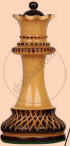
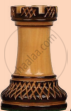
Have you played chess or watched the game carefully?
Now identify the chess pieces and complete the table below. Discuss the role of each piece in the game.
 |
|
 |
|
 |
|
 |
|
 |
|
 |
Where was the narrator when the incident happened?
Who took the city of Ratisbon by storm?
Where was Napoleon standing on the day of attack on the city of Ratisbon?
Why did the rider keep his lips compressed?
When did the narrator find that the boy was badly wounded?
Read the line given below and answer the question that follow.
Legs wide, arms locked behind As if to balance the prone brow Oppressive with its mind.
- Whose action is described here?
- What is meant by prone brow?
- What is his state of mind?
The young soldier matched his emperor in courage and patriotism. Elucidate your answer.
