Advertisements
Advertisements
Question
Identify the figure of speech used in each of the extract given below and write down the answer in the space given below.
“ A creeper climbs, in whose embraces bound
No other tree could live. But gallantly
The giant wears the scarf, and flowers are hung......”
Advertisements
Solution
Personification (As the creeper is said to embrace the tree, the tree also gallantly, like a bold lover, accepts the embrace)
APPEARS IN
RELATED QUESTIONS
Where were the enemies?
Why were the secret galleries bare?
How safe was the castle? How was it conquered?
Read the given line and answer the question that follow in a line or two.
Our gates were strong, our walls were thick,
So smooth and high, no man could win.
- How safe was the castle?
- What was the firm belief of the soldiers?
Read the given line and answer the question that follow in a line or two.
We could do nothing, being sold.
- Why couldn’t they do anything?
- Why did they feel helpless?
Our only enemy was gold
Identify the figure of speech used in the following line.
How can this shameful tale be told?
How does the creeper appear on the tree?
How does the poet spend her winter?
To whom does Toru Dutt want to consecrate the tree’s memory?
Explain the following line with reference to the context.
Dear is the Casuarina to my soul;
Explain the following line with reference to the context.
It is the tree’s lament, an eerie speech,…
Identify the figure of speech used in each of the extract given below and write down the answer in the space given below.
“ LIKE a huge Python, winding round and round
The rugged trunk indented deep with scars”,
Identify the figure of speech used in each of the extract given below and write down the answer in the space given below.
“A gray baboon sits statue-like alone’’
Describe the reminiscences of the poet, when she sees the casuarina tree.
Discuss with your partner the different stages in the growth of man from a new born to an adult

“And they have their exits and their entrances” - What do the words ‘exits’ and ‘entrances’ mean?
What is the first stage of a human’s life?
Bring out the features of the fourth stage of a man as described by the poet.
Read the poem once again carefully and identify the figure of speech that has been used in each of the following lines from the poem.
“All the world’s a stage,
And all the men and women merely players;
They have their exits and their entrances;
And one man in his time plays many parts,
His acts being seven ages. At first the infant,
Mewling and puking in the nurse’s arms;
Then the whining school-boy, with his satchel
And shining morning face, creeping like snail
Unwillingly to school. And then the lover,
Sighing like furnace, with a woeful ballad
Made to his mistress’ eyebrow. Then a soldier,
Full of strange oaths, and bearded like the pard,
Jealous in honour, sudden and quick in quarrel,
Seeking the bubble reputation
Even in the cannon’s mouth. And then the justice,
In fair round belly with good capon lin’d,
With eyes severe and beard of formal cut,
Full of wise saws and modern instances;
And so he plays his part. The sixth age shifts
Into the lean and slipper’d pantaloon,
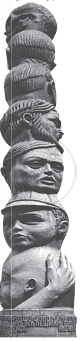
With spectacles on nose and pouch on side;
His youthful hose, well sav’d, a world too wide
For his shrunk shank; and his big manly voice,
Turning again toward childish treble, pipes
And whistles in his sound. Last scene of all,
That ends this strange eventful history,
Is second childishness and mere oblivion;
Sans teeth, sans eyes, sans taste, sans everything.”
- “All the world's a stage”
- “And all the men and women merely players”
- “And shining morning face, creeping like snail”
- “Full of strange oaths, and bearded like the pard,”
- “Seeking the bubble reputation”
- “His youthful hose, well sav’d, a world too wide”
- “and his big manly voice, turning again toward childish treble”
Introduction
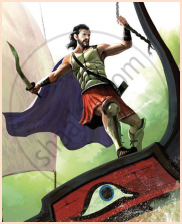
The poem ‘Ulysses’ is a dramatic monologue that contains 70 lines of blank verse. Ulysses, the King of Ithaca, gathers his men together to prepare for the journey and exhorts them not to waste their time left on earth. Ulysses has grown old, having experienced many adventures at the battle of Troy and in the seas. After returning to Ithaca, he desires to embark upon his next voyage. His inquisitive spirit is always looking forward to more and more of such adventures.
What does Ulysses yearn for?
Why did Ulysses want to hand over the kingdom to his son?
How would Telemachus transform the subjects?
Identify the figure of speech employed in the following line.
To follow knowledge like a sinking star.
Explain with reference to the context the following line.
How dull it is to pause, to make an end,
To rust unburnished, not to shine in use!
What happened to the people who wanted too much money?
What are the poet’s thoughts on ‘being different’?
Explain how the poet guides his son who is at the threshold of manhood, to face the challenges of life.
The young soldier matched his emperor in courage and patriotism. Elucidate your answer.
