Advertisements
Advertisements
Question
Identify the figure of speech used in each of the extract given below and write down the answer in the space given below.
“ LIKE a huge Python, winding round and round
The rugged trunk indented deep with scars”,
Advertisements
Solution
Zoomorphism/Simile
APPEARS IN
RELATED QUESTIONS
Have you ever visited a fort or a castle?
Where were the enemies?
Who had let the enemies in?
Who was the real enemy?
Bring out the contrasting picture of the castle as depicted in stanzas 3 and 5.
Read the given line and answer the question that follow in a line or two.
A foothold there, no clever trick
Could take us dead or quick,
Only a bird could have got in.
- What was challenging?
- Which aspect of the castle’s strength is conveyed by the above line?
Our only enemy was gold
Underline the alliterated word in the following line.
With our arms and provender, load on load.
To whom does Toru Dutt want to consecrate the tree’s memory?
Explain the following line with reference to the context.
Unto thy honor, Tree, beloved of those
Who now in blessed sleep for aye repose,
Why is the last stage called second childhood?
Read the given line and answer the question that follow.
And then the justice,
In fair round belly with good capon lin'd,
With eyes severe and beard of formal cut,
Full of wise saws and modern instances;
- Whom does justice refer to?
- Describe his appearance.
- How does he behave with the people around him?
- What does he do to show his wisdom?
Shakespeare has skilfully brought out the parallels between the life of man and actors on stage. Elaborate this statement with reference to the poem.
Introduction
The poem ‘Ulysses’ is a dramatic monologue that contains 70 lines of blank verse. Ulysses, the King of Ithaca, gathers his men together to prepare for the journey and exhorts them not to waste their time left on earth. Ulysses has grown old, having experienced many adventures at the battle of Troy and in the seas. After returning to Ithaca, he desires to embark upon his next voyage. His inquisitive spirit is always looking forward to more and more of such adventures.
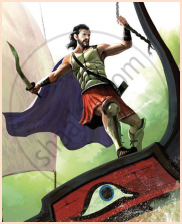
What could be the possible outcomes of their travel?
Identify the figure of speech employed in the following line.
.....the deep Moans round with many voices.
Read the set of line from the poem and answer the question that follow.
Death closes all: but something ere the end,
Some work of noble note, may yet be done,
Not unbecoming men that strove with Gods.
- The above lines convey the undying spirit of Ulysses. Explain.
- Pick out the words in alliteration in the above lines.
Explain with reference to the context the following line.
I am become a name; For always roaming with a hungry heart
Explain with reference to the context the following line.
He works his work, I mine.
Explain with reference to the context the following line.
It may be we shall touch the Happy Isles,
And see the great Achilles, whom we knew.
How would the poet’s advice help his son who is at the threshold of the manhood?
How would his being alone help the boy?
Read the line given below and answer the question that follow.
Tell him time as a stuff can be wasted.
Tell him to be a fool every so often
- Why does the poet suggest that time can be wasted?
- Identify the figure of speech in the above line.
Explain the following line with reference to the context.
Yet learning something out of every folly
hoping to repeat none of the cheap follies
How according to the poet is it possible for his son to bring changes into a world that resents change?
When did the narrator find that the boy was badly wounded?
Explain the following line with reference to the context.
‘I’m killed, Sire!’ And, his Chief beside, Smiling, the boy fell dead.
The young soldier matched his emperor in courage and patriotism. Elucidate your answer.
