Advertisements
Advertisements
Question
Explain with reference to the context the following line.
The long day wanes: the slow moon climbs:
the deep Moans round with many voices.
Advertisements
Solution
- Reference: These lines are from the poem ‘Ulysses” written by Alfred Tennyson.
- Context and Explanation: The poet continues to discuss old age and the tantalizing call of the oceans to conquer. Ulysses hints at the probable end of the cycle of life in the words “The long clay wanes”. The symbol of darkness or night is mostly associated with death. The lure of the ocean to resume his voyages beyond the point of sunset is too tempting to resist. The dark unfathomable sea beckons him and his compatriots with mysterious voices.
APPEARS IN
RELATED QUESTIONS
Fill in the following empty boxes.
| Name | Location |
| Fort St. George | Chennai |
| Gingee Fort | ______ |
| Golconda Fort | ______ |
| Red Fort | ______ |
Who is the narrator in the poem?
How long had the soldiers been in the castle?
Where were the enemies?
Human greed led to the mighty fall of the citadel. Explain.
Name the bird that sings in the poet’s garden.
The casuarina tree will be remembered forever. Why?
Explain the following line with reference to the context.
Dear is the Casuarina to my soul;
Explain the following line with reference to the context.
Unto thy honor, Tree, beloved of those
Who now in blessed sleep for aye repose,
Identify the figure of speech used in each of the extract given below and write down the answer in the space given below.
“The water-lilies spring, like snow enmassed.”
Bring out the features of the fourth stage of a man as described by the poet.
Complete the summary of the poem, choosing words from the list given below. Lines 1 to 32
Ulysses is (1) ______to discharge his duties as a (2) ______, as he longs for (3) ______. He is filled with an (4) ______thirst for (5) ______and wishes to live life to the (6) ______. He has travelled far and wide gaining (7) _______ of various places, cultures, men and (8) ______. He recalls with delight his experience at the battle of Troy. Enriched by his (9) ______he longs for more and his quest seems endless. Like metal which would (10) ______if unused, life without adventure is meaningless. According to him living is not merely (11) ______to stay alive. Though old but zestful, Ulysses looks at every hour as a bringer of new things and yearns to follow knowledge even if it is (12)______.
| fullest, unquenchable, unattainable, experience, knowledge, king, matters, rust, adventure, unwilling, travel, breathing |
‘Ulysses is not happy to perform his duties as a king.’ Why?
‘As tho’ to breathe were life!’ – From the given line what do you understand of Ulysses’ attitude to life?
‘He works his work, I mine’ – How is the work distinguished?
Identify the figure of speech employed in the following line.
For always roaming with a hungry heart
Identify the figure of speech employed in the following line.
.....the deep Moans round with many voices.
Read the set of line from the poem and answer the question that follow.
Little remains: but every hour is saved
From that eternal silence, something more,
A bringer of new things; and vile it were
- How is every hour important to Ulysses?
- What does the term ‘Little remains’ convey?
Read the set of line from the poem and answer the question that follow.
This is my son, mine own Telemachus,
To whom I leave the sceptre and the isle Well-loved of me,
- Who does Ulysses entrust his kingdom to, in his absence?
- Bring out the significance of the ‘sceptre’.
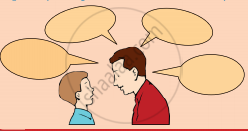
Every parent is anxious about the welfare of his/her children. Parents express their anxiety by advising them almost all the time. What kind of advice do you frequently receive from your parents? Fill in the bubbles. Tick the ones you like to follow implicitly and give reasons for the ones you don’t like to follow.
Read the line given below and answer the question that follow.
“Life is hard; be steel; be a rock.”
- How should one face life?
- Identify the figure of speech in the above line.
How according to the poet is it possible for his son to bring changes into a world that resents change?
Where was Napoleon standing on the day of attack on the city of Ratisbon?
Describe the posture of Napoleon.
What does the phrase ‘full galloping’ suggest?
What was Napoleon’s reaction on hearing the news of victory?
Why did Napoleon’s eyes become soft as a mother eagle’s eyes?
Read the line given below and answer the question that follow.
‘You’re wounded!’ ‘Nay’, his soldier’s pride Touched to the quick, he said:
- Why did the boy contradict Napoleon’s words?
- Why was his pride touched?
The young soldier matched his emperor in courage and patriotism. Elucidate your answer.
Napoleon was a great source of inspiration to his army. Justify.
