Advertisements
Advertisements
Question
Describe the posture of Napoleon.
Advertisements
Solution
Napoleon’s neck was outthrust. He kept his legs wide and arms locked behind as if to balance his body against his brow heavy with oppressive thoughts about the battle.
APPEARS IN
RELATED QUESTIONS
Have you ever visited a fort or a castle?
Why were the soldiers in the castle fearless?
Why does the narrator say that the enemy was no threat at all?
Why did the narrator feel helpless?
Read the poem and complete the table with suitable rhyming words.
All through that summer at ease we lay,
And daily from the turret wall
We watched the mowers in the hay
And the enemy half a mile away
They seemed no threat to us at all.
For what, we thought, had we to fear
With our arms and provender, load on load,
Our towering battlements, tier on tier,
And friendly allies drawing near
On every leafy summer road.
Our gates were strong, our walls were thick,
So smooth and high, no man could win
A foothold there, no clever trick
Could take us dead or quick,
Only a bird could have got in.
What could they offer us for bait?
Our captain was brave and we were true…
There was a little private gate,
A little wicked wicket gate.
The wizened warder let them through.
Oh then our maze of tunneled stone
Grew thin and treacherous as air.
The cause was lost without a groan,
The famous citadel overthrown,
And all its secret galleries bare.
How can this shameful tale be told?
I will maintain until my death
We could do nothing, being sold:
Our only enemy was gold,
And we had no arms to fight it with.
| lay | hay |
Underline the alliterated word in the following line.
With our arms and provender, load on load.
Identify the figure of speech used in the following line.
Grew thin and treacherous as air.
How does the creeper appear on the tree?
Why is the casuarina tree dear to poet’s heart?
What has Wordsworth sanctified in his poem?
Explain the following line briefly with reference to the context.
“They have their exits and their entrances;
And one man in his time plays many parts,”
Pick out the word in ‘alliteration’ in the following line.
“Jealous in honour, sudden and quick in quarrel.”
Complete the summary of the poem, choosing words from the list given below. Lines 44 to 70
Ulysses beckons his sailors to (1) ______at the port where the ship is ready to sail. His companions who have faced both (2) ______and sunshine with a smile, are united by their undying spirit of adventure. Though death would end everything, Ulysses urges his companions to join him and sail beyond the sunset and seek a newer (3) ______, regardless of consequences. These brave hearts who had once moved (4) ______ and earth, may have grown old and weak physically but their spirit is young and (5) ______. His call is an inspiration for all those who seek true knowledge and strive to lead (6) ______ lives.
| world, thunder, meaningful, gather, undaunted, heaven |
How would Telemachus transform the subjects?
Identify the figure of speech employed in the following line.
To follow knowledge like a sinking star.
Read the set of line from the poem and answer the question that follow.
Death closes all: but something ere the end,
Some work of noble note, may yet be done,
Not unbecoming men that strove with Gods.
- The above lines convey the undying spirit of Ulysses. Explain.
- Pick out the words in alliteration in the above lines.
Read the set of line from the poem and answer the question that follow.
One equal temper of heroic hearts,
Made weak by time and fate, but strong in will
To strive, to seek, to find, and not to yield.
- Though made weak by time and fate, the hearts are heroic. Explain.
- Pick out the words in alliteration in the above lines.
Explain with reference to the context the following line.
I cannot rest from travel: I will drink Life to the lees:
Explain with reference to the context the following line.
It may be we shall touch the Happy Isles,
And see the great Achilles, whom we knew.
‘A tough will counts.’ Explain.
How would his being alone help the boy?
Why does the poet advise his son to have lazy days?
Read the line given below and answer the question that follow.
Tell him time as a stuff can be wasted.
Tell him to be a fool every so often
- Why does the poet suggest that time can be wasted?
- Identify the figure of speech in the above line.
Pick out the alliterated words from the poem and write.
And this might stand him for the storms
Explain the following line with reference to the context.
Yet learning something out of every folly
hoping to repeat none of the cheap follies
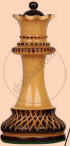
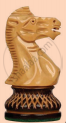
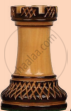
Have you played chess or watched the game carefully?
Now identify the chess pieces and complete the table below. Discuss the role of each piece in the game.
 |
|
 |
|
 |
|
 |
|
 |
|
 |
Who do you think is the narrator of the poem?
Read the line given below and answer the question that follow.
‘You’re wounded!’ ‘Nay’, his soldier’s pride Touched to the quick, he said:
- Why did the boy contradict Napoleon’s words?
- Why was his pride touched?
Explain the following line with reference to the context.
To see your flag-bird flap his vans Where I, to heart’s desire, Perched him!’
