Advertisements
Advertisements
Question
Complete the summary of the poem, choosing words from the list given below. Lines 33 to 42
Ulysses desires to hand over his (1) ______to his son Telemachus, who would fulfil his duties towards his subjects with care and (2) ______. Telemachus possesses patience and has the will to civilise the citizens of Ithaca in a (3) ______way. Ulysses is happy that his son would do his work blamelessly and he would pursue his (4) ______for travel and knowledge.
| prudence, kingdom, quest, tender |
Advertisements
Solution
Ulysses desires to hand over his (1) kingdom to his son Telemachus, who would fulfil his duties towards his subjects with care and (2) prudence. Telemachus possesses patience and has the will to civilise the citizens of Ithaca in a (3) tender way. Ulysses is happy that his son would do his work blamelessly and he would pursue his (4) quest for travel and knowledge.
APPEARS IN
RELATED QUESTIONS
Who is the narrator in the poem?
Why were the soldiers in the castle fearless?
Did the soldiers fight with the enemies face to face?
How can this shameful tale be told?
I will maintain until my death
Identify the figure of speech used in the following line.
Oh then our maze of tunneled stone
What is the creeper compared to?
The casuarina tree will be remembered forever. Why?
Explain the following line with reference to the context.
Unto thy honor, Tree, beloved of those
Who now in blessed sleep for aye repose,
Identify the figure of speech used in each of the extract given below and write down the answer in the space given below.
“A gray baboon sits statue-like alone’’
Discuss with your partner the different stages in the growth of man from a new born to an adult

Explain the following line briefly with reference to the context.
“Jealous in honour, sudden and quick in quarrel,
Seeking the bubble reputation”.“They have their exits and their entrances;
Pick out the word in ‘alliteration’ in the following line.
“and all the men and women merely players”
Complete the table based on your understanding of the poem.
| Stage | Characteristic |
| crying | |
| judge | |
| soldier | |
| unhappy | |
| second childhood | |
| whining | |
| old man |
Introduction
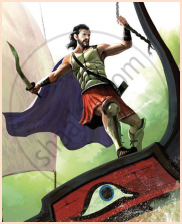
The poem ‘Ulysses’ is a dramatic monologue that contains 70 lines of blank verse. Ulysses, the King of Ithaca, gathers his men together to prepare for the journey and exhorts them not to waste their time left on earth. Ulysses has grown old, having experienced many adventures at the battle of Troy and in the seas. After returning to Ithaca, he desires to embark upon his next voyage. His inquisitive spirit is always looking forward to more and more of such adventures.
Complete the summary of the poem, choosing words from the list given below. Lines 44 to 70
Ulysses beckons his sailors to (1) ______at the port where the ship is ready to sail. His companions who have faced both (2) ______and sunshine with a smile, are united by their undying spirit of adventure. Though death would end everything, Ulysses urges his companions to join him and sail beyond the sunset and seek a newer (3) ______, regardless of consequences. These brave hearts who had once moved (4) ______ and earth, may have grown old and weak physically but their spirit is young and (5) ______. His call is an inspiration for all those who seek true knowledge and strive to lead (6) ______ lives.
| world, thunder, meaningful, gather, undaunted, heaven |
Who does the speaker address in the second part?
In what ways were Ulysses and his mariners alike?
Identify the figure of speech employed in the following line.
To follow knowledge like a sinking star.
Explain with reference to the context the following line.
He works his work, I mine.
Explain with reference to the context the following line.
It may be we shall touch the Happy Isles,
And see the great Achilles, whom we knew.
List the roles and responsibilities Ulysses assigns to his son Telemachus, while he is away.
How would the poet’s advice help his son who is at the threshold of the manhood?
Here are a few poetic device used in the poem.
Antithesis- It is a literary device that emphasises the idea of contrast.
Read the line given below and answer the question that follow.
“Life is a soft loam; be gentle; go easy.” And this too might serve him.
- Why does the poet suggest to take life easy?
- Identify the figure of speech in the above line.
Explain the following line with reference to the context.
He will be lonely enough
to have time for the work
When did the narrator find that the boy was badly wounded?
Read the line given below and answer the question that follow.
Legs wide, arms locked behind As if to balance the prone brow Oppressive with its mind.
- Whose action is described here?
- What is meant by prone brow?
- What is his state of mind?
Explain the following line with reference to the context.
‘I’m killed, Sire!’ And, his Chief beside, Smiling, the boy fell dead.
Explain the following line with reference to the context.
To see your flag-bird flap his vans Where I, to heart’s desire, Perched him!’
