Advertisements
Advertisements
Question
Here are a few poetic device used in the poem.
Antithesis- It is a literary device that emphasises the idea of contrast.
Advertisements
Solution
e.g. The growth of a frail flower in a path up has sometimes shattered and split a rock. Brutes have been gentled where lashes failed.
APPEARS IN
RELATED QUESTIONS
Who had let the enemies in?
What was the ‘shameful act’?
Read the given line and answer the question that follow in a line or two.
| Oh then our maze of tunneled stone Grew thin and treacherous as air. The castle was lost without a groan, The famous citadel overthrown, |
- Bring out the contrast in the first two lines.
- What is the rhyme scheme of the given stanza?
I will maintain until my death
Our only enemy was gold
Identify the figure of speech used in the following line.
How can this shameful tale be told?
You visit your school after several years. As you cross the banyan tree at the entrance, cheerful memories fi ll your mind. Fill the bubbles with your memories.

Read the line given below and answer the question that follow.
The giant wears the scarf, and flowers are hung
In crimson clusters all the bough among!
- Who is the giant here?
- Why is the scarf colourful?
Identify the figure of speech used in each of the extract given below and write down the answer in the space given below.
“ A creeper climbs, in whose embraces bound
No other tree could live. But gallantly
The giant wears the scarf, and flowers are hung......”
Bring out the features of the fourth stage of a man as described by the poet.
Pick out the word in ‘alliteration’ in the following line.
“Jealous in honour, sudden and quick in quarrel.”
Complete the table based on your understanding of the poem.
| Stage | Characteristic |
| crying | |
| judge | |
| soldier | |
| unhappy | |
| second childhood | |
| whining | |
| old man |
Introduction
The poem ‘Ulysses’ is a dramatic monologue that contains 70 lines of blank verse. Ulysses, the King of Ithaca, gathers his men together to prepare for the journey and exhorts them not to waste their time left on earth. Ulysses has grown old, having experienced many adventures at the battle of Troy and in the seas. After returning to Ithaca, he desires to embark upon his next voyage. His inquisitive spirit is always looking forward to more and more of such adventures.
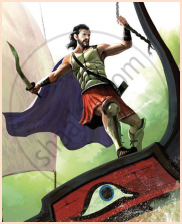
Pick out the lines which convey that his quest for travel is unending.
‘As tho’ to breathe were life!’ – From the given line what do you understand of Ulysses’ attitude to life?
What does Ulysses yearn for?
Identify the figure of speech employed in the following line.
For always roaming with a hungry heart
Identify the figure of speech employed in the following line.
.....the deep Moans round with many voices.
Here are a few poetic device used in the poem.
Repetition- It is a figure of speech.
Explain how the poet guides his son who is at the threshold of manhood, to face the challenges of life.
Who came galloping on a horse to Napoleon?
What does the phrase ‘full galloping’ suggest?
Why was the rider in a hurry?
Where did the rider plant the French flag after Ratisbon was captured?
When did the narrator find that the boy was badly wounded?
Read the line given below and answer the question that follow.
A film the mother eagles eye When her bruised eaglet breathes
- Who is compared to the mother eagle in the above lines?
- Explain the comparison.
Explain the following line with reference to the context.
Then off there flung in smiling joy, And held himself erect
The young soldier matched his emperor in courage and patriotism. Elucidate your answer.
