Advertisements
Advertisements
Question
Read the given line and answer the question that follow.
Then the whining school-boy, with his satchel
And shining morning face, creeping like snail
Unwillingly to school.
- Which stage of life is being referred to here by the poet?
- What are the characteristics of this stage?
- How does the boy go to school?
- Which figure of speech has been employed in the second line?
Advertisements
Solution
- Boyhood is referred to here.
- Innocence, joy, and carefree life are the characteristics of this stage in life.
- The boy goes to school unwillingly. He is slow like a snail.
- The simile is employed in the second line.
APPEARS IN
RELATED QUESTIONS
Fill in the following empty boxes.
| Name | Location |
| Fort St. George | Chennai |
| Gingee Fort | ______ |
| Golconda Fort | ______ |
| Red Fort | ______ |
Did the soldiers fight with the enemies face to face?
Our gates were strong, our walls were thick,
Underline the alliterated word in the following line.
A little wicked wicket gate.
How does the creeper appear on the tree?
Name the bird that sings in the poet’s garden.
Read the line given below and answer the question that follow.
The giant wears the scarf, and flowers are hung
In crimson clusters all the bough among!
- Who is the giant here?
- Why is the scarf colourful?
Read the line given below and answer the question that follow.
“Fear, trembling Hope, and Death, the skeleton,
And Time the shadow”, and though weak the verse
That would thy beauty fain, oh, fain rehearse,
May Love defend thee from oblivion’s curse.
- What does the poet mean by the expression ‘May love defend thee from oblivion’s curse?’
- What does the expression ‘fain’ convey?
- What does the poet convey through the expression ‘Fear, trembling Hope’?
Read the given line and answer the question that follow.
And then the justice,
In fair round belly with good capon lin'd,
With eyes severe and beard of formal cut,
Full of wise saws and modern instances;
- Whom does justice refer to?
- Describe his appearance.
- How does he behave with the people around him?
- What does he do to show his wisdom?
Complete the summary of the poem, choosing words from the list given below. Lines 44 to 70
Ulysses beckons his sailors to (1) ______at the port where the ship is ready to sail. His companions who have faced both (2) ______and sunshine with a smile, are united by their undying spirit of adventure. Though death would end everything, Ulysses urges his companions to join him and sail beyond the sunset and seek a newer (3) ______, regardless of consequences. These brave hearts who had once moved (4) ______ and earth, may have grown old and weak physically but their spirit is young and (5) ______. His call is an inspiration for all those who seek true knowledge and strive to lead (6) ______ lives.
| world, thunder, meaningful, gather, undaunted, heaven |
What does he think of the people of his kingdom?
Pick out the lines which convey that his quest for travel is unending.
In what ways were Ulysses and his mariners alike?
Read the set of line from the poem and answer the question that follow.
Death closes all: but something ere the end,
Some work of noble note, may yet be done,
Not unbecoming men that strove with Gods.
- The above lines convey the undying spirit of Ulysses. Explain.
- Pick out the words in alliteration in the above lines.
Explain with reference to the context the following line.
I cannot rest from travel: I will drink Life to the lees:
What makes Ulysses seek newer adventures?
How would his being alone help the boy?
What are the poet’s thoughts on ‘being different’?
Why does the poet advise his son to have lazy days?
The poet says
‘Without rich wanting nothing arrives’ but he condemns ‘the quest of lucre beyond a few easy needs.’ Analyse the difference and write.
Read the line given below and answer the question that follow.
..........Free imaginations
Bringing changes into a world resenting change.
- How does free imagination help the world?
- Identify the figure of speech.
Explain the following line with reference to the context.
and guide him among sudden betrayals
and tighten him for slack moments.
Explain the following line with reference to the context.
He will be lonely enough
to have time for the work
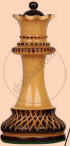
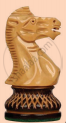
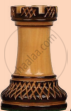
Have you played chess or watched the game carefully?
Now identify the chess pieces and complete the table below. Discuss the role of each piece in the game.
 |
|
 |
|
 |
|
 |
|
 |
|
 |
Fill in the blanks choosing the words from the box given and complete the summary of the poem.
The poet Robert Browning narrates an incident at the French Camp in the war of 1809 between France and Austria, in a (a)______version. He describes the brave action of a (b)______soldier, whose heroic devotion to duty and his (c) ______ in it is inspiring and worthy of (d) ______. During the attack of the French army on Ratisbon, Napoleon was anxious about the (e) ______. Austrians were defending Ratisbon with great (f) ______and courage. Napoleon was watching the war standing on a (g) ______near the battlefield.
All of a sudden a rider appeared from the closed smoke and dust. Riding at great speed, jumping and leaping, he approached the mound where Napoleon stood. As he came closer, the narrator noticed that the rider, a young boy, was severely wounded. But the rider showed no sign of pain and smiling in joy, jumped off the horse and gave the happy news of (h) ______to the emperor.
He exclaimed with pride that the French had (i) ______Ratisbon and he himself had hoisted the flag of France. When Napoleon heard the news, his plans (j) ______up like fire. His eyes (k) ______when he saw that the soldier was severely wounded. Like a caring mother eagle, the emperor asked if he was wounded. The (l) ______soldier replied proudly that he was killed and died heroically.
| determination | result | dramatic |
| pride | admiration | softened |
| wounded | mound | victory |
| conquered | soared | valiant |
Why did Napoleon’s eyes become soft as a mother eagle’s eyes?
Explain the following line with reference to the context.
Then off there flung in smiling joy, And held himself erect
