Advertisements
Advertisements
Question
Have you played chess or watched the game carefully?
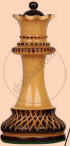
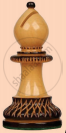
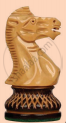
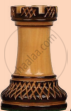
Now identify the chess pieces and complete the table below. Discuss the role of each piece in the game.
 |
|
 |
|
 |
|
 |
|
 |
|
 |
Advertisements
Solution
|
King |
|
Queen |
|
Bishop |
|
Horse |
|
Rook |
|
Soldier |
APPEARS IN
RELATED QUESTIONS
Have you ever visited a fort or a castle?
Fill in the following empty boxes.
| Name | Location |
| Fort St. George | Chennai |
| Gingee Fort | ______ |
| Golconda Fort | ______ |
| Red Fort | ______ |
Who is the narrator in the poem?
Did the soldiers fight with the enemies face to face?
Who was the real enemy?
How safe was the castle? How was it conquered?
Read the given line and answer the question that follow in a line or two.
| Oh then our maze of tunneled stone Grew thin and treacherous as air. The castle was lost without a groan, The famous citadel overthrown, |
- Bring out the contrast in the first two lines.
- What is the rhyme scheme of the given stanza?
Identify the figure of speech used in the following line.
Oh then our maze of tunneled stone
Identify the figure of speech used in the following line.
Our only enemy was gold,
Identify the figure of speech used in each of the extract given below and write down the answer in the space given below.
“ LIKE a huge Python, winding round and round
The rugged trunk indented deep with scars”,
Identify the figure of speech used in each of the extract given below and write down the answer in the space given below.
“A gray baboon sits statue-like alone’’
Fill in the blanks using the words given in the box to complete the summary of the poem.
Shakespeare considers the whole world a stage where men and women are only (1) ______. They (2)______the stage when they are born and exit when they die. Every man, during his life time, plays seven roles based on age. In the first act, as an infant, he is wholly (3) ______on the mother or a nurse. Later, emerging as a school child, he slings his bag over his shoulder and creeps most (4)______ to school. His next act is that of a lover, busy (5) ______ballads for his beloved and yearns for her (6) ______. In the fourth stage, he is aggressive and ambitious and seeks (7) ______in all that he does. He (8) ______solemnly to guard his country and becomes a soldier. As he grows older, with (9) ______and wisdom, he becomes a fair judge. During this stage, he is firm and (10) ______. In the sixth act, he is seen with loose pantaloons and spectacles. His manly voice changes into a childish (11) ______. The last scene of all is his second childhood. Slowly, he loses his (12) ______of sight, hearing, smell and taste and exits from the roles of his life.
| attention | treble | reluctantly |
| actors | maturity | reputation |
| serious | faculties | composing |
| enter | promises | dependent |
Describe the second stage of life as depicted by Shakespeare.
How does a man play a lover’s role?
When does a man become a judge? How?
Pick out the word in ‘alliteration’ in the following line.
“and all the men and women merely players”
Read the given line and answer the question that follow.
Then a soldier,
full of strange oaths, and bearded like the pard,
Jealous in honour, sudden and quick in quarrel,
Seeking the bubble reputation
Even in the cannon's mouth.
- What is the soldier ready to do?
- Explain ‘bubble reputation’.
- What are the distinguishing features of this stage?
Shakespeare has skilfully brought out the parallels between the life of man and actors on stage. Elaborate this statement with reference to the poem.
Who does the speaker address in the second part?
Read the set of line from the poem and answer the question that follow.
… I mete and dole
Unequal laws unto a savage race,
That hoard, and sleep, and feed, and
know not me.
- What does Ulysses do?
- Did he enjoy what he was doing? Give reasons.
Read the set of line from the poem and answer the question that follow.
This is my son, mine own Telemachus,
To whom I leave the sceptre and the isle Well-loved of me,
- Who does Ulysses entrust his kingdom to, in his absence?
- Bring out the significance of the ‘sceptre’.
Read the set of line from the poem and answer the question that follow.
……for my purpose holds
To sail beyond the sunset, and the baths
Of all the western stars, until I die.
- What was Ulysses’ purpose in life?
- How long would his venture last?
Read the set of line from the poem and answer the question that follow.
One equal temper of heroic hearts,
Made weak by time and fate, but strong in will
To strive, to seek, to find, and not to yield.
- Though made weak by time and fate, the hearts are heroic. Explain.
- Pick out the words in alliteration in the above lines.
How would the poet’s advice help his son who is at the threshold of the manhood?
Explain the following line with reference to the context.
Yet learning something out of every folly
hoping to repeat none of the cheap follies
Explain the following line with reference to the context.
He will be lonely enough
to have time for the work
Fill in the blanks choosing the words from the box given and complete the summary of the poem.
The poet Robert Browning narrates an incident at the French Camp in the war of 1809 between France and Austria, in a (a)______version. He describes the brave action of a (b)______soldier, whose heroic devotion to duty and his (c) ______ in it is inspiring and worthy of (d) ______. During the attack of the French army on Ratisbon, Napoleon was anxious about the (e) ______. Austrians were defending Ratisbon with great (f) ______and courage. Napoleon was watching the war standing on a (g) ______near the battlefield.
All of a sudden a rider appeared from the closed smoke and dust. Riding at great speed, jumping and leaping, he approached the mound where Napoleon stood. As he came closer, the narrator noticed that the rider, a young boy, was severely wounded. But the rider showed no sign of pain and smiling in joy, jumped off the horse and gave the happy news of (h) ______to the emperor.
He exclaimed with pride that the French had (i) ______Ratisbon and he himself had hoisted the flag of France. When Napoleon heard the news, his plans (j) ______up like fire. His eyes (k) ______when he saw that the soldier was severely wounded. Like a caring mother eagle, the emperor asked if he was wounded. The (l) ______soldier replied proudly that he was killed and died heroically.
| determination | result | dramatic |
| pride | admiration | softened |
| wounded | mound | victory |
| conquered | soared | valiant |
Describe the posture of Napoleon.
Why did the rider keep his lips compressed?
