English
Tamil Nadu Board of Secondary EducationHSC Science Class 12

Read the set of line from the poem and answer the question that follow. ……for my purpose holds To sail beyond the sunset, and the baths Of all the western stars, until I die.

Advertisements
Advertisements

Question

Read the set of line from the poem and answer the question that follow.

……for my purpose holds

To sail beyond the sunset, and the baths

Of all the western stars, until I die.

  1. What was Ulysses’ purpose in life?
  2. How long would his venture last?
Short/Brief Note
Advertisements

Solution

  1. Ulysses proposes to sail beyond sunset and baths. His goal is not death but is in death. He seeks life in death. Ordinary mortals can’t reach ‘Happy isles’ or baths while they are alive. Ulysses wants to find direct evidence of spiritual reality after death. He wants to venture into the unknown.
  2. His venture would last until he confronts his death.
shaalaa.com
Poem (Class 12th)
  Is there an error in this question or solution?
Chapter 4.2: Ulysses - Exercise [Page 132]

APPEARS IN

Samacheer Kalvi English Class 12 TN Board
Chapter 4.2 Ulysses
Exercise | Q 4. g) | Page 132

RELATED QUESTIONS

Who is the narrator in the poem?


Why does the narrator say that the enemy was no threat at all?


What was the ‘shameful act’?


Why didn’t the narrator want to tell the tale to anybody?


Bring out the contrasting picture of the castle as depicted in stanzas 3 and 5.


Read the given line and answer the question that follow in a line or two.

Our gates were strong, our walls were thick,

So smooth and high, no man could win.

  1. How safe was the castle?
  2. What was the firm belief of the soldiers?

Underline the alliterated word in the following line.

With our arms and provender, load on load.


Identify the figure of speech used in the following line.

Oh then our maze of tunneled stone


Identify the figure of speech used in the following line.

How can this shameful tale be told?


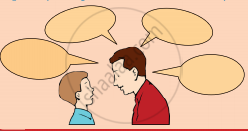
You visit your school after several years. As you cross the banyan tree at the entrance, cheerful memories fi ll your mind. Fill the bubbles with your memories.


Fill in the blanks choosing the words from the box given and complete the summary of the poem.

The casuarina tree is tall and strong, with a creeper winding around it like a (1) ______. The tree stands like a (2) ______with a colourful scarf of flowers. Birds surround the garden and the sweet song of the birds is heard. The poet is delighted to see the casuarina tree through her (3) ______. She sees a grey monkey sitting like a (4) ______on top of the tree, the cows grazing, and the water lilies (5) ______in the pond. The poet feels that the tree is dear to her not for its (6) ______appearance but for the (7) ______memories of her happy childhood that it brings to her. She strongly believes that (8) ______communicates with human beings. The poet could communicate with the tree even when she was in a far-off land as she could hear the tree (9) ______her absence. The poet (10) ______the tree’s memory to her loved ones, who are not alive. She immortalizes the tree through her poem like the poet Wordsworth who (11) ______the yew tree of Borrowdale in verse. She expresses her wish that the tree should be remembered out of love and not just because it cannot be (12) ______.

python statue nature casement
nostalgic lamenting impressive forgotten
giant consecrates springing sanctified

The casuarina tree will be remembered forever. Why?


Read the line given below and answer the question that follow.

A creeper climbs, in whose embraces bound No other tree could live.

  1. Which tree is referred to in the above lines?
  2. How does the tree survive the tight hold of the creeper?
  3. Why does Toru Dutt use the expression ‘a creeper climbs’?

Read the poem once again carefully and identify the figure of speech that has been used in each of the following lines from the poem.

“All the world’s a stage,
And all the men and women merely players;
They have their exits and their entrances;
And one man in his time plays many parts,
His acts being seven ages. At first the infant,

Mewling and puking in the nurse’s arms;
Then the whining school-boy, with his satchel
And shining morning face, creeping like snail
Unwillingly to school. And then the lover,
Sighing like furnace, with a woeful ballad
Made to his mistress’ eyebrow. Then a soldier,
Full of strange oaths, and bearded like the pard,
Jealous in honour, sudden and quick in quarrel,

Seeking the bubble reputation
Even in the cannon’s mouth. And then the justice,
In fair round belly with good capon lin’d,
With eyes severe and beard of formal cut,
Full of wise saws and modern instances;
And so he plays his part. The sixth age shifts
Into the lean and slipper’d pantaloon,

With spectacles on nose and pouch on side;
His youthful hose, well sav’d, a world too wide
For his shrunk shank; and his big manly voice,
Turning again toward childish treble, pipes
And whistles in his sound. Last scene of all,
That ends this strange eventful history,
Is second childishness and mere oblivion;
Sans teeth, sans eyes, sans taste, sans everything.”

  1. “All the world's a stage”
  2. “And all the men and women merely players”
  3. “And shining morning face, creeping like snail”
  4. “Full of strange oaths, and bearded like the pard,”
  5. “Seeking the bubble reputation”
  6. “His youthful hose, well sav’d, a world too wide”
  7. “and his big manly voice, turning again toward childish treble”

Pick out the word in ‘alliteration’ in the following line.

“and all the men and women merely players”


Read the given line and answer the question that follow.

Then the whining school-boy, with his satchel

And shining morning face, creeping like snail

Unwillingly to school.

  1. Which stage of life is being referred to here by the poet?
  2. What are the characteristics of this stage?
  3. How does the boy go to school?
  4. Which figure of speech has been employed in the second line?

Read the given line and answer the question that follow.

Then a soldier,

full of strange oaths, and bearded like the pard,

Jealous in honour, sudden and quick in quarrel,

Seeking the bubble reputation

Even in the cannon's mouth.

  1. What is the soldier ready to do?
  2. Explain ‘bubble reputation’.
  3. What are the distinguishing features of this stage?

Shakespeare has skilfully brought out the parallels between the life of man and actors on stage. Elaborate this statement with reference to the poem.


What could be the possible outcomes of their travel?


Read the set of line from the poem and answer the question that follow.

That ever with a frolic welcome took

The thunder and the sunshine, and opposed

  1. What do ‘thunder’ and ‘sunshine’ refer to?
  2. What do we infer about the attitude of the sailors?

Explain with reference to the context the following line.

I am become a name; For always roaming with a hungry heart


Fill in the blanks choosing the words from the box given and complete the summary of the poem.

Lines 1-25

The poet Carl Sandburg gives a vivid description of a father’s worldly (1)______ in directing a son who is at the threshold of his (2) ______.

Here the father motivates his son to be like a hard(3) ______and withstand life’s (4)______ and sudden betrayals. (5)______is like a fertile soil. We can make our life fruitful if we are gentle, and take life as it comes. At times(6)______ overtakes harshness. The growth of a (7)______can split a rock. One should have a (8) ______and strong will to achieve. Greed for(9)______has left men dead before they really die. Good men also have fallen prey in quest for (10) ______money. Time for (11)______is not a waste. When you seek knowledge never feel ashamed to be called a(12)______for not knowing, at the same time learn from your (13) ______and never (14)______it.

deep desire manhood gentleness mistakes easy
leisure fool life money repeat
tender-flower rock challenges wisdom  

Lines 26-44

Do (15)______often, and do not hesitate to accept your shortcomings, avoid(16) ______to protect self against other people. Solitude helps to be (17)______and(18) ______ are taken in silent rooms. Instead of being one among many, be (19)______, if that is your nature. The son may need lazy days to find his (20)______abilities, to seek what he is born for. He will then know how free imaginations bring (21)______to the world, which (22)______ change. During such resentment, let him know that it is time for him to be on his own, and (23)______to achieve like Shakespeare, the Wright brothers, Pasteur, Pavlov, and Michael Faraday.

changes introspect inherent work resents
white lies creative final decisions different  

Where are the final decisions taken?


Here are a few poetic device used in the poem.

Repetition- It is a figure of speech.


Read the line given below and answer the question that follow.

Tell him time as a stuff can be wasted.

Tell him to be a fool every so often

  1. Why does the poet suggest that time can be wasted?
  2. Identify the figure of speech in the above line.

Where was the narrator when the incident happened?


Who took the city of Ratisbon by storm?


Who came galloping on a horse to Napoleon?


What did the rider do when he reached Napoleon?


Why did Napoleon’s eyes become soft as a mother eagle’s eyes?


Share
Notifications

Englishहिंदीमराठी


      Forgot password?
Use app×