Advertisements
Advertisements
Question
Pick out the lines which convey that his quest for travel is unending.
Advertisements
Solution
“How dull it is to pause, to make an end,
To rust unburnished, not to shine in use!
The lines quoted above convey his quest for travel is unending.
APPEARS IN
RELATED QUESTIONS
Why were the secret galleries bare?
Why did the narrator feel helpless?
They seemed no threat to us at all.
Identify the figure of speech used in the following line.
How can this shameful tale be told?
Identify the figure of speech used in the following line.
Our only enemy was gold,
How does the creeper appear on the tree?
What has Wordsworth sanctified in his poem?
To whom does Toru Dutt want to consecrate the tree’s memory?
Fill in the blanks using the words given in the box to complete the summary of the poem.
Shakespeare considers the whole world a stage where men and women are only (1) ______. They (2)______the stage when they are born and exit when they die. Every man, during his life time, plays seven roles based on age. In the first act, as an infant, he is wholly (3) ______on the mother or a nurse. Later, emerging as a school child, he slings his bag over his shoulder and creeps most (4)______ to school. His next act is that of a lover, busy (5) ______ballads for his beloved and yearns for her (6) ______. In the fourth stage, he is aggressive and ambitious and seeks (7) ______in all that he does. He (8) ______solemnly to guard his country and becomes a soldier. As he grows older, with (9) ______and wisdom, he becomes a fair judge. During this stage, he is firm and (10) ______. In the sixth act, he is seen with loose pantaloons and spectacles. His manly voice changes into a childish (11) ______. The last scene of all is his second childhood. Slowly, he loses his (12) ______of sight, hearing, smell and taste and exits from the roles of his life.
| attention | treble | reluctantly |
| actors | maturity | reputation |
| serious | faculties | composing |
| enter | promises | dependent |
What is the world compared to?
Describe the second stage of life as depicted by Shakespeare.
Explain the following line briefly with reference to the context.
“Jealous in honour, sudden and quick in quarrel,
Seeking the bubble reputation”.“They have their exits and their entrances;
Pick out the word in ‘alliteration’ in the following line.
“and all the men and women merely players”
Pick out the word in ‘alliteration’ in the following line.
“Jealous in honour, sudden and quick in quarrel.”
‘Ulysses is not happy to perform his duties as a king.’ Why?
Identify the figure of speech employed in the following line.
For always roaming with a hungry heart
Identify the figure of speech employed in the following line.
There lies the port the vessel puffs her sail
Explain with reference to the context the following line.
I cannot rest from travel: I will drink Life to the lees:
Explain with reference to the context the following line.
To follow knowledge like a sinking star,
Beyond the utmost bound of human thought.
Explain with reference to the context the following line.
The long day wanes: the slow moon climbs:
the deep Moans round with many voices.
What makes Ulysses seek newer adventures?
What is Ulysses’ clarion call to his sailors? How does he inspire them?
How would the poet’s advice help his son who is at the threshold of the manhood?
Where are the final decisions taken?
Here are a few poetic device used in the poem.
Repetition- It is a figure of speech.
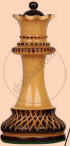
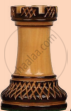
Have you played chess or watched the game carefully?
Now identify the chess pieces and complete the table below. Discuss the role of each piece in the game.
 |
|
 |
|
 |
|
 |
|
 |
|
 |
Where was the narrator when the incident happened?
Who took the city of Ratisbon by storm?
Explain the following line with reference to the context.
To see your flag-bird flap his vans Where I, to heart’s desire, Perched him!’
