Advertisements
Advertisements
Question
Explain the following line briefly with reference to the context.
“They have their exits and their entrances;
And one man in his time plays many parts,”
Advertisements
Solution
- Reference: These lines are from the poem ‘All the world’s a stage’ written by William Shakespeare.
- Context and Explanation: The poet says this while hinting at the beginning and the end of life. The poet divides man’s life into seven stages. The first stage symbolizes birth and the last stage of death. So, he uses the words “entrances and exits”.
APPEARS IN
RELATED QUESTIONS
What thoughts come to your mind when you think about a castle? Add your ideas to the list
moat, huge buildings, soldiers, weapons ______,______.
Did the soldiers fight with the enemies face to face?
Our gates were strong, our walls were thick,
How can this shameful tale be told?
How does the poet spend her winter?
Explain the following line with reference to the context.
It is the tree’s lament, an eerie speech,…
Why is the last stage called second childhood?
Explain the following line briefly with reference to the context.
“Jealous in honour, sudden and quick in quarrel,
Seeking the bubble reputation”.“They have their exits and their entrances;
Pick out the word in ‘alliteration’ in the following line.
“And one man in his time plays many parts”
Pick out the lines which convey that his quest for travel is unending.
Who does the speaker address in the second part?
Explain with reference to the context the following line.
I am become a name; For always roaming with a hungry heart
What is Ulysses’ clarion call to his sailors? How does he inspire them?
What has twisted good men into thwarted worms?
How would his being alone help the boy?
Here are a few poetic device used in the poem.
Transferred Epithet- It is a figure of speech in which an epithet grammatically qualifies a noun other than the person or a thing, it is actually meant to describe.
Read the line given below and answer the question that follow.
Tell him time as a stuff can be wasted.
Tell him to be a fool every so often
- Why does the poet suggest that time can be wasted?
- Identify the figure of speech in the above line.
Read the line given below and answer the question that follow.
Tell him to be a fool ever so often
and to have no shame over having been a fool
yet learning something out of every folly
hoping to repeat none of the cheap follies
- Is it a shame to be a fool at times?
- What does one learn from every folly?
Pick out the alliterated words from the poem and write.
And this might stand him for the storms
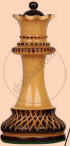
Have you played chess or watched the game carefully?
Now identify the chess pieces and complete the table below. Discuss the role of each piece in the game.
 |
|
 |
|
 |
|
 |
|
 |
|
 |
Who took the city of Ratisbon by storm?
Describe the posture of Napoleon.
What does the phrase ‘full galloping’ suggest?
Literary Devices
Mark the rhyme scheme of the poem. The rhyme scheme for the first stanza is as follows.
| With neck out-thrust, you fancy how, | a |
| Legs wide, arms locked behind, | b |
| As if to balance the prone brow | a |
| Oppressive with its mind. | b |
Read the line given below and answer the question that follow.
A film the mother eagles eye When her bruised eaglet breathes
- Who is compared to the mother eagle in the above lines?
- Explain the comparison.
Explain the following line with reference to the context.
Then off there flung in smiling joy, And held himself erect
