Advertisements
Advertisements
प्रश्न
How safe was the castle? How was it conquered?
Advertisements
उत्तर
The castle was fortified by a deep moat very difficult for an enemy to cross. They had a stockpile of arms. Their captain was brave and the soldiers loyal. They had a huge stock of foodgrains to last any siege of the castle. Allies were ready to pitch in at a short notice. From the turret wall, soldiers were ready to shoot down the enemy at sight. Not a single enemy was spotted all through the summer. The soldiers were relaxed and spent time gazing at the mowers in the distant fields. But the castle’s wicket gate was guarded by an aged greedy gatekeeper. The warder collected gold from the enemy and let the enemies in. Their enemy was gold against which they had no weapon. Their castle fell to the greed of an aged warder.
APPEARS IN
संबंधित प्रश्न
What thoughts come to your mind when you think about a castle? Add your ideas to the list
moat, huge buildings, soldiers, weapons ______,______.
Fill in the following empty boxes.
| Name | Location |
| Fort St. George | Chennai |
| Gingee Fort | ______ |
| Golconda Fort | ______ |
| Red Fort | ______ |
How long had the soldiers been in the castle?
Did the soldiers fight with the enemies face to face?
Why were the secret galleries bare?
Read the given line and answer the question that follow in a line or two.
We could do nothing, being sold.
- Why couldn’t they do anything?
- Why did they feel helpless?
Identify the figure of speech used in the following line.
Our only enemy was gold,
Fill in the blanks choosing the words from the box given and complete the summary of the poem.
The casuarina tree is tall and strong, with a creeper winding around it like a (1) ______. The tree stands like a (2) ______with a colourful scarf of flowers. Birds surround the garden and the sweet song of the birds is heard. The poet is delighted to see the casuarina tree through her (3) ______. She sees a grey monkey sitting like a (4) ______on top of the tree, the cows grazing, and the water lilies (5) ______in the pond. The poet feels that the tree is dear to her not for its (6) ______appearance but for the (7) ______memories of her happy childhood that it brings to her. She strongly believes that (8) ______communicates with human beings. The poet could communicate with the tree even when she was in a far-off land as she could hear the tree (9) ______her absence. The poet (10) ______the tree’s memory to her loved ones, who are not alive. She immortalizes the tree through her poem like the poet Wordsworth who (11) ______the yew tree of Borrowdale in verse. She expresses her wish that the tree should be remembered out of love and not just because it cannot be (12) ______.
| python | statue | nature | casement |
| nostalgic | lamenting | impressive | forgotten |
| giant | consecrates | springing | sanctified |
What has Wordsworth sanctified in his poem?
Identify the figure of speech used in each of the extract given below and write down the answer in the space given below.
“ A creeper climbs, in whose embraces bound
No other tree could live. But gallantly
The giant wears the scarf, and flowers are hung......”
Explain the following line briefly with reference to the context.
“Is second childishness and mere oblivion;
Sans teeth, sans eyes, sans taste, sans everything.”
Read the given line and answer the question that follow.
Then the whining school-boy, with his satchel
And shining morning face, creeping like snail
Unwillingly to school.
- Which stage of life is being referred to here by the poet?
- What are the characteristics of this stage?
- How does the boy go to school?
- Which figure of speech has been employed in the second line?
Complete the table based on your understanding of the poem.
| Stage | Characteristic |
| crying | |
| judge | |
| soldier | |
| unhappy | |
| second childhood | |
| whining | |
| old man |
Shakespeare has skilfully brought out the parallels between the life of man and actors on stage. Elaborate this statement with reference to the poem.
Complete the summary of the poem, choosing words from the list given below. Lines 33 to 42
Ulysses desires to hand over his (1) ______to his son Telemachus, who would fulfil his duties towards his subjects with care and (2) ______. Telemachus possesses patience and has the will to civilise the citizens of Ithaca in a (3) ______way. Ulysses is happy that his son would do his work blamelessly and he would pursue his (4) ______for travel and knowledge.
| prudence, kingdom, quest, tender |
What does he think of the people of his kingdom?
What could be the possible outcomes of their travel?
Read the set of line from the poem and answer the question that follow.
Death closes all: but something ere the end,
Some work of noble note, may yet be done,
Not unbecoming men that strove with Gods.
- The above lines convey the undying spirit of Ulysses. Explain.
- Pick out the words in alliteration in the above lines.
Explain with reference to the context the following line.
He works his work, I mine.
Explain with reference to the context the following line.
To strive, to seek, to find, and not to yield.
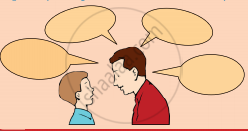
Every parent is anxious about the welfare of his/her children. Parents express their anxiety by advising them almost all the time. What kind of advice do you frequently receive from your parents? Fill in the bubbles. Tick the ones you like to follow implicitly and give reasons for the ones you don’t like to follow.
The poet says
‘Without rich wanting nothing arrives’ but he condemns ‘the quest of lucre beyond a few easy needs.’ Analyse the difference and write.
Here are a few poetic device used in the poem.
Transferred Epithet- It is a figure of speech in which an epithet grammatically qualifies a noun other than the person or a thing, it is actually meant to describe.
Explain the following line with reference to the context.
Yet learning something out of every folly
hoping to repeat none of the cheap follies
Who came galloping on a horse to Napoleon?
When did the narrator find that the boy was badly wounded?
How did the young soldier face his end?
