Advertisements
Advertisements
प्रश्न
When does a man become a judge? How?
Advertisements
उत्तर
In the fifth stage, man grows mature and wise. He becomes an impartial judge. He is firm and serious about his opinions.
APPEARS IN
संबंधित प्रश्न
Why did the narrator feel helpless?
Read the given line and answer the question that follow in a line or two.
We could do nothing, being sold.
- Why couldn’t they do anything?
- Why did they feel helpless?
Our only enemy was gold
Read the poem and complete the table with suitable rhyming words.
All through that summer at ease we lay,
And daily from the turret wall
We watched the mowers in the hay
And the enemy half a mile away
They seemed no threat to us at all.
For what, we thought, had we to fear
With our arms and provender, load on load,
Our towering battlements, tier on tier,
And friendly allies drawing near
On every leafy summer road.
Our gates were strong, our walls were thick,
So smooth and high, no man could win
A foothold there, no clever trick
Could take us dead or quick,
Only a bird could have got in.
What could they offer us for bait?
Our captain was brave and we were true…
There was a little private gate,
A little wicked wicket gate.
The wizened warder let them through.
Oh then our maze of tunneled stone
Grew thin and treacherous as air.
The cause was lost without a groan,
The famous citadel overthrown,
And all its secret galleries bare.
How can this shameful tale be told?
I will maintain until my death
We could do nothing, being sold:
Our only enemy was gold,
And we had no arms to fight it with.
| lay | hay |
Underline the alliterated word in the following line.
The wizened warder let them through.
Identify the figure of speech used in the following line.
A little wicked wicket gate.
Can you call ‘The Castle’ an allegorical poem? Discuss.
Describe the second stage of life as depicted by Shakespeare.
Complete the table based on your understanding of the poem.
| Stage | Characteristic |
| crying | |
| judge | |
| soldier | |
| unhappy | |
| second childhood | |
| whining | |
| old man |
‘Ulysses is not happy to perform his duties as a king.’ Why?
How would Telemachus transform the subjects?
‘He works his work, I mine’ – How is the work distinguished?
Identify the figure of speech employed in the following line.
To follow knowledge like a sinking star.
Read the set of line from the poem and answer the question that follow.
Yet all experience is an arch wherethrough
Gleams that untravelled world, whose margin fades
For ever and for ever when I move
- What is experience compared to?
- How do the lines convey that the experience is endless?
Read the set of line from the poem and answer the question that follow.
……for my purpose holds
To sail beyond the sunset, and the baths
Of all the western stars, until I die.
- What was Ulysses’ purpose in life?
- How long would his venture last?
Explain with reference to the context the following line.
He works his work, I mine.
What is Ulysses’ clarion call to his sailors? How does he inspire them?
Every parent is anxious about the welfare of his/her children. Parents express their anxiety by advising them almost all the time. What kind of advice do you frequently receive from your parents? Fill in the bubbles. Tick the ones you like to follow implicitly and give reasons for the ones you don’t like to follow.
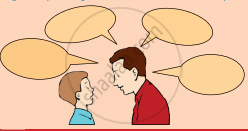
Here are a few poetic device used in the poem.
Repetition- It is a figure of speech.
Explain the following line with reference to the context.
He will be lonely enough
to have time for the work
Explain how the poet guides his son who is at the threshold of manhood, to face the challenges of life.
Fill in the blanks choosing the words from the box given and complete the summary of the poem.
The poet Robert Browning narrates an incident at the French Camp in the war of 1809 between France and Austria, in a (a)______version. He describes the brave action of a (b)______soldier, whose heroic devotion to duty and his (c) ______ in it is inspiring and worthy of (d) ______. During the attack of the French army on Ratisbon, Napoleon was anxious about the (e) ______. Austrians were defending Ratisbon with great (f) ______and courage. Napoleon was watching the war standing on a (g) ______near the battlefield.
All of a sudden a rider appeared from the closed smoke and dust. Riding at great speed, jumping and leaping, he approached the mound where Napoleon stood. As he came closer, the narrator noticed that the rider, a young boy, was severely wounded. But the rider showed no sign of pain and smiling in joy, jumped off the horse and gave the happy news of (h) ______to the emperor.
He exclaimed with pride that the French had (i) ______Ratisbon and he himself had hoisted the flag of France. When Napoleon heard the news, his plans (j) ______up like fire. His eyes (k) ______when he saw that the soldier was severely wounded. Like a caring mother eagle, the emperor asked if he was wounded. The (l) ______soldier replied proudly that he was killed and died heroically.
| determination | result | dramatic |
| pride | admiration | softened |
| wounded | mound | victory |
| conquered | soared | valiant |
Describe the posture of Napoleon.
What does the phrase ‘full galloping’ suggest?
Why was the rider in a hurry?
Why did the rider keep his lips compressed?
Explain the following line with reference to the context.
Then off there flung in smiling joy, And held himself erect
The young soldier matched his emperor in courage and patriotism. Elucidate your answer.
