Advertisements
Advertisements
प्रश्न
Bring out the features of the fourth stage of a man as described by the poet.
Advertisements
उत्तर
In the fourth stage, man becomes aggressive and ambitious and seeks glory in all his pursuits. He is ready to enter the mouth of the cannon for a moment of glory.
APPEARS IN
संबंधित प्रश्न
Have you ever visited a fort or a castle?
Did the soldiers fight with the enemies face to face?
Who had let the enemies in?
Why did the narrator feel helpless?
Bring out the contrasting picture of the castle as depicted in stanzas 3 and 5.
They seemed no threat to us at all.
Read the poem and complete the table with suitable rhyming words.
All through that summer at ease we lay,
And daily from the turret wall
We watched the mowers in the hay
And the enemy half a mile away
They seemed no threat to us at all.
For what, we thought, had we to fear
With our arms and provender, load on load,
Our towering battlements, tier on tier,
And friendly allies drawing near
On every leafy summer road.
Our gates were strong, our walls were thick,
So smooth and high, no man could win
A foothold there, no clever trick
Could take us dead or quick,
Only a bird could have got in.
What could they offer us for bait?
Our captain was brave and we were true…
There was a little private gate,
A little wicked wicket gate.
The wizened warder let them through.
Oh then our maze of tunneled stone
Grew thin and treacherous as air.
The cause was lost without a groan,
The famous citadel overthrown,
And all its secret galleries bare.
How can this shameful tale be told?
I will maintain until my death
We could do nothing, being sold:
Our only enemy was gold,
And we had no arms to fight it with.
| lay | hay |
Underline the alliterated word in the following line.
A little wicked wicket gate.
Identify the figure of speech used in the following line.
Our only enemy was gold,
You visit your school after several years. As you cross the banyan tree at the entrance, cheerful memories fi ll your mind. Fill the bubbles with your memories.

Fill in the blanks choosing the words from the box given and complete the summary of the poem.
The casuarina tree is tall and strong, with a creeper winding around it like a (1) ______. The tree stands like a (2) ______with a colourful scarf of flowers. Birds surround the garden and the sweet song of the birds is heard. The poet is delighted to see the casuarina tree through her (3) ______. She sees a grey monkey sitting like a (4) ______on top of the tree, the cows grazing, and the water lilies (5) ______in the pond. The poet feels that the tree is dear to her not for its (6) ______appearance but for the (7) ______memories of her happy childhood that it brings to her. She strongly believes that (8) ______communicates with human beings. The poet could communicate with the tree even when she was in a far-off land as she could hear the tree (9) ______her absence. The poet (10) ______the tree’s memory to her loved ones, who are not alive. She immortalizes the tree through her poem like the poet Wordsworth who (11) ______the yew tree of Borrowdale in verse. She expresses her wish that the tree should be remembered out of love and not just because it cannot be (12) ______.
| python | statue | nature | casement |
| nostalgic | lamenting | impressive | forgotten |
| giant | consecrates | springing | sanctified |
Does nature communicate with human beings?
What has Wordsworth sanctified in his poem?
Identify the figure of speech used in each of the extract given below and write down the answer in the space given below.
“ A creeper climbs, in whose embraces bound
No other tree could live. But gallantly
The giant wears the scarf, and flowers are hung......”
“And they have their exits and their entrances” - What do the words ‘exits’ and ‘entrances’ mean?
Explain the following line briefly with reference to the context.
“Jealous in honour, sudden and quick in quarrel,
Seeking the bubble reputation”.“They have their exits and their entrances;
Complete the summary of the poem, choosing words from the list given below. Lines 1 to 32
Ulysses is (1) ______to discharge his duties as a (2) ______, as he longs for (3) ______. He is filled with an (4) ______thirst for (5) ______and wishes to live life to the (6) ______. He has travelled far and wide gaining (7) _______ of various places, cultures, men and (8) ______. He recalls with delight his experience at the battle of Troy. Enriched by his (9) ______he longs for more and his quest seems endless. Like metal which would (10) ______if unused, life without adventure is meaningless. According to him living is not merely (11) ______to stay alive. Though old but zestful, Ulysses looks at every hour as a bringer of new things and yearns to follow knowledge even if it is (12)______.
| fullest, unquenchable, unattainable, experience, knowledge, king, matters, rust, adventure, unwilling, travel, breathing |
Pick out the lines which convey that his quest for travel is unending.
Identify the figure of speech employed in the following line.
Thro’ scudding drifts the rainy Hyades Vext the dim sea...
Explain with reference to the context the following line.
I cannot rest from travel: I will drink Life to the lees:
Explain with reference to the context the following line.
How dull it is to pause, to make an end,
To rust unburnished, not to shine in use!
Explain with reference to the context the following line.
We are not now that strength which in old days Moved earth and heaven;
Every parent is anxious about the welfare of his/her children. Parents express their anxiety by advising them almost all the time. What kind of advice do you frequently receive from your parents? Fill in the bubbles. Tick the ones you like to follow implicitly and give reasons for the ones you don’t like to follow.
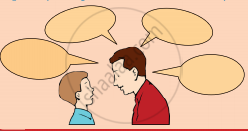
How would the poet’s advice help his son who is at the threshold of the manhood?
How would his being alone help the boy?
Who do you think is the narrator of the poem?
What did the rider do when he reached Napoleon?
Where did the rider plant the French flag after Ratisbon was captured?
Literary Devices
Mark the rhyme scheme of the poem. The rhyme scheme for the first stanza is as follows.
| With neck out-thrust, you fancy how, | a |
| Legs wide, arms locked behind, | b |
| As if to balance the prone brow | a |
| Oppressive with its mind. | b |
Read the line given below and answer the question that follow.
Legs wide, arms locked behind As if to balance the prone brow Oppressive with its mind.
- Whose action is described here?
- What is meant by prone brow?
- What is his state of mind?
