Advertisements
Advertisements
प्रश्न
Explain with reference to the context the following line.
It may be we shall touch the Happy Isles,
And see the great Achilles, whom we knew.
Advertisements
उत्तर
- Reference: These lines are from the poem ‘Ulysses” written by Alfred Tennyson.
- Context and Explanation: The poet says these words through Ulysses as to the probable outcome of the daring voyage at the fag end of his life. Ulysses is uncertain about the probable outcome of his last voyage. But he infers that he might reach ‘Happy Isles’ and see the ‘great Achilles’ who was dipped in the river of life.
APPEARS IN
संबंधित प्रश्न
Have you ever visited a fort or a castle?
Our gates were strong, our walls were thick,
Our captain was brave and we were true
How can this shameful tale be told?
Identify the figure of speech used in the following line.
Oh then our maze of tunneled stone
Can you call ‘The Castle’ an allegorical poem? Discuss.
What is the creeper compared to?
Name the bird that sings in the poet’s garden.
Explain the following line with reference to the context.
Unto thy honor, Tree, beloved of those
Who now in blessed sleep for aye repose,
“And they have their exits and their entrances” - What do the words ‘exits’ and ‘entrances’ mean?
Pick out the word in ‘alliteration’ in the following line.
“and all the men and women merely players”
Pick out the word in ‘alliteration’ in the following line.
“And one man in his time plays many parts”
Read the given line and answer the question that follow.
Then the whining school-boy, with his satchel
And shining morning face, creeping like snail
Unwillingly to school.
- Which stage of life is being referred to here by the poet?
- What are the characteristics of this stage?
- How does the boy go to school?
- Which figure of speech has been employed in the second line?
Read the given line and answer the question that follow.
And then the justice,
In fair round belly with good capon lin'd,
With eyes severe and beard of formal cut,
Full of wise saws and modern instances;
- Whom does justice refer to?
- Describe his appearance.
- How does he behave with the people around him?
- What does he do to show his wisdom?
Shakespeare has skilfully brought out the parallels between the life of man and actors on stage. Elaborate this statement with reference to the poem.
Complete the summary of the poem, choosing words from the list given below. Lines 1 to 32
Ulysses is (1) ______to discharge his duties as a (2) ______, as he longs for (3) ______. He is filled with an (4) ______thirst for (5) ______and wishes to live life to the (6) ______. He has travelled far and wide gaining (7) _______ of various places, cultures, men and (8) ______. He recalls with delight his experience at the battle of Troy. Enriched by his (9) ______he longs for more and his quest seems endless. Like metal which would (10) ______if unused, life without adventure is meaningless. According to him living is not merely (11) ______to stay alive. Though old but zestful, Ulysses looks at every hour as a bringer of new things and yearns to follow knowledge even if it is (12)______.
| fullest, unquenchable, unattainable, experience, knowledge, king, matters, rust, adventure, unwilling, travel, breathing |
‘As tho’ to breathe were life!’ – From the given line what do you understand of Ulysses’ attitude to life?
How would Telemachus transform the subjects?
What could be the possible outcomes of their travel?
Read the set of line from the poem and answer the question that follow.
Little remains: but every hour is saved
From that eternal silence, something more,
A bringer of new things; and vile it were
- How is every hour important to Ulysses?
- What does the term ‘Little remains’ convey?
Read the set of line from the poem and answer the question that follow.
This is my son, mine own Telemachus,
To whom I leave the sceptre and the isle Well-loved of me,
- Who does Ulysses entrust his kingdom to, in his absence?
- Bring out the significance of the ‘sceptre’.
Explain with reference to the context the following line.
He works his work, I mine.
What is Ulysses’ clarion call to his sailors? How does he inspire them?
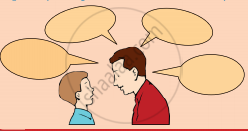
Every parent is anxious about the welfare of his/her children. Parents express their anxiety by advising them almost all the time. What kind of advice do you frequently receive from your parents? Fill in the bubbles. Tick the ones you like to follow implicitly and give reasons for the ones you don’t like to follow.
‘A tough will counts.’ Explain.
Why does the poet advise his son to have lazy days?
Explain the following line with reference to the context.
Brutes have been gentled where lashes failed.
Who came galloping on a horse to Napoleon?
Read the line given below and answer the question that follow.
‘You’re wounded!’ ‘Nay’, his soldier’s pride Touched to the quick, he said:
- Why did the boy contradict Napoleon’s words?
- Why was his pride touched?
The young soldier matched his emperor in courage and patriotism. Elucidate your answer.
