Advertisements
Advertisements
प्रश्न
How did the enemies enter the castle?
Advertisements
उत्तर
The enemies bribed the warder with gold coins. He opened the wicket gate and the castle was captured without bloodshed and fight.
APPEARS IN
संबंधित प्रश्न
Where were the enemies?
Did the soldiers fight with the enemies face to face?
Why did the narrator feel helpless?
Read the given line and answer the question that follow in a line or two.
| Oh then our maze of tunneled stone Grew thin and treacherous as air. The castle was lost without a groan, The famous citadel overthrown, |
- Bring out the contrast in the first two lines.
- What is the rhyme scheme of the given stanza?
I will maintain until my death
Our only enemy was gold
Underline the alliterated word in the following line.
A little wicked wicket gate.
Identify the figure of speech used in the following line.
A little wicked wicket gate.
Identify the figure of speech used in the following line.
How can this shameful tale be told?
You visit your school after several years. As you cross the banyan tree at the entrance, cheerful memories fi ll your mind. Fill the bubbles with your memories.

Why is the casuarina tree dear to poet’s heart?
Name the bird that sings in the poet’s garden.
Discuss with your partner the different stages in the growth of man from a new born to an adult

How does a man play a lover’s role?
Explain the following line briefly with reference to the context.
“Is second childishness and mere oblivion;
Sans teeth, sans eyes, sans taste, sans everything.”
Shakespeare has skilfully brought out the parallels between the life of man and actors on stage. Elaborate this statement with reference to the poem.
‘Ulysses is not happy to perform his duties as a king.’ Why?
What could be the possible outcomes of their travel?
Read the set of line from the poem and answer the question that follow.
That ever with a frolic welcome took
The thunder and the sunshine, and opposed
- What do ‘thunder’ and ‘sunshine’ refer to?
- What do we infer about the attitude of the sailors?
Explain with reference to the context the following line.
I am become a name; For always roaming with a hungry heart
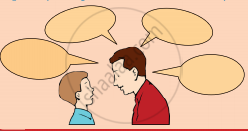
Every parent is anxious about the welfare of his/her children. Parents express their anxiety by advising them almost all the time. What kind of advice do you frequently receive from your parents? Fill in the bubbles. Tick the ones you like to follow implicitly and give reasons for the ones you don’t like to follow.
What happened to the people who wanted too much money?
Read the line given below and answer the question that follow.
Tell him time as a stuff can be wasted.
Tell him to be a fool every so often
- Why does the poet suggest that time can be wasted?
- Identify the figure of speech in the above line.
Explain how the poet guides his son who is at the threshold of manhood, to face the challenges of life.
Who came galloping on a horse to Napoleon?
When did the narrator find that the boy was badly wounded?
Literary Devices
Mark the rhyme scheme of the poem. The rhyme scheme for the first stanza is as follows.
| With neck out-thrust, you fancy how, | a |
| Legs wide, arms locked behind, | b |
| As if to balance the prone brow | a |
| Oppressive with its mind. | b |
Read the line given below and answer the question that follow.
Legs wide, arms locked behind As if to balance the prone brow Oppressive with its mind.
- Whose action is described here?
- What is meant by prone brow?
- What is his state of mind?
