Advertisements
Advertisements
प्रश्न
Read the set of line from the poem and answer the question that follow.
That ever with a frolic welcome took
The thunder and the sunshine, and opposed
- What do ‘thunder’ and ‘sunshine’ refer to?
- What do we infer about the attitude of the sailors?
Advertisements
उत्तर
- Thunder and sunshine refer to misfortunes and happy days. Ulysses and his comrades had undergone both kinds of experiences.
- The sailors shared the undying quest for exploration, adventure and for seeking newer knowledge in the untravelled world. They even welcomed dangers in fighting with Gods. They enjoyed the thrill of action and never worried about the outcome of battles or quests. They have an equal temper of heroic hearts.
APPEARS IN
संबंधित प्रश्न
What thoughts come to your mind when you think about a castle? Add your ideas to the list
moat, huge buildings, soldiers, weapons ______,______.
How long had the soldiers been in the castle?
What was the ‘shameful act’?
Read the poem again and complete the summary using the words given in box.
Stanzas 1–3
‘The Castle’ by Edwin Muir is a moving poem on the (1)______ of a well guarded (2)______ The soldiers of the castle were totally stress-free and relaxed. They were (3)______ of their castle’s physical strength. Through the turrets they were able to watch the mowers and no enemy was found up to the distance of (4)______ and so they seemed no threat to the castle. They had (5)______ of weapons to protect them and a large quantity of (6)______ in stock to take care of the well-being of the soldiers inside the castle. The soldiers stood one above the other on the towering battlements (7)______ to shoot the enemy at sight. They believed that the castle was absolutely safe because their captain was (8)______ and the soldiers were loyal.
| half-a-mile | watching |
| castle | brave |
| ration | capture |
| plenty | confident |
Stanzas 4–6
Even by a trick no one but the birds could enter. The enemy could not use a (9)______ for their entry inside the castle. But there was a wicket gate guarded by a (10) ______ He (11)______ in the enemies inside the famous citadel that had been known for its secret gallery and intricate path. The strong castle became(12)______ and thin because of the greedy disloyal warder. The (13)______ was captured by the enemies for (14)______ The narrator (15)______ over the (16)______ of the useless warder and also decided not to disclose this (17)______ story to anyone. He was (18)______ and wondered how he would keep this truth to himself. He regretted not finding any (19)______ to fight with the (20)______ called ‘gold’.
| lamented | shameful |
| wicked guard | bait |
| let | gold |
| weapon | citadel |
| weak | disloyalty |
| helpless | enemy |
How safe was the castle? How was it conquered?
Identify the figure of speech used in the following line.
Oh then our maze of tunneled stone
Fill in the blanks choosing the words from the box given and complete the summary of the poem.
The casuarina tree is tall and strong, with a creeper winding around it like a (1) ______. The tree stands like a (2) ______with a colourful scarf of flowers. Birds surround the garden and the sweet song of the birds is heard. The poet is delighted to see the casuarina tree through her (3) ______. She sees a grey monkey sitting like a (4) ______on top of the tree, the cows grazing, and the water lilies (5) ______in the pond. The poet feels that the tree is dear to her not for its (6) ______appearance but for the (7) ______memories of her happy childhood that it brings to her. She strongly believes that (8) ______communicates with human beings. The poet could communicate with the tree even when she was in a far-off land as she could hear the tree (9) ______her absence. The poet (10) ______the tree’s memory to her loved ones, who are not alive. She immortalizes the tree through her poem like the poet Wordsworth who (11) ______the yew tree of Borrowdale in verse. She expresses her wish that the tree should be remembered out of love and not just because it cannot be (12) ______.
| python | statue | nature | casement |
| nostalgic | lamenting | impressive | forgotten |
| giant | consecrates | springing | sanctified |
The casuarina tree will be remembered forever. Why?
Identify the figure of speech used in each of the extract given below and write down the answer in the space given below.
“ What is that dirge-like murmur that I hear Like the sea breaking on a shingle -beach?
How does a man play a lover’s role?
Bring out the features of the fourth stage of a man as described by the poet.
Complete the table based on your understanding of the poem.
| Stage | Characteristic |
| crying | |
| judge | |
| soldier | |
| unhappy | |
| second childhood | |
| whining | |
| old man |
What does he think of the people of his kingdom?
Pick out the lines which convey that his quest for travel is unending.
How would Telemachus transform the subjects?
‘He works his work, I mine’ – How is the work distinguished?
In what ways were Ulysses and his mariners alike?
Read the set of line from the poem and answer the question that follow.
……for my purpose holds
To sail beyond the sunset, and the baths
Of all the western stars, until I die.
- What was Ulysses’ purpose in life?
- How long would his venture last?
Explain with reference to the context the following line.
To follow knowledge like a sinking star,
Beyond the utmost bound of human thought.
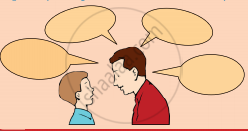
Every parent is anxious about the welfare of his/her children. Parents express their anxiety by advising them almost all the time. What kind of advice do you frequently receive from your parents? Fill in the bubbles. Tick the ones you like to follow implicitly and give reasons for the ones you don’t like to follow.
What has twisted good men into thwarted worms?
Read the line given below and answer the question that follow.
..........Free imaginations
Bringing changes into a world resenting change.
- How does free imagination help the world?
- Identify the figure of speech.
What does the phrase ‘full galloping’ suggest?
What did the rider do when he reached Napoleon?
When did the narrator find that the boy was badly wounded?
Read the line given below and answer the question that follow.
Legs wide, arms locked behind As if to balance the prone brow Oppressive with its mind.
- Whose action is described here?
- What is meant by prone brow?
- What is his state of mind?
The young soldier matched his emperor in courage and patriotism. Elucidate your answer.
Napoleon was a great source of inspiration to his army. Justify.
