Advertisements
Advertisements
प्रश्न
Who had let the enemies in?
Advertisements
उत्तर
The aged greedy wicket gatekeeper had let the enemy in.
APPEARS IN
संबंधित प्रश्न
Why were the soldiers in the castle fearless?
Why does the narrator say that the enemy was no threat at all?
Did the soldiers fight with the enemies face to face?
Why were the secret galleries bare?
What was the ‘shameful act’?
Bring out the contrasting picture of the castle as depicted in stanzas 3 and 5.
Read the given line and answer the question that follow in a line or two.
| Oh then our maze of tunneled stone Grew thin and treacherous as air. The castle was lost without a groan, The famous citadel overthrown, |
- Bring out the contrast in the first two lines.
- What is the rhyme scheme of the given stanza?
Read the given line and answer the question that follow in a line or two.
We could do nothing, being sold.
- Why couldn’t they do anything?
- Why did they feel helpless?
Underline the alliterated word in the following line.
With our arms and provender, load on load.
What has Wordsworth sanctified in his poem?
Which stage of man’s life is associated with the ‘shrunk shank’?
Complete the table based on your understanding of the poem.
| Stage | Characteristic |
| crying | |
| judge | |
| soldier | |
| unhappy | |
| second childhood | |
| whining | |
| old man |
Complete the summary of the poem, choosing words from the list given below. Lines 33 to 42
Ulysses desires to hand over his (1) ______to his son Telemachus, who would fulfil his duties towards his subjects with care and (2) ______. Telemachus possesses patience and has the will to civilise the citizens of Ithaca in a (3) ______way. Ulysses is happy that his son would do his work blamelessly and he would pursue his (4) ______for travel and knowledge.
| prudence, kingdom, quest, tender |
Pick out the lines which convey that his quest for travel is unending.
‘As tho’ to breathe were life!’ – From the given line what do you understand of Ulysses’ attitude to life?
Why did Ulysses want to hand over the kingdom to his son?
Read the set of line from the poem and answer the question that follow.
Little remains: but every hour is saved
From that eternal silence, something more,
A bringer of new things; and vile it were
- How is every hour important to Ulysses?
- What does the term ‘Little remains’ convey?
Explain with reference to the context the following line.
He works his work, I mine.
How would his being alone help the boy?
Read the line given below and answer the question that follow.
Tell him to be a fool ever so often
and to have no shame over having been a fool
yet learning something out of every folly
hoping to repeat none of the cheap follies
- Is it a shame to be a fool at times?
- What does one learn from every folly?
Explain the following line with reference to the context.
Brutes have been gentled where lashes failed.
How according to the poet is it possible for his son to bring changes into a world that resents change?
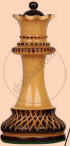
Have you played chess or watched the game carefully?
Now identify the chess pieces and complete the table below. Discuss the role of each piece in the game.
 |
|
 |
|
 |
|
 |
|
 |
|
 |
Who do you think is the narrator of the poem?
How did the young soldier face his end?
Explain the following line with reference to the context.
‘I’m killed, Sire!’ And, his Chief beside, Smiling, the boy fell dead.
The young soldier matched his emperor in courage and patriotism. Elucidate your answer.
Napoleon was a great source of inspiration to his army. Justify.
