Advertisements
Advertisements
प्रश्न
Read the line given below and answer the question that follow.
Legs wide, arms locked behind As if to balance the prone brow Oppressive with its mind.
- Whose action is described here?
- What is meant by prone brow?
- What is his state of mind?
Advertisements
उत्तर
- Napoleon’s action is described here.
- The phrase ‘prone brow’ means eyebrow inclined downward.
- His state of mind is filled with anxiety and his eagerness hasted.
APPEARS IN
संबंधित प्रश्न
How long had the soldiers been in the castle?
Who had let the enemies in?
How did the enemies enter the castle?
Why were the secret galleries bare?
Who was the real enemy?
How safe was the castle? How was it conquered?
Identify the figure of speech used in the following line.
Grew thin and treacherous as air.
Identify the figure of speech used in each of the extract given below and write down the answer in the space given below.
“ A creeper climbs, in whose embraces bound
No other tree could live. But gallantly
The giant wears the scarf, and flowers are hung......”
Identify the figure of speech used in each of the extract given below and write down the answer in the space given below.
“ What is that dirge-like murmur that I hear Like the sea breaking on a shingle -beach?
How does a man play a lover’s role?
When does a man become a judge? How?
Introduction
The poem ‘Ulysses’ is a dramatic monologue that contains 70 lines of blank verse. Ulysses, the King of Ithaca, gathers his men together to prepare for the journey and exhorts them not to waste their time left on earth. Ulysses has grown old, having experienced many adventures at the battle of Troy and in the seas. After returning to Ithaca, he desires to embark upon his next voyage. His inquisitive spirit is always looking forward to more and more of such adventures.
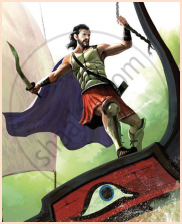
‘Ulysses is not happy to perform his duties as a king.’ Why?
What does he think of the people of his kingdom?
Identify the figure of speech employed in the following line.
And drunk delight of battle with my peers;
Identify the figure of speech employed in the following line.
There lies the port the vessel puffs her sail
Read the set of line from the poem and answer the question that follow.
Little remains: but every hour is saved
From that eternal silence, something more,
A bringer of new things; and vile it were
- How is every hour important to Ulysses?
- What does the term ‘Little remains’ convey?
Read the set of line from the poem and answer the question that follow.
One equal temper of heroic hearts,
Made weak by time and fate, but strong in will
To strive, to seek, to find, and not to yield.
- Though made weak by time and fate, the hearts are heroic. Explain.
- Pick out the words in alliteration in the above lines.
‘A tough will counts.’ Explain.
What happened to the people who wanted too much money?
Here are a few poetic device used in the poem.
Transferred Epithet- It is a figure of speech in which an epithet grammatically qualifies a noun other than the person or a thing, it is actually meant to describe.
Here are a few poetic device used in the poem.
Repetition- It is a figure of speech.
Read the line given below and answer the question that follow.
Tell him solitude is creative if he is strong and the final decisions are made in silent rooms.
- Can being in solitude help a strong human being? How?
- Identify the figure of speech in the above line.
Explain the following line with reference to the context.
and guide him among sudden betrayals
and tighten him for slack moments.
Explain how the poet guides his son who is at the threshold of manhood, to face the challenges of life.
Who do you think is the narrator of the poem?
What was Napoleon’s reaction on hearing the news of victory?
What is the role of the young soldier in the victory of the French at Ratisbon?
