Advertisements
Advertisements
प्रश्न
‘A tough will counts.’ Explain.
Advertisements
उत्तर
In life, everybody may face a tough situation that is surrounded by obstacles. But we should not give up our try to achieve our goal or success. One should have a deep desire and strong willpower to achieve it.
APPEARS IN
संबंधित प्रश्न
Why were the soldiers in the castle fearless?
Where were the enemies?
How did the enemies enter the castle?
Bring out the contrasting picture of the castle as depicted in stanzas 3 and 5.
Fill in the blanks choosing the words from the box given and complete the summary of the poem.
The casuarina tree is tall and strong, with a creeper winding around it like a (1) ______. The tree stands like a (2) ______with a colourful scarf of flowers. Birds surround the garden and the sweet song of the birds is heard. The poet is delighted to see the casuarina tree through her (3) ______. She sees a grey monkey sitting like a (4) ______on top of the tree, the cows grazing, and the water lilies (5) ______in the pond. The poet feels that the tree is dear to her not for its (6) ______appearance but for the (7) ______memories of her happy childhood that it brings to her. She strongly believes that (8) ______communicates with human beings. The poet could communicate with the tree even when she was in a far-off land as she could hear the tree (9) ______her absence. The poet (10) ______the tree’s memory to her loved ones, who are not alive. She immortalizes the tree through her poem like the poet Wordsworth who (11) ______the yew tree of Borrowdale in verse. She expresses her wish that the tree should be remembered out of love and not just because it cannot be (12) ______.
| python | statue | nature | casement |
| nostalgic | lamenting | impressive | forgotten |
| giant | consecrates | springing | sanctified |
What is the creeper compared to?
How does the creeper appear on the tree?
Why is the casuarina tree dear to poet’s heart?
Read the line given below and answer the question that follow.
A creeper climbs, in whose embraces bound No other tree could live.
- Which tree is referred to in the above lines?
- How does the tree survive the tight hold of the creeper?
- Why does Toru Dutt use the expression ‘a creeper climbs’?
Explain the following line with reference to the context.
Unto thy honor, Tree, beloved of those
Who now in blessed sleep for aye repose,
Identify the figure of speech used in each of the extract given below and write down the answer in the space given below.
“ What is that dirge-like murmur that I hear Like the sea breaking on a shingle -beach?
Describe the second stage of life as depicted by Shakespeare.
Bring out the features of the fourth stage of a man as described by the poet.
Which stage of man’s life is associated with the ‘shrunk shank’?
Introduction
The poem ‘Ulysses’ is a dramatic monologue that contains 70 lines of blank verse. Ulysses, the King of Ithaca, gathers his men together to prepare for the journey and exhorts them not to waste their time left on earth. Ulysses has grown old, having experienced many adventures at the battle of Troy and in the seas. After returning to Ithaca, he desires to embark upon his next voyage. His inquisitive spirit is always looking forward to more and more of such adventures.
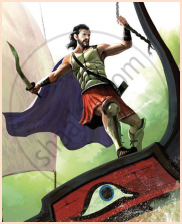
‘As tho’ to breathe were life!’ – From the given line what do you understand of Ulysses’ attitude to life?
What does Ulysses yearn for?
Why did Ulysses want to hand over the kingdom to his son?
How would Telemachus transform the subjects?
Read the set of line from the poem and answer the question that follow.
……for my purpose holds
To sail beyond the sunset, and the baths
Of all the western stars, until I die.
- What was Ulysses’ purpose in life?
- How long would his venture last?
Read the set of line from the poem and answer the question that follow.
One equal temper of heroic hearts,
Made weak by time and fate, but strong in will
To strive, to seek, to find, and not to yield.
- Though made weak by time and fate, the hearts are heroic. Explain.
- Pick out the words in alliteration in the above lines.
Explain with reference to the context the following line.
We are not now that strength which in old days Moved earth and heaven;
Explain with reference to the context the following line.
To strive, to seek, to find, and not to yield.
How would the poet’s advice help his son who is at the threshold of the manhood?
What are the poet’s thoughts on ‘being different’?
How according to the poet is it possible for his son to bring changes into a world that resents change?
Describe the posture of Napoleon.
Where did the rider plant the French flag after Ratisbon was captured?
What was Napoleon’s reaction on hearing the news of victory?
