Advertisements
Advertisements
प्रश्न
Who does the speaker address in the second part?
Advertisements
उत्तर
The speaker addresses the readers in the second part explaining the difference between his roles and that of Telemachus.
APPEARS IN
संबंधित प्रश्न
What thoughts come to your mind when you think about a castle? Add your ideas to the list
moat, huge buildings, soldiers, weapons ______,______.
Fill in the following empty boxes.
| Name | Location |
| Fort St. George | Chennai |
| Gingee Fort | ______ |
| Golconda Fort | ______ |
| Red Fort | ______ |
Where were the enemies?
Why did the narrator feel helpless?
Human greed led to the mighty fall of the citadel. Explain.
How does the creeper appear on the tree?
Explain the following line with reference to the context.
Dear is the Casuarina to my soul;
Identify the figure of speech used in each of the extract given below and write down the answer in the space given below.
“ What is that dirge-like murmur that I hear Like the sea breaking on a shingle -beach?
What is the first stage of a human’s life?
When does a man become a judge? How?
Why is the last stage called second childhood?
Explain the following line briefly with reference to the context.
“Is second childishness and mere oblivion;
Sans teeth, sans eyes, sans taste, sans everything.”
Pick out the word in ‘alliteration’ in the following line.
“and all the men and women merely players”
Read the given line and answer the question that follow.
Then the whining school-boy, with his satchel
And shining morning face, creeping like snail
Unwillingly to school.
- Which stage of life is being referred to here by the poet?
- What are the characteristics of this stage?
- How does the boy go to school?
- Which figure of speech has been employed in the second line?
Complete the table based on your understanding of the poem.
| Stage | Characteristic |
| crying | |
| judge | |
| soldier | |
| unhappy | |
| second childhood | |
| whining | |
| old man |
Pick out the lines which convey that his quest for travel is unending.
In what ways were Ulysses and his mariners alike?
Identify the figure of speech employed in the following line.
For always roaming with a hungry heart
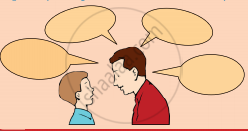
Every parent is anxious about the welfare of his/her children. Parents express their anxiety by advising them almost all the time. What kind of advice do you frequently receive from your parents? Fill in the bubbles. Tick the ones you like to follow implicitly and give reasons for the ones you don’t like to follow.
Why does the poet advise his son to have lazy days?
Read the line given below and answer the question that follow.
Tell him to be a fool ever so often
and to have no shame over having been a fool
yet learning something out of every folly
hoping to repeat none of the cheap follies
- Is it a shame to be a fool at times?
- What does one learn from every folly?
Pick out the alliterated words from the poem and write.
And this might stand him for the storms
Explain the following line with reference to the context.
Yet learning something out of every folly
hoping to repeat none of the cheap follies
Where was the narrator when the incident happened?
Why did the rider keep his lips compressed?
What was Napoleon’s reaction on hearing the news of victory?
Why did Napoleon’s eyes become soft as a mother eagle’s eyes?
