Advertisements
Advertisements
प्रश्न
Identify the figure of speech used in each of the extract given below and write down the answer in the space given below.
“ What is that dirge-like murmur that I hear Like the sea breaking on a shingle -beach?
Advertisements
उत्तर
Simile
APPEARS IN
संबंधित प्रश्न
Why were the secret galleries bare?
Who was the real enemy?
How safe was the castle? How was it conquered?
Underline the alliterated word in the following line.
The wizened warder let them through.
Does nature communicate with human beings?
Read the line given below and answer the question that follow.
The giant wears the scarf, and flowers are hung
In crimson clusters all the bough among!
- Who is the giant here?
- Why is the scarf colourful?
Identify the figure of speech used in each of the extract given below and write down the answer in the space given below.
“ LIKE a huge Python, winding round and round
The rugged trunk indented deep with scars”,
Identify the figure of speech used in each of the extract given below and write down the answer in the space given below.
“A gray baboon sits statue-like alone’’
Identify the figure of speech used in each of the extract given below and write down the answer in the space given below.
“The water-lilies spring, like snow enmassed.”
What is the first stage of a human’s life?
Describe the second stage of life as depicted by Shakespeare.
Bring out the features of the fourth stage of a man as described by the poet.
Introduction
The poem ‘Ulysses’ is a dramatic monologue that contains 70 lines of blank verse. Ulysses, the King of Ithaca, gathers his men together to prepare for the journey and exhorts them not to waste their time left on earth. Ulysses has grown old, having experienced many adventures at the battle of Troy and in the seas. After returning to Ithaca, he desires to embark upon his next voyage. His inquisitive spirit is always looking forward to more and more of such adventures.
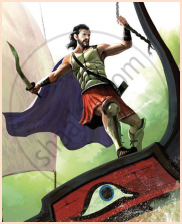
Pick out the lines which convey that his quest for travel is unending.
What does Ulysses yearn for?
Identify the figure of speech employed in the following line.
And drunk delight of battle with my peers;
Read the set of line from the poem and answer the question that follow.
Little remains: but every hour is saved
From that eternal silence, something more,
A bringer of new things; and vile it were
- How is every hour important to Ulysses?
- What does the term ‘Little remains’ convey?
Read the set of line from the poem and answer the question that follow.
This is my son, mine own Telemachus,
To whom I leave the sceptre and the isle Well-loved of me,
- Who does Ulysses entrust his kingdom to, in his absence?
- Bring out the significance of the ‘sceptre’.
Read the set of line from the poem and answer the question that follow.
……for my purpose holds
To sail beyond the sunset, and the baths
Of all the western stars, until I die.
- What was Ulysses’ purpose in life?
- How long would his venture last?
Explain with reference to the context the following line.
To strive, to seek, to find, and not to yield.
What are the poet’s thoughts on ‘being different’?
Read the line given below and answer the question that follow.
“Life is hard; be steel; be a rock.”
- How should one face life?
- Identify the figure of speech in the above line.
Read the line given below and answer the question that follow.
..........Free imaginations
Bringing changes into a world resenting change.
- How does free imagination help the world?
- Identify the figure of speech.
Pick out the alliterated words from the poem and write.
And this might stand him for the storms
Explain the following line with reference to the context.
Brutes have been gentled where lashes failed.
Who took the city of Ratisbon by storm?
Describe the posture of Napoleon.
Where did the rider plant the French flag after Ratisbon was captured?
Read the line given below and answer the question that follow.
Legs wide, arms locked behind As if to balance the prone brow Oppressive with its mind.
- Whose action is described here?
- What is meant by prone brow?
- What is his state of mind?
