Advertisements
Advertisements
प्रश्न
Our gates were strong, our walls were thick,
Advertisements
उत्तर
- Reference: This line is from Edwin Muir’s poem “The Castle”.
- Context and Explanation: The poet says these words while flaunting the invincibility of their strong castle. They could watch the movement of enemies from the turret wall and shoot down the enemy at a distance of half a kilometer. They had a stockpile of arms. Their granary was full to sustain the people in the event of a siege. Only a bird could have got into the castle. So, the enemies did not seem to be a threat at all to the soldiers.
APPEARS IN
संबंधित प्रश्न
How long had the soldiers been in the castle?
Why did the narrator feel helpless?
Read the given line and answer the question that follow in a line or two.
All through the summer at ease we lay,
And daily from the turret wall
We watched the mowers in the hay
- Who does ‘we’ refer to?
- How did the soldiers spend the summer days?
- What could they watch from the turret wall?
Read the given line and answer the question that follow in a line or two.
We could do nothing, being sold.
- Why couldn’t they do anything?
- Why did they feel helpless?
What has Wordsworth sanctified in his poem?
Read the line given below and answer the question that follow.
The giant wears the scarf, and flowers are hung
In crimson clusters all the bough among!
- Who is the giant here?
- Why is the scarf colourful?
Read the line given below and answer the question that follow.
“Fear, trembling Hope, and Death, the skeleton,
And Time the shadow”, and though weak the verse
That would thy beauty fain, oh, fain rehearse,
May Love defend thee from oblivion’s curse.
- What does the poet mean by the expression ‘May love defend thee from oblivion’s curse?’
- What does the expression ‘fain’ convey?
- What does the poet convey through the expression ‘Fear, trembling Hope’?
Identify the figure of speech used in each of the extract given below and write down the answer in the space given below.
“A gray baboon sits statue-like alone’’
What is the world compared to?
Shakespeare has skilfully brought out the parallels between the life of man and actors on stage. Elaborate this statement with reference to the poem.
Complete the summary of the poem, choosing words from the list given below. Lines 33 to 42
Ulysses desires to hand over his (1) ______to his son Telemachus, who would fulfil his duties towards his subjects with care and (2) ______. Telemachus possesses patience and has the will to civilise the citizens of Ithaca in a (3) ______way. Ulysses is happy that his son would do his work blamelessly and he would pursue his (4) ______for travel and knowledge.
| prudence, kingdom, quest, tender |
Complete the summary of the poem, choosing words from the list given below. Lines 44 to 70
Ulysses beckons his sailors to (1) ______at the port where the ship is ready to sail. His companions who have faced both (2) ______and sunshine with a smile, are united by their undying spirit of adventure. Though death would end everything, Ulysses urges his companions to join him and sail beyond the sunset and seek a newer (3) ______, regardless of consequences. These brave hearts who had once moved (4) ______ and earth, may have grown old and weak physically but their spirit is young and (5) ______. His call is an inspiration for all those who seek true knowledge and strive to lead (6) ______ lives.
| world, thunder, meaningful, gather, undaunted, heaven |
Pick out the lines which convey that his quest for travel is unending.
‘He works his work, I mine’ – How is the work distinguished?
In what ways were Ulysses and his mariners alike?
What could be the possible outcomes of their travel?
Identify the figure of speech employed in the following line.
For always roaming with a hungry heart
Read the set of line from the poem and answer the question that follow.
… I mete and dole
Unequal laws unto a savage race,
That hoard, and sleep, and feed, and
know not me.
- What does Ulysses do?
- Did he enjoy what he was doing? Give reasons.
Explain with reference to the context the following line.
He works his work, I mine.
Explain with reference to the context the following line.
It may be we shall touch the Happy Isles,
And see the great Achilles, whom we knew.
Every parent is anxious about the welfare of his/her children. Parents express their anxiety by advising them almost all the time. What kind of advice do you frequently receive from your parents? Fill in the bubbles. Tick the ones you like to follow implicitly and give reasons for the ones you don’t like to follow.
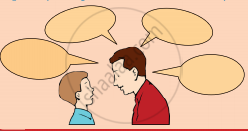
How would the poet’s advice help his son who is at the threshold of the manhood?
What are the poet’s thoughts on ‘being different’?
Read the line given below and answer the question that follow.
Tell him to be a fool ever so often
and to have no shame over having been a fool
yet learning something out of every folly
hoping to repeat none of the cheap follies
- Is it a shame to be a fool at times?
- What does one learn from every folly?
Explain the following line with reference to the context.
and guide him among sudden betrayals
and tighten him for slack moments.
Who took the city of Ratisbon by storm?
Describe the posture of Napoleon.
Who came galloping on a horse to Napoleon?
Explain the following line with reference to the context.
To see your flag-bird flap his vans Where I, to heart’s desire, Perched him!’
