Advertisements
Advertisements
प्रश्न
How long had the soldiers been in the castle?
Advertisements
उत्तर
The soldiers had been in the castle all through the summer.
APPEARS IN
संबंधित प्रश्न
Where were the enemies?
Why does the narrator say that the enemy was no threat at all?
Why were the secret galleries bare?
Who was the real enemy?
Read the given line and answer the question that follow in a line or two.
All through the summer at ease we lay,
And daily from the turret wall
We watched the mowers in the hay
- Who does ‘we’ refer to?
- How did the soldiers spend the summer days?
- What could they watch from the turret wall?
I will maintain until my death
Underline the alliterated word in the following line.
The wizened warder let them through.
You visit your school after several years. As you cross the banyan tree at the entrance, cheerful memories fi ll your mind. Fill the bubbles with your memories.

Name the bird that sings in the poet’s garden.
Read the line given below and answer the question that follow.
“Fear, trembling Hope, and Death, the skeleton,
And Time the shadow”, and though weak the verse
That would thy beauty fain, oh, fain rehearse,
May Love defend thee from oblivion’s curse.
- What does the poet mean by the expression ‘May love defend thee from oblivion’s curse?’
- What does the expression ‘fain’ convey?
- What does the poet convey through the expression ‘Fear, trembling Hope’?
Explain the following line with reference to the context.
Unto thy honor, Tree, beloved of those
Who now in blessed sleep for aye repose,
Identify the figure of speech used in each of the extract given below and write down the answer in the space given below.
“ LIKE a huge Python, winding round and round
The rugged trunk indented deep with scars”,
Which stage of man’s life is associated with the ‘shrunk shank’?
Describe the various stages of a man’s life picturised in the poem “All the World’s a stage."
Complete the summary of the poem, choosing words from the list given below. Lines 1 to 32
Ulysses is (1) ______to discharge his duties as a (2) ______, as he longs for (3) ______. He is filled with an (4) ______thirst for (5) ______and wishes to live life to the (6) ______. He has travelled far and wide gaining (7) _______ of various places, cultures, men and (8) ______. He recalls with delight his experience at the battle of Troy. Enriched by his (9) ______he longs for more and his quest seems endless. Like metal which would (10) ______if unused, life without adventure is meaningless. According to him living is not merely (11) ______to stay alive. Though old but zestful, Ulysses looks at every hour as a bringer of new things and yearns to follow knowledge even if it is (12)______.
| fullest, unquenchable, unattainable, experience, knowledge, king, matters, rust, adventure, unwilling, travel, breathing |
What has Ulysses gained from his travel experiences?
Who does the speaker address in the second part?
How would Telemachus transform the subjects?
Every parent is anxious about the welfare of his/her children. Parents express their anxiety by advising them almost all the time. What kind of advice do you frequently receive from your parents? Fill in the bubbles. Tick the ones you like to follow implicitly and give reasons for the ones you don’t like to follow.
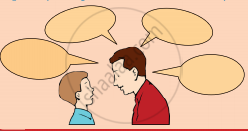
How would the poet’s advice help his son who is at the threshold of the manhood?
Read the line given below and answer the question that follow.
..........Free imaginations
Bringing changes into a world resenting change.
- How does free imagination help the world?
- Identify the figure of speech.
Pick out the alliterated words from the poem and write.
And this might stand him for the storms
How according to the poet is it possible for his son to bring changes into a world that resents change?
Why was the rider in a hurry?
How did the young soldier face his end?
Read the line given below and answer the question that follow.
Legs wide, arms locked behind As if to balance the prone brow Oppressive with its mind.
- Whose action is described here?
- What is meant by prone brow?
- What is his state of mind?
Read the line given below and answer the question that follow.
‘You’re wounded!’ ‘Nay’, his soldier’s pride Touched to the quick, he said:
- Why did the boy contradict Napoleon’s words?
- Why was his pride touched?
Read the line given below and answer the question that follow.
A film the mother eagles eye When her bruised eaglet breathes
- Who is compared to the mother eagle in the above lines?
- Explain the comparison.
What is the role of the young soldier in the victory of the French at Ratisbon?
