Advertisements
Advertisements
प्रश्न
Identify the figure of speech employed in the following line.
There lies the port the vessel puffs her sail
Advertisements
उत्तर
Personification
APPEARS IN
संबंधित प्रश्न
How long had the soldiers been in the castle?
Did the soldiers fight with the enemies face to face?
Why were the secret galleries bare?
Why did the narrator feel helpless?
What is the creeper compared to?
To whom does Toru Dutt want to consecrate the tree’s memory?
Describe the second stage of life as depicted by Shakespeare.
Which stage of man’s life is associated with the ‘shrunk shank’?
Explain the following line briefly with reference to the context.
“Jealous in honour, sudden and quick in quarrel,
Seeking the bubble reputation”.“They have their exits and their entrances;
Read the poem once again carefully and identify the figure of speech that has been used in each of the following lines from the poem.
“All the world’s a stage,
And all the men and women merely players;
They have their exits and their entrances;
And one man in his time plays many parts,
His acts being seven ages. At first the infant,
Mewling and puking in the nurse’s arms;
Then the whining school-boy, with his satchel
And shining morning face, creeping like snail
Unwillingly to school. And then the lover,
Sighing like furnace, with a woeful ballad
Made to his mistress’ eyebrow. Then a soldier,
Full of strange oaths, and bearded like the pard,
Jealous in honour, sudden and quick in quarrel,
Seeking the bubble reputation
Even in the cannon’s mouth. And then the justice,
In fair round belly with good capon lin’d,
With eyes severe and beard of formal cut,
Full of wise saws and modern instances;
And so he plays his part. The sixth age shifts
Into the lean and slipper’d pantaloon,
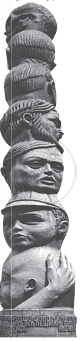
With spectacles on nose and pouch on side;
His youthful hose, well sav’d, a world too wide
For his shrunk shank; and his big manly voice,
Turning again toward childish treble, pipes
And whistles in his sound. Last scene of all,
That ends this strange eventful history,
Is second childishness and mere oblivion;
Sans teeth, sans eyes, sans taste, sans everything.”
- “All the world's a stage”
- “And all the men and women merely players”
- “And shining morning face, creeping like snail”
- “Full of strange oaths, and bearded like the pard,”
- “Seeking the bubble reputation”
- “His youthful hose, well sav’d, a world too wide”
- “and his big manly voice, turning again toward childish treble”
Pick out the word in ‘alliteration’ in the following line.
“Jealous in honour, sudden and quick in quarrel.”
Read the given line and answer the question that follow.
Then the whining school-boy, with his satchel
And shining morning face, creeping like snail
Unwillingly to school.
- Which stage of life is being referred to here by the poet?
- What are the characteristics of this stage?
- How does the boy go to school?
- Which figure of speech has been employed in the second line?
‘As tho’ to breathe were life!’ – From the given line what do you understand of Ulysses’ attitude to life?
Who does the speaker address in the second part?
In what ways were Ulysses and his mariners alike?
Identify the figure of speech employed in the following line.
To follow knowledge like a sinking star.
Read the set of line from the poem and answer the question that follow.
Little remains: but every hour is saved
From that eternal silence, something more,
A bringer of new things; and vile it were
- How is every hour important to Ulysses?
- What does the term ‘Little remains’ convey?
Explain with reference to the context the following line.
How dull it is to pause, to make an end,
To rust unburnished, not to shine in use!
Explain with reference to the context the following line.
To follow knowledge like a sinking star,
Beyond the utmost bound of human thought.
Why does the poet advise his son to have lazy days?
The poet says
‘Without rich wanting nothing arrives’ but he condemns ‘the quest of lucre beyond a few easy needs.’ Analyse the difference and write.
Here are a few poetic device used in the poem.
Transferred Epithet- It is a figure of speech in which an epithet grammatically qualifies a noun other than the person or a thing, it is actually meant to describe.
Here are a few poetic device used in the poem.
Repetition- It is a figure of speech.
Read the line given below and answer the question that follow.
Tell him time as a stuff can be wasted.
Tell him to be a fool every so often
- Why does the poet suggest that time can be wasted?
- Identify the figure of speech in the above line.
Explain the following line with reference to the context.
Yet learning something out of every folly
hoping to repeat none of the cheap follies
Explain the following line with reference to the context.
He will be lonely enough
to have time for the work
Who came galloping on a horse to Napoleon?
Explain the following line with reference to the context.
Then off there flung in smiling joy, And held himself erect
