Advertisements
Advertisements
प्रश्न
The young soldier matched his emperor in courage and patriotism. Elucidate your answer.
Advertisements
उत्तर
During the attack of the French army on Ratisbon, Napoleon was anxiously waiting for the result. He was standing on a mound with his neck out thrust, legs wide, arms locked behind, and with his balanced prone eyebrows. Then a young soldier appeared from the closed smoke and dust. He seemed to be a little boy. Though he was a boy, he wanted to fight for his country. He came galloping on a horse to Napoleon. He never minded his wounds. He knew that his emperor is waiting for the result. He was in a hurry to convey the news of victory to the emperor before his death. But he showed no sign of pain and smiling in joy. He jumped off the horse and informed the happy news. He announced that the French army had conquered Ratisbon and also he himself had planted the French flag in the marketplace of Ratisbon. As Napoleon always thought of his nation’s victory, the boy too thought of the nation’s victory. As Napoleon’s strategy led to success, the boy’s courage and patriotism also led to success. Thus the young soldier matched his emperor in courage and patriotism.
APPEARS IN
संबंधित प्रश्न
How long had the soldiers been in the castle?
Read the given line and answer the question that follow in a line or two.
Our gates were strong, our walls were thick,
So smooth and high, no man could win.
- How safe was the castle?
- What was the firm belief of the soldiers?
Can you call ‘The Castle’ an allegorical poem? Discuss.
How does the creeper appear on the tree?
Why is the casuarina tree dear to poet’s heart?
The casuarina tree will be remembered forever. Why?
Read the line given below and answer the question that follow.
The giant wears the scarf, and flowers are hung
In crimson clusters all the bough among!
- Who is the giant here?
- Why is the scarf colourful?
Explain the following line with reference to the context.
Unto thy honor, Tree, beloved of those
Who now in blessed sleep for aye repose,
“And they have their exits and their entrances” - What do the words ‘exits’ and ‘entrances’ mean?
Explain the following line briefly with reference to the context.
“Jealous in honour, sudden and quick in quarrel,
Seeking the bubble reputation”.“They have their exits and their entrances;
Explain the following line briefly with reference to the context.
“Is second childishness and mere oblivion;
Sans teeth, sans eyes, sans taste, sans everything.”
Read the given line and answer the question that follow.
Then a soldier,
full of strange oaths, and bearded like the pard,
Jealous in honour, sudden and quick in quarrel,
Seeking the bubble reputation
Even in the cannon's mouth.
- What is the soldier ready to do?
- Explain ‘bubble reputation’.
- What are the distinguishing features of this stage?
What does he think of the people of his kingdom?
What has Ulysses gained from his travel experiences?
What does Ulysses yearn for?
‘He works his work, I mine’ – How is the work distinguished?
In what ways were Ulysses and his mariners alike?
Read the set of line from the poem and answer the question that follow.
Death closes all: but something ere the end,
Some work of noble note, may yet be done,
Not unbecoming men that strove with Gods.
- The above lines convey the undying spirit of Ulysses. Explain.
- Pick out the words in alliteration in the above lines.
Read the set of line from the poem and answer the question that follow.
One equal temper of heroic hearts,
Made weak by time and fate, but strong in will
To strive, to seek, to find, and not to yield.
- Though made weak by time and fate, the hearts are heroic. Explain.
- Pick out the words in alliteration in the above lines.
What has twisted good men into thwarted worms?
Here are a few poetic device used in the poem.
Repetition- It is a figure of speech.
Read the line given below and answer the question that follow.
Tell him time as a stuff can be wasted.
Tell him to be a fool every so often
- Why does the poet suggest that time can be wasted?
- Identify the figure of speech in the above line.
How according to the poet is it possible for his son to bring changes into a world that resents change?
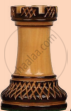
Have you played chess or watched the game carefully?
Now identify the chess pieces and complete the table below. Discuss the role of each piece in the game.
 |
|
 |
|
 |
|
 |
|
 |
|
 |
Who do you think is the narrator of the poem?
What does the phrase ‘full galloping’ suggest?
Read the line given below and answer the question that follow.
‘You’re wounded!’ ‘Nay’, his soldier’s pride Touched to the quick, he said:
- Why did the boy contradict Napoleon’s words?
- Why was his pride touched?
Explain the following line with reference to the context.
To see your flag-bird flap his vans Where I, to heart’s desire, Perched him!’
What is the role of the young soldier in the victory of the French at Ratisbon?
