Advertisements
Advertisements
प्रश्न
Explain how the poet guides his son who is at the threshold of manhood, to face the challenges of life.
Advertisements
उत्तर
The poet shares his wisdom with his son who is at the threshold of manhood. He persuades his son to be hard as steel or rock to withstand challenges and unforeseen betrayals in life. A person with a soft heart will crumble before a breach of trust. Similarly, he wants his son to be discerning enough to be soft when needed to grow like a frail flower plant splitting a rock. Occasionally one has to go with the current because life is at times fertile with a lot of opportunities to grow even among the harshest circumstances. ‘Rich soft wanting’ can help a person to win against all odds. He reiterates this idea by explaining how gentleness can reform a hardened criminal when lashes would, in contrast, harden them further.
APPEARS IN
संबंधित प्रश्न
Who is the narrator in the poem?
How long had the soldiers been in the castle?
Why were the soldiers in the castle fearless?
Bring out the contrasting picture of the castle as depicted in stanzas 3 and 5.
Read the given line and answer the question that follow in a line or two.
Our gates were strong, our walls were thick,
So smooth and high, no man could win.
- How safe was the castle?
- What was the firm belief of the soldiers?
Describe the garden during the night.
To whom does Toru Dutt want to consecrate the tree’s memory?
Identify the figure of speech used in each of the extract given below and write down the answer in the space given below.
“ A creeper climbs, in whose embraces bound
No other tree could live. But gallantly
The giant wears the scarf, and flowers are hung......”
Describe the reminiscences of the poet, when she sees the casuarina tree.
How does a man play a lover’s role?
Explain the following line briefly with reference to the context.
“They have their exits and their entrances;
And one man in his time plays many parts,”
Describe the various stages of a man’s life picturised in the poem “All the World’s a stage."
In what ways were Ulysses and his mariners alike?
Identify the figure of speech employed in the following line.
.....the deep Moans round with many voices.
Identify the figure of speech employed in the following line.
There lies the port the vessel puffs her sail
Read the set of line from the poem and answer the question that follow.
… I mete and dole
Unequal laws unto a savage race,
That hoard, and sleep, and feed, and
know not me.
- What does Ulysses do?
- Did he enjoy what he was doing? Give reasons.
Read the set of line from the poem and answer the question that follow.
Little remains: but every hour is saved
From that eternal silence, something more,
A bringer of new things; and vile it were
- How is every hour important to Ulysses?
- What does the term ‘Little remains’ convey?
Read the set of line from the poem and answer the question that follow.
This is my son, mine own Telemachus,
To whom I leave the sceptre and the isle Well-loved of me,
- Who does Ulysses entrust his kingdom to, in his absence?
- Bring out the significance of the ‘sceptre’.
Explain with reference to the context the following line.
....you and I are old;
Old age hath yet his honour and his toil;
List the roles and responsibilities Ulysses assigns to his son Telemachus, while he is away.
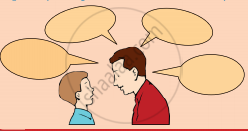
Every parent is anxious about the welfare of his/her children. Parents express their anxiety by advising them almost all the time. What kind of advice do you frequently receive from your parents? Fill in the bubbles. Tick the ones you like to follow implicitly and give reasons for the ones you don’t like to follow.
What happened to the people who wanted too much money?
Explain the following line with reference to the context.
and guide him among sudden betrayals
and tighten him for slack moments.
Explain the following line with reference to the context.
Yet learning something out of every folly
hoping to repeat none of the cheap follies
Why was the rider in a hurry?
Read the line given below and answer the question that follow.
Legs wide, arms locked behind As if to balance the prone brow Oppressive with its mind.
- Whose action is described here?
- What is meant by prone brow?
- What is his state of mind?
What is the role of the young soldier in the victory of the French at Ratisbon?
