Advertisements
Advertisements
प्रश्न
Can you call ‘The Castle’ an allegorical poem? Discuss.
Advertisements
उत्तर
The castle is doubtless an allegorical poem. The outward strength of the castle is matchless. It is fortified well. It has brave soldiers and large quantity of arms are stockpiled. The castle houses well stocked granary also. But the castle also conceals the ingredients of personal downfall within. If a person does not look within, their doom may be unstoppable. It is very difficult to protect oneself against greed, particularly the love of gold, instilled deep in the psyche of human beings. People say, “everything is fair in love and war.” People resort to anything to win in a war. Gandhi said, “the end never justifies the means.” But in times of war people stoop down to any betrayal to win. Thus, the castle is an allegorical poem.
APPEARS IN
संबंधित प्रश्न
Where were the enemies?
How did the enemies enter the castle?
What was the ‘shameful act’?
Read the given line and answer the question that follow in a line or two.
Our gates were strong, our walls were thick,
So smooth and high, no man could win.
- How safe was the castle?
- What was the firm belief of the soldiers?
Our gates were strong, our walls were thick,
Our captain was brave and we were true
How can this shameful tale be told?
Underline the alliterated word in the following line.
A little wicked wicket gate.
How does the poet spend her winter?
Identify the figure of speech used in each of the extract given below and write down the answer in the space given below.
“A gray baboon sits statue-like alone’’
Describe the reminiscences of the poet, when she sees the casuarina tree.
Bring out the features of the fourth stage of a man as described by the poet.
Which stage of man’s life is associated with the ‘shrunk shank’?
Explain the following line briefly with reference to the context.
“They have their exits and their entrances;
And one man in his time plays many parts,”
How would Telemachus transform the subjects?
Identify the figure of speech employed in the following line.
For always roaming with a hungry heart
Read the set of line from the poem and answer the question that follow.
Little remains: but every hour is saved
From that eternal silence, something more,
A bringer of new things; and vile it were
- How is every hour important to Ulysses?
- What does the term ‘Little remains’ convey?
Explain with reference to the context the following line.
I am become a name; For always roaming with a hungry heart
Explain with reference to the context the following line.
He works his work, I mine.
Explain with reference to the context the following line.
It may be we shall touch the Happy Isles,
And see the great Achilles, whom we knew.
Every parent is anxious about the welfare of his/her children. Parents express their anxiety by advising them almost all the time. What kind of advice do you frequently receive from your parents? Fill in the bubbles. Tick the ones you like to follow implicitly and give reasons for the ones you don’t like to follow.
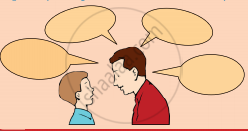
‘A tough will counts.’ Explain.
Read the line given below and answer the question that follow.
Tell him to be a fool ever so often
and to have no shame over having been a fool
yet learning something out of every folly
hoping to repeat none of the cheap follies
- Is it a shame to be a fool at times?
- What does one learn from every folly?
Explain the following line with reference to the context.
and guide him among sudden betrayals
and tighten him for slack moments.
Explain how the poet guides his son who is at the threshold of manhood, to face the challenges of life.
Read the line given below and answer the question that follow.
A film the mother eagles eye When her bruised eaglet breathes
- Who is compared to the mother eagle in the above lines?
- Explain the comparison.
Explain the following line with reference to the context.
Then off there flung in smiling joy, And held himself erect
