Advertisements
Advertisements
प्रश्न
Read the set of line from the poem and answer the question that follow.
Death closes all: but something ere the end,
Some work of noble note, may yet be done,
Not unbecoming men that strove with Gods.
- The above lines convey the undying spirit of Ulysses. Explain.
- Pick out the words in alliteration in the above lines.
Advertisements
उत्तर
- Ulysses is aware of aging and a substantial decrease in his physical strength. He knows that will close in on him sooner or later. But before that happens, he wants to sail beyond the sunset/horizon and if possible meet warriors like Achilles. He wants to achieve something worthy of those who challenged and fought with God. Thus these lines show the undying spirit of Ulysses.
- ere, end, noble, note are the words that alliterate.
APPEARS IN
संबंधित प्रश्न
Fill in the following empty boxes.
| Name | Location |
| Fort St. George | Chennai |
| Gingee Fort | ______ |
| Golconda Fort | ______ |
| Red Fort | ______ |
Where were the enemies?
I will maintain until my death
Our only enemy was gold
Fill in the blanks choosing the words from the box given and complete the summary of the poem.
The casuarina tree is tall and strong, with a creeper winding around it like a (1) ______. The tree stands like a (2) ______with a colourful scarf of flowers. Birds surround the garden and the sweet song of the birds is heard. The poet is delighted to see the casuarina tree through her (3) ______. She sees a grey monkey sitting like a (4) ______on top of the tree, the cows grazing, and the water lilies (5) ______in the pond. The poet feels that the tree is dear to her not for its (6) ______appearance but for the (7) ______memories of her happy childhood that it brings to her. She strongly believes that (8) ______communicates with human beings. The poet could communicate with the tree even when she was in a far-off land as she could hear the tree (9) ______her absence. The poet (10) ______the tree’s memory to her loved ones, who are not alive. She immortalizes the tree through her poem like the poet Wordsworth who (11) ______the yew tree of Borrowdale in verse. She expresses her wish that the tree should be remembered out of love and not just because it cannot be (12) ______.
| python | statue | nature | casement |
| nostalgic | lamenting | impressive | forgotten |
| giant | consecrates | springing | sanctified |
How does the creeper appear on the tree?
Read the line given below and answer the question that follow.
“Fear, trembling Hope, and Death, the skeleton,
And Time the shadow”, and though weak the verse
That would thy beauty fain, oh, fain rehearse,
May Love defend thee from oblivion’s curse.
- What does the poet mean by the expression ‘May love defend thee from oblivion’s curse?’
- What does the expression ‘fain’ convey?
- What does the poet convey through the expression ‘Fear, trembling Hope’?
Explain the following line with reference to the context.
It is the tree’s lament, an eerie speech,…
Identify the figure of speech used in each of the extract given below and write down the answer in the space given below.
“ A creeper climbs, in whose embraces bound
No other tree could live. But gallantly
The giant wears the scarf, and flowers are hung......”
Fill in the blanks using the words given in the box to complete the summary of the poem.
Shakespeare considers the whole world a stage where men and women are only (1) ______. They (2)______the stage when they are born and exit when they die. Every man, during his life time, plays seven roles based on age. In the first act, as an infant, he is wholly (3) ______on the mother or a nurse. Later, emerging as a school child, he slings his bag over his shoulder and creeps most (4)______ to school. His next act is that of a lover, busy (5) ______ballads for his beloved and yearns for her (6) ______. In the fourth stage, he is aggressive and ambitious and seeks (7) ______in all that he does. He (8) ______solemnly to guard his country and becomes a soldier. As he grows older, with (9) ______and wisdom, he becomes a fair judge. During this stage, he is firm and (10) ______. In the sixth act, he is seen with loose pantaloons and spectacles. His manly voice changes into a childish (11) ______. The last scene of all is his second childhood. Slowly, he loses his (12) ______of sight, hearing, smell and taste and exits from the roles of his life.
| attention | treble | reluctantly |
| actors | maturity | reputation |
| serious | faculties | composing |
| enter | promises | dependent |
What is the first stage of a human’s life?
Describe the second stage of life as depicted by Shakespeare.
Why is the last stage called second childhood?
Read the given line and answer the question that follow.
Then the whining school-boy, with his satchel
And shining morning face, creeping like snail
Unwillingly to school.
- Which stage of life is being referred to here by the poet?
- What are the characteristics of this stage?
- How does the boy go to school?
- Which figure of speech has been employed in the second line?
What has Ulysses gained from his travel experiences?
Read the set of line from the poem and answer the question that follow.
… I mete and dole
Unequal laws unto a savage race,
That hoard, and sleep, and feed, and
know not me.
- What does Ulysses do?
- Did he enjoy what he was doing? Give reasons.
Read the set of line from the poem and answer the question that follow.
……for my purpose holds
To sail beyond the sunset, and the baths
Of all the western stars, until I die.
- What was Ulysses’ purpose in life?
- How long would his venture last?
Explain with reference to the context the following line.
I am become a name; For always roaming with a hungry heart
Explain with reference to the context the following line.
The long day wanes: the slow moon climbs:
the deep Moans round with many voices.
Explain with reference to the context the following line.
It may be we shall touch the Happy Isles,
And see the great Achilles, whom we knew.
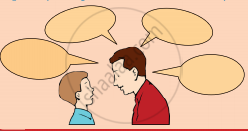
Every parent is anxious about the welfare of his/her children. Parents express their anxiety by advising them almost all the time. What kind of advice do you frequently receive from your parents? Fill in the bubbles. Tick the ones you like to follow implicitly and give reasons for the ones you don’t like to follow.
How would the poet’s advice help his son who is at the threshold of the manhood?
How would his being alone help the boy?
Here are a few poetic device used in the poem.
Antithesis- It is a literary device that emphasises the idea of contrast.
Here are a few poetic device used in the poem.
Repetition- It is a figure of speech.
Read the line given below and answer the question that follow.
“Life is hard; be steel; be a rock.”
- How should one face life?
- Identify the figure of speech in the above line.
Explain the following line with reference to the context.
Yet learning something out of every folly
hoping to repeat none of the cheap follies
Who do you think is the narrator of the poem?
Describe the posture of Napoleon.
