Advertisements
Advertisements
प्रश्न
Read the given line and answer the question that follow in a line or two.
A foothold there, no clever trick
Could take us dead or quick,
Only a bird could have got in.
- What was challenging?
- Which aspect of the castle’s strength is conveyed by the above line?
Advertisements
उत्तर
- Scaling over the castle’s smooth and high walls was challenging.
- The physical strength of the castle (i.e.) its brave and loyal soldiers, the stockpile of arms, and well-stocked granary, is conveyed here.
APPEARS IN
संबंधित प्रश्न
Underline the alliterated word in the following line.
With our arms and provender, load on load.
Underline the alliterated word in the following line.
The wizened warder let them through.
Identify the figure of speech used in the following line.
A little wicked wicket gate.
Identify the figure of speech used in the following line.
Oh then our maze of tunneled stone
How does a man play a lover’s role?
Bring out the features of the fourth stage of a man as described by the poet.
When does a man become a judge? How?
Pick out the word in ‘alliteration’ in the following line.
“and all the men and women merely players”
Read the given line and answer the question that follow.
And then the justice,
In fair round belly with good capon lin'd,
With eyes severe and beard of formal cut,
Full of wise saws and modern instances;
- Whom does justice refer to?
- Describe his appearance.
- How does he behave with the people around him?
- What does he do to show his wisdom?
Complete the summary of the poem, choosing words from the list given below. Lines 33 to 42
Ulysses desires to hand over his (1) ______to his son Telemachus, who would fulfil his duties towards his subjects with care and (2) ______. Telemachus possesses patience and has the will to civilise the citizens of Ithaca in a (3) ______way. Ulysses is happy that his son would do his work blamelessly and he would pursue his (4) ______for travel and knowledge.
| prudence, kingdom, quest, tender |
Pick out the lines which convey that his quest for travel is unending.
How would Telemachus transform the subjects?
What could be the possible outcomes of their travel?
Identify the figure of speech employed in the following line.
Thro’ scudding drifts the rainy Hyades Vext the dim sea...
Identify the figure of speech employed in the following line.
And drunk delight of battle with my peers;
Identify the figure of speech employed in the following line.
To follow knowledge like a sinking star.
Read the set of line from the poem and answer the question that follow.
… I mete and dole
Unequal laws unto a savage race,
That hoard, and sleep, and feed, and
know not me.
- What does Ulysses do?
- Did he enjoy what he was doing? Give reasons.
Explain with reference to the context the following line.
....you and I are old;
Old age hath yet his honour and his toil;
Explain with reference to the context the following line.
To strive, to seek, to find, and not to yield.
Every parent is anxious about the welfare of his/her children. Parents express their anxiety by advising them almost all the time. What kind of advice do you frequently receive from your parents? Fill in the bubbles. Tick the ones you like to follow implicitly and give reasons for the ones you don’t like to follow.
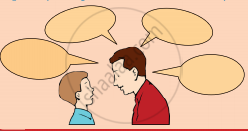
How would the poet’s advice help his son who is at the threshold of the manhood?
How would his being alone help the boy?
The poet says
‘Without rich wanting nothing arrives’ but he condemns ‘the quest of lucre beyond a few easy needs.’ Analyse the difference and write.
Here are a few poetic device used in the poem.
Antithesis- It is a literary device that emphasises the idea of contrast.
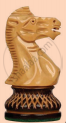
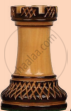
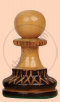
Have you played chess or watched the game carefully?
Now identify the chess pieces and complete the table below. Discuss the role of each piece in the game.
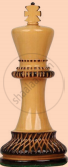 |
|
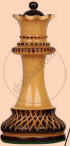 |
|
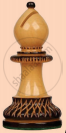 |
|
 |
|
 |
|
 |
Who took the city of Ratisbon by storm?
Where was Napoleon standing on the day of attack on the city of Ratisbon?
What was Napoleon’s reaction on hearing the news of victory?
Read the line given below and answer the question that follow.
A film the mother eagles eye When her bruised eaglet breathes
- Who is compared to the mother eagle in the above lines?
- Explain the comparison.
The young soldier matched his emperor in courage and patriotism. Elucidate your answer.
