Advertisements
Advertisements
प्रश्न
Our only enemy was gold
Advertisements
उत्तर
- Reference:
This line is taken from the Poem – “The Castle”, Poet – “Edwin Muir”. - Context:
Here the poet talks about the ‘success of the enemy’. - Explanation:
The narrator wondered about the tricks played by enemies. At last, the enemy won them by giving them gold as a bribe. So the narrator called the enemy gold.
APPEARS IN
संबंधित प्रश्न
How long had the soldiers been in the castle?
Why were the soldiers in the castle fearless?
How safe was the castle? How was it conquered?
They seemed no threat to us at all.
Identify the figure of speech used in the following line.
Our only enemy was gold,
Why is the casuarina tree dear to poet’s heart?
To whom does Toru Dutt want to consecrate the tree’s memory?
Fill in the blanks using the words given in the box to complete the summary of the poem.
Shakespeare considers the whole world a stage where men and women are only (1) ______. They (2)______the stage when they are born and exit when they die. Every man, during his life time, plays seven roles based on age. In the first act, as an infant, he is wholly (3) ______on the mother or a nurse. Later, emerging as a school child, he slings his bag over his shoulder and creeps most (4)______ to school. His next act is that of a lover, busy (5) ______ballads for his beloved and yearns for her (6) ______. In the fourth stage, he is aggressive and ambitious and seeks (7) ______in all that he does. He (8) ______solemnly to guard his country and becomes a soldier. As he grows older, with (9) ______and wisdom, he becomes a fair judge. During this stage, he is firm and (10) ______. In the sixth act, he is seen with loose pantaloons and spectacles. His manly voice changes into a childish (11) ______. The last scene of all is his second childhood. Slowly, he loses his (12) ______of sight, hearing, smell and taste and exits from the roles of his life.
| attention | treble | reluctantly |
| actors | maturity | reputation |
| serious | faculties | composing |
| enter | promises | dependent |
Read the given line and answer the question that follow.
And then the justice,
In fair round belly with good capon lin'd,
With eyes severe and beard of formal cut,
Full of wise saws and modern instances;
- Whom does justice refer to?
- Describe his appearance.
- How does he behave with the people around him?
- What does he do to show his wisdom?
Describe the various stages of a man’s life picturised in the poem “All the World’s a stage."
Shakespeare has skilfully brought out the parallels between the life of man and actors on stage. Elaborate this statement with reference to the poem.
Introduction
The poem ‘Ulysses’ is a dramatic monologue that contains 70 lines of blank verse. Ulysses, the King of Ithaca, gathers his men together to prepare for the journey and exhorts them not to waste their time left on earth. Ulysses has grown old, having experienced many adventures at the battle of Troy and in the seas. After returning to Ithaca, he desires to embark upon his next voyage. His inquisitive spirit is always looking forward to more and more of such adventures.
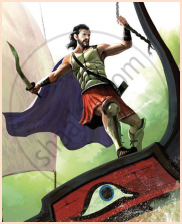
Why did Ulysses want to hand over the kingdom to his son?
Identify the figure of speech employed in the following line.
To follow knowledge like a sinking star.
Read the set of line from the poem and answer the question that follow.
… I mete and dole
Unequal laws unto a savage race,
That hoard, and sleep, and feed, and
know not me.
- What does Ulysses do?
- Did he enjoy what he was doing? Give reasons.
Explain with reference to the context the following line.
The long day wanes: the slow moon climbs:
the deep Moans round with many voices.
Explain with reference to the context the following line.
It may be we shall touch the Happy Isles,
And see the great Achilles, whom we knew.
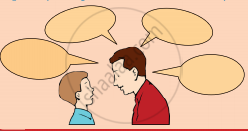
Every parent is anxious about the welfare of his/her children. Parents express their anxiety by advising them almost all the time. What kind of advice do you frequently receive from your parents? Fill in the bubbles. Tick the ones you like to follow implicitly and give reasons for the ones you don’t like to follow.
What happened to the people who wanted too much money?
Where are the final decisions taken?
Explain the following line with reference to the context.
Yet learning something out of every folly
hoping to repeat none of the cheap follies
Explain the following line with reference to the context.
He will be lonely enough
to have time for the work
Where was the narrator when the incident happened?
Who came galloping on a horse to Napoleon?
Why was the rider in a hurry?
Why did Napoleon’s eyes become soft as a mother eagle’s eyes?
Literary Devices
Mark the rhyme scheme of the poem. The rhyme scheme for the first stanza is as follows.
| With neck out-thrust, you fancy how, | a |
| Legs wide, arms locked behind, | b |
| As if to balance the prone brow | a |
| Oppressive with its mind. | b |
The young soldier matched his emperor in courage and patriotism. Elucidate your answer.
Napoleon was a great source of inspiration to his army. Justify.
