Advertisements
Advertisements
प्रश्न
Describe the reminiscences of the poet, when she sees the casuarina tree.
Advertisements
उत्तर
The poet remembers how her days started with the sight of the Casuarina tree from her casement. She remembers how her loving companions played under the giant Casuarina tree. The memory of her beloved companions brings hot tears because they had succumbed to cruel tuberculosis. She remembers how well the tree accommodated birds to sing songs during days and nights. The tree had allowed the creeper to embrace it like a lady love. Though it sapped its vitality, like a gallant lover, allowed the creeper to stay around its neck like a scarf. She remembers how a baboon seated at the crest of the tree had watched beautiful sunrise while her young ones were leaping and playing in the lower branches of the giant tree.
APPEARS IN
संबंधित प्रश्न
Why were the soldiers in the castle fearless?
Did the soldiers fight with the enemies face to face?
How does the poet spend her winter?
To whom does Toru Dutt want to consecrate the tree’s memory?
Identify the figure of speech used in each of the extract given below and write down the answer in the space given below.
“ LIKE a huge Python, winding round and round
The rugged trunk indented deep with scars”,
Identify the figure of speech used in each of the extract given below and write down the answer in the space given below.
“The water-lilies spring, like snow enmassed.”
Fill in the blanks using the words given in the box to complete the summary of the poem.
Shakespeare considers the whole world a stage where men and women are only (1) ______. They (2)______the stage when they are born and exit when they die. Every man, during his life time, plays seven roles based on age. In the first act, as an infant, he is wholly (3) ______on the mother or a nurse. Later, emerging as a school child, he slings his bag over his shoulder and creeps most (4)______ to school. His next act is that of a lover, busy (5) ______ballads for his beloved and yearns for her (6) ______. In the fourth stage, he is aggressive and ambitious and seeks (7) ______in all that he does. He (8) ______solemnly to guard his country and becomes a soldier. As he grows older, with (9) ______and wisdom, he becomes a fair judge. During this stage, he is firm and (10) ______. In the sixth act, he is seen with loose pantaloons and spectacles. His manly voice changes into a childish (11) ______. The last scene of all is his second childhood. Slowly, he loses his (12) ______of sight, hearing, smell and taste and exits from the roles of his life.
| attention | treble | reluctantly |
| actors | maturity | reputation |
| serious | faculties | composing |
| enter | promises | dependent |
Bring out the features of the fourth stage of a man as described by the poet.
Explain the following line briefly with reference to the context.
“They have their exits and their entrances;
And one man in his time plays many parts,”
Why did Ulysses want to hand over the kingdom to his son?
How would Telemachus transform the subjects?
Identify the figure of speech employed in the following line.
For always roaming with a hungry heart
Identify the figure of speech employed in the following line.
There lies the port the vessel puffs her sail
Explain with reference to the context the following line.
How dull it is to pause, to make an end,
To rust unburnished, not to shine in use!
Explain with reference to the context the following line.
....you and I are old;
Old age hath yet his honour and his toil;
Explain with reference to the context the following line.
We are not now that strength which in old days Moved earth and heaven;
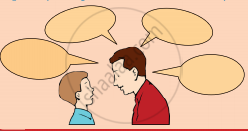
Every parent is anxious about the welfare of his/her children. Parents express their anxiety by advising them almost all the time. What kind of advice do you frequently receive from your parents? Fill in the bubbles. Tick the ones you like to follow implicitly and give reasons for the ones you don’t like to follow.
‘A tough will counts.’ Explain.
Where are the final decisions taken?
Read the line given below and answer the question that follow.
Tell him to be a fool ever so often
and to have no shame over having been a fool
yet learning something out of every folly
hoping to repeat none of the cheap follies
- Is it a shame to be a fool at times?
- What does one learn from every folly?
Explain the following line with reference to the context.
Yet learning something out of every folly
hoping to repeat none of the cheap follies
Explain the following line with reference to the context.
He will be lonely enough
to have time for the work
How according to the poet is it possible for his son to bring changes into a world that resents change?
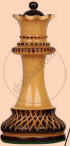
Have you played chess or watched the game carefully?
Now identify the chess pieces and complete the table below. Discuss the role of each piece in the game.
 |
|
 |
|
 |
|
 |
|
 |
|
 |
Who came galloping on a horse to Napoleon?
Why was the rider in a hurry?
What was Napoleon’s reaction on hearing the news of victory?
When did the narrator find that the boy was badly wounded?
Read the line given below and answer the question that follow.
Legs wide, arms locked behind As if to balance the prone brow Oppressive with its mind.
- Whose action is described here?
- What is meant by prone brow?
- What is his state of mind?
