Advertisements
Advertisements
प्रश्न
‘Ulysses is not happy to perform his duties as a king.’ Why?
Advertisements
उत्तर
Ulysses is not happy to perform the ordinary duties of a king mainly because his heart is in voyages beyond the horizon. He is bored with the task of enforcing law and order and giving reward and punishment to a savage race.
APPEARS IN
संबंधित प्रश्न
Who is the narrator in the poem?
Why does the narrator say that the enemy was no threat at all?
Why did the narrator feel helpless?
Read the given line and answer the question that follow in a line or two.
All through the summer at ease we lay,
And daily from the turret wall
We watched the mowers in the hay
- Who does ‘we’ refer to?
- How did the soldiers spend the summer days?
- What could they watch from the turret wall?
Identify the figure of speech used in the following line.
A little wicked wicket gate.
Identify the figure of speech used in the following line.
Grew thin and treacherous as air.
Describe the garden during the night.
How does the poet spend her winter?
Explain the following line with reference to the context.
Unto thy honor, Tree, beloved of those
Who now in blessed sleep for aye repose,
Identify the figure of speech used in each of the extract given below and write down the answer in the space given below.
“ A creeper climbs, in whose embraces bound
No other tree could live. But gallantly
The giant wears the scarf, and flowers are hung......”
Fill in the blanks using the words given in the box to complete the summary of the poem.
Shakespeare considers the whole world a stage where men and women are only (1) ______. They (2)______the stage when they are born and exit when they die. Every man, during his life time, plays seven roles based on age. In the first act, as an infant, he is wholly (3) ______on the mother or a nurse. Later, emerging as a school child, he slings his bag over his shoulder and creeps most (4)______ to school. His next act is that of a lover, busy (5) ______ballads for his beloved and yearns for her (6) ______. In the fourth stage, he is aggressive and ambitious and seeks (7) ______in all that he does. He (8) ______solemnly to guard his country and becomes a soldier. As he grows older, with (9) ______and wisdom, he becomes a fair judge. During this stage, he is firm and (10) ______. In the sixth act, he is seen with loose pantaloons and spectacles. His manly voice changes into a childish (11) ______. The last scene of all is his second childhood. Slowly, he loses his (12) ______of sight, hearing, smell and taste and exits from the roles of his life.
| attention | treble | reluctantly |
| actors | maturity | reputation |
| serious | faculties | composing |
| enter | promises | dependent |
Bring out the features of the fourth stage of a man as described by the poet.
Read the given line and answer the question that follow.
Then a soldier,
full of strange oaths, and bearded like the pard,
Jealous in honour, sudden and quick in quarrel,
Seeking the bubble reputation
Even in the cannon's mouth.
- What is the soldier ready to do?
- Explain ‘bubble reputation’.
- What are the distinguishing features of this stage?
Shakespeare has skilfully brought out the parallels between the life of man and actors on stage. Elaborate this statement with reference to the poem.
Complete the summary of the poem, choosing words from the list given below. Lines 33 to 42
Ulysses desires to hand over his (1) ______to his son Telemachus, who would fulfil his duties towards his subjects with care and (2) ______. Telemachus possesses patience and has the will to civilise the citizens of Ithaca in a (3) ______way. Ulysses is happy that his son would do his work blamelessly and he would pursue his (4) ______for travel and knowledge.
| prudence, kingdom, quest, tender |
‘He works his work, I mine’ – How is the work distinguished?
Read the set of line from the poem and answer the question that follow.
That ever with a frolic welcome took
The thunder and the sunshine, and opposed
- What do ‘thunder’ and ‘sunshine’ refer to?
- What do we infer about the attitude of the sailors?
List the roles and responsibilities Ulysses assigns to his son Telemachus, while he is away.
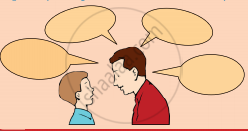
Every parent is anxious about the welfare of his/her children. Parents express their anxiety by advising them almost all the time. What kind of advice do you frequently receive from your parents? Fill in the bubbles. Tick the ones you like to follow implicitly and give reasons for the ones you don’t like to follow.
Here are a few poetic device used in the poem.
Transferred Epithet- It is a figure of speech in which an epithet grammatically qualifies a noun other than the person or a thing, it is actually meant to describe.
Describe the posture of Napoleon.
What does the phrase ‘full galloping’ suggest?
Where did the rider plant the French flag after Ratisbon was captured?
Explain the following line with reference to the context.
Then off there flung in smiling joy, And held himself erect
Explain the following line with reference to the context.
To see your flag-bird flap his vans Where I, to heart’s desire, Perched him!’
The young soldier matched his emperor in courage and patriotism. Elucidate your answer.
What is the role of the young soldier in the victory of the French at Ratisbon?
