Advertisements
Advertisements
प्रश्न
Read the line given below and answer the question that follow.
“Fear, trembling Hope, and Death, the skeleton,
And Time the shadow”, and though weak the verse
That would thy beauty fain, oh, fain rehearse,
May Love defend thee from oblivion’s curse.
- What does the poet mean by the expression ‘May love defend thee from oblivion’s curse?’
- What does the expression ‘fain’ convey?
- What does the poet convey through the expression ‘Fear, trembling Hope’?
Advertisements
उत्तर
- Any living thing will have to meet death. But the poet deeply believes that her love for the tree would ensure its immortality. She will live forever in her verses.
- Fain means eagerly.
- Fear and trembling hope mean the fear of lurking death and trembling hope is that death may not attack in the near future.
APPEARS IN
संबंधित प्रश्न
Fill in the following empty boxes.
| Name | Location |
| Fort St. George | Chennai |
| Gingee Fort | ______ |
| Golconda Fort | ______ |
| Red Fort | ______ |
Who is the narrator in the poem?
Why does the narrator say that the enemy was no threat at all?
Why were the secret galleries bare?
Why didn’t the narrator want to tell the tale to anybody?
Read the poem again and complete the summary using the words given in box.
Stanzas 1–3
‘The Castle’ by Edwin Muir is a moving poem on the (1)______ of a well guarded (2)______ The soldiers of the castle were totally stress-free and relaxed. They were (3)______ of their castle’s physical strength. Through the turrets they were able to watch the mowers and no enemy was found up to the distance of (4)______ and so they seemed no threat to the castle. They had (5)______ of weapons to protect them and a large quantity of (6)______ in stock to take care of the well-being of the soldiers inside the castle. The soldiers stood one above the other on the towering battlements (7)______ to shoot the enemy at sight. They believed that the castle was absolutely safe because their captain was (8)______ and the soldiers were loyal.
| half-a-mile | watching |
| castle | brave |
| ration | capture |
| plenty | confident |
Stanzas 4–6
Even by a trick no one but the birds could enter. The enemy could not use a (9)______ for their entry inside the castle. But there was a wicket gate guarded by a (10) ______ He (11)______ in the enemies inside the famous citadel that had been known for its secret gallery and intricate path. The strong castle became(12)______ and thin because of the greedy disloyal warder. The (13)______ was captured by the enemies for (14)______ The narrator (15)______ over the (16)______ of the useless warder and also decided not to disclose this (17)______ story to anyone. He was (18)______ and wondered how he would keep this truth to himself. He regretted not finding any (19)______ to fight with the (20)______ called ‘gold’.
| lamented | shameful |
| wicked guard | bait |
| let | gold |
| weapon | citadel |
| weak | disloyalty |
| helpless | enemy |
Human greed led to the mighty fall of the citadel. Explain.
“And they have their exits and their entrances” - What do the words ‘exits’ and ‘entrances’ mean?
Which stage of man’s life is associated with the ‘shrunk shank’?
Complete the table based on your understanding of the poem.
| Stage | Characteristic |
| crying | |
| judge | |
| soldier | |
| unhappy | |
| second childhood | |
| whining | |
| old man |
Shakespeare has skilfully brought out the parallels between the life of man and actors on stage. Elaborate this statement with reference to the poem.
‘Ulysses is not happy to perform his duties as a king.’ Why?
What does he think of the people of his kingdom?
What does Ulysses yearn for?
Identify the figure of speech employed in the following line.
To follow knowledge like a sinking star.
Read the set of line from the poem and answer the question that follow.
Little remains: but every hour is saved
From that eternal silence, something more,
A bringer of new things; and vile it were
- How is every hour important to Ulysses?
- What does the term ‘Little remains’ convey?
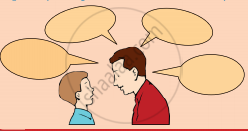
Every parent is anxious about the welfare of his/her children. Parents express their anxiety by advising them almost all the time. What kind of advice do you frequently receive from your parents? Fill in the bubbles. Tick the ones you like to follow implicitly and give reasons for the ones you don’t like to follow.
What happened to the people who wanted too much money?
What has twisted good men into thwarted worms?
Here are a few poetic device used in the poem.
Transferred Epithet- It is a figure of speech in which an epithet grammatically qualifies a noun other than the person or a thing, it is actually meant to describe.
Read the line given below and answer the question that follow.
Tell him to be a fool ever so often
and to have no shame over having been a fool
yet learning something out of every folly
hoping to repeat none of the cheap follies
- Is it a shame to be a fool at times?
- What does one learn from every folly?
Explain how the poet guides his son who is at the threshold of manhood, to face the challenges of life.
Who took the city of Ratisbon by storm?
What does the phrase ‘full galloping’ suggest?
Why was the rider in a hurry?
Why did the rider keep his lips compressed?
What was Napoleon’s reaction on hearing the news of victory?
When did the narrator find that the boy was badly wounded?
Literary Devices
Mark the rhyme scheme of the poem. The rhyme scheme for the first stanza is as follows.
| With neck out-thrust, you fancy how, | a |
| Legs wide, arms locked behind, | b |
| As if to balance the prone brow | a |
| Oppressive with its mind. | b |
