Advertisements
Advertisements
प्रश्न
Explain with reference to the context the following line.
To follow knowledge like a sinking star,
Beyond the utmost bound of human thought.
Advertisements
उत्तर
- Reference: These lines are from the poem ‘Ulysses” written by Alfred Tennyson.
- Context and Explanation: The poet says these words while describing the quest Ulysses has for adventure and fulfillment. Similar to a sinking star, Ulysses wants to pursue in his failing old age pursue knowledge like the goal of Goethe’s Faust, his quest is defined by the pursuit of new and unique knowledge “beyond the utmost bound of human thought”.
APPEARS IN
संबंधित प्रश्न
Did the soldiers fight with the enemies face to face?
Who was the real enemy?
Underline the alliterated word in the following line.
The wizened warder let them through.
Identify the figure of speech used in the following line.
How can this shameful tale be told?
Fill in the blanks choosing the words from the box given and complete the summary of the poem.
The casuarina tree is tall and strong, with a creeper winding around it like a (1) ______. The tree stands like a (2) ______with a colourful scarf of flowers. Birds surround the garden and the sweet song of the birds is heard. The poet is delighted to see the casuarina tree through her (3) ______. She sees a grey monkey sitting like a (4) ______on top of the tree, the cows grazing, and the water lilies (5) ______in the pond. The poet feels that the tree is dear to her not for its (6) ______appearance but for the (7) ______memories of her happy childhood that it brings to her. She strongly believes that (8) ______communicates with human beings. The poet could communicate with the tree even when she was in a far-off land as she could hear the tree (9) ______her absence. The poet (10) ______the tree’s memory to her loved ones, who are not alive. She immortalizes the tree through her poem like the poet Wordsworth who (11) ______the yew tree of Borrowdale in verse. She expresses her wish that the tree should be remembered out of love and not just because it cannot be (12) ______.
| python | statue | nature | casement |
| nostalgic | lamenting | impressive | forgotten |
| giant | consecrates | springing | sanctified |
How does the poet spend her winter?
Does nature communicate with human beings?
To whom does Toru Dutt want to consecrate the tree’s memory?
The casuarina tree will be remembered forever. Why?
Explain the following line with reference to the context.
Dear is the Casuarina to my soul;
Identify the figure of speech used in each of the extract given below and write down the answer in the space given below.
“A gray baboon sits statue-like alone’’
Identify the figure of speech used in each of the extract given below and write down the answer in the space given below.
“The water-lilies spring, like snow enmassed.”
Which stage of man’s life is associated with the ‘shrunk shank’?
Explain the following line briefly with reference to the context.
“Is second childishness and mere oblivion;
Sans teeth, sans eyes, sans taste, sans everything.”
In what ways were Ulysses and his mariners alike?
What could be the possible outcomes of their travel?
Identify the figure of speech employed in the following line.
For always roaming with a hungry heart
Identify the figure of speech employed in the following line.
.....the deep Moans round with many voices.
Read the set of line from the poem and answer the question that follow.
One equal temper of heroic hearts,
Made weak by time and fate, but strong in will
To strive, to seek, to find, and not to yield.
- Though made weak by time and fate, the hearts are heroic. Explain.
- Pick out the words in alliteration in the above lines.
Explain with reference to the context the following line.
He works his work, I mine.
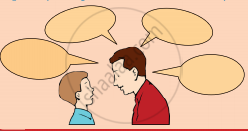
Every parent is anxious about the welfare of his/her children. Parents express their anxiety by advising them almost all the time. What kind of advice do you frequently receive from your parents? Fill in the bubbles. Tick the ones you like to follow implicitly and give reasons for the ones you don’t like to follow.
How would the poet’s advice help his son who is at the threshold of the manhood?
What are the poet’s thoughts on ‘being different’?
Here are a few poetic device used in the poem.
Transferred Epithet- It is a figure of speech in which an epithet grammatically qualifies a noun other than the person or a thing, it is actually meant to describe.
Read the line given below and answer the question that follow.
Tell him time as a stuff can be wasted.
Tell him to be a fool every so often
- Why does the poet suggest that time can be wasted?
- Identify the figure of speech in the above line.
Read the line given below and answer the question that follow.
..........Free imaginations
Bringing changes into a world resenting change.
- How does free imagination help the world?
- Identify the figure of speech.
Who came galloping on a horse to Napoleon?
Read the line given below and answer the question that follow.
A film the mother eagles eye When her bruised eaglet breathes
- Who is compared to the mother eagle in the above lines?
- Explain the comparison.
The young soldier matched his emperor in courage and patriotism. Elucidate your answer.
