Advertisements
Advertisements
प्रश्न
How does a man play a lover’s role?
Advertisements
उत्तर
As a lover, a man sings serenades seeking the attention of his lady love.
APPEARS IN
संबंधित प्रश्न
What thoughts come to your mind when you think about a castle? Add your ideas to the list
moat, huge buildings, soldiers, weapons ______,______.
Why does the narrator say that the enemy was no threat at all?
Why were the secret galleries bare?
What was the ‘shameful act’?
Who was the real enemy?
Bring out the contrasting picture of the castle as depicted in stanzas 3 and 5.
Identify the figure of speech used in the following line.
How can this shameful tale be told?
Identify the figure of speech used in the following line.
Our only enemy was gold,
Why is the casuarina tree dear to poet’s heart?
Does nature communicate with human beings?
Discuss with your partner the different stages in the growth of man from a new born to an adult

Read the given line and answer the question that follow.
Then a soldier,
full of strange oaths, and bearded like the pard,
Jealous in honour, sudden and quick in quarrel,
Seeking the bubble reputation
Even in the cannon's mouth.
- What is the soldier ready to do?
- Explain ‘bubble reputation’.
- What are the distinguishing features of this stage?
What does he think of the people of his kingdom?
‘He works his work, I mine’ – How is the work distinguished?
In what ways were Ulysses and his mariners alike?
Identify the figure of speech employed in the following line.
To follow knowledge like a sinking star.
Explain with reference to the context the following line.
I cannot rest from travel: I will drink Life to the lees:
Explain with reference to the context the following line.
I am become a name; For always roaming with a hungry heart
Every parent is anxious about the welfare of his/her children. Parents express their anxiety by advising them almost all the time. What kind of advice do you frequently receive from your parents? Fill in the bubbles. Tick the ones you like to follow implicitly and give reasons for the ones you don’t like to follow.
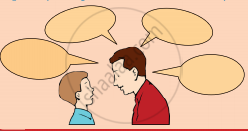
The poet says
‘Without rich wanting nothing arrives’ but he condemns ‘the quest of lucre beyond a few easy needs.’ Analyse the difference and write.
Here are a few poetic device used in the poem.
Transferred Epithet- It is a figure of speech in which an epithet grammatically qualifies a noun other than the person or a thing, it is actually meant to describe.
Read the line given below and answer the question that follow.
“Life is hard; be steel; be a rock.”
- How should one face life?
- Identify the figure of speech in the above line.
Read the line given below and answer the question that follow.
Tell him time as a stuff can be wasted.
Tell him to be a fool every so often
- Why does the poet suggest that time can be wasted?
- Identify the figure of speech in the above line.
Explain the following line with reference to the context.
Brutes have been gentled where lashes failed.
Fill in the blanks choosing the words from the box given and complete the summary of the poem.
The poet Robert Browning narrates an incident at the French Camp in the war of 1809 between France and Austria, in a (a)______version. He describes the brave action of a (b)______soldier, whose heroic devotion to duty and his (c) ______ in it is inspiring and worthy of (d) ______. During the attack of the French army on Ratisbon, Napoleon was anxious about the (e) ______. Austrians were defending Ratisbon with great (f) ______and courage. Napoleon was watching the war standing on a (g) ______near the battlefield.
All of a sudden a rider appeared from the closed smoke and dust. Riding at great speed, jumping and leaping, he approached the mound where Napoleon stood. As he came closer, the narrator noticed that the rider, a young boy, was severely wounded. But the rider showed no sign of pain and smiling in joy, jumped off the horse and gave the happy news of (h) ______to the emperor.
He exclaimed with pride that the French had (i) ______Ratisbon and he himself had hoisted the flag of France. When Napoleon heard the news, his plans (j) ______up like fire. His eyes (k) ______when he saw that the soldier was severely wounded. Like a caring mother eagle, the emperor asked if he was wounded. The (l) ______soldier replied proudly that he was killed and died heroically.
| determination | result | dramatic |
| pride | admiration | softened |
| wounded | mound | victory |
| conquered | soared | valiant |
Where was the narrator when the incident happened?
Who took the city of Ratisbon by storm?
Why did the rider keep his lips compressed?
Read the line given below and answer the question that follow.
A film the mother eagles eye When her bruised eaglet breathes
- Who is compared to the mother eagle in the above lines?
- Explain the comparison.
