Advertisements
Advertisements
प्रश्न
Underline the alliterated word in the following line.
The wizened warder let them through.
Advertisements
उत्तर
The wizened warder let them through.
APPEARS IN
संबंधित प्रश्न
Who is the narrator in the poem?
Why were the soldiers in the castle fearless?
How safe was the castle? How was it conquered?
Read the given line and answer the question that follow in a line or two.
We could do nothing, being sold.
- Why couldn’t they do anything?
- Why did they feel helpless?
They seemed no threat to us at all.
Does nature communicate with human beings?
Explain the following line with reference to the context.
Dear is the Casuarina to my soul;
Describe the reminiscences of the poet, when she sees the casuarina tree.
What is the first stage of a human’s life?
How does a man play a lover’s role?
Explain the following line briefly with reference to the context.
“They have their exits and their entrances;
And one man in his time plays many parts,”
Explain the following line briefly with reference to the context.
“Jealous in honour, sudden and quick in quarrel,
Seeking the bubble reputation”.“They have their exits and their entrances;
What does he think of the people of his kingdom?
What has Ulysses gained from his travel experiences?
Why did Ulysses want to hand over the kingdom to his son?
Identify the figure of speech employed in the following line.
There lies the port the vessel puffs her sail
Read the set of line from the poem and answer the question that follow.
Little remains: but every hour is saved
From that eternal silence, something more,
A bringer of new things; and vile it were
- How is every hour important to Ulysses?
- What does the term ‘Little remains’ convey?
What is Ulysses’ clarion call to his sailors? How does he inspire them?
Here are a few poetic device used in the poem.
Antithesis- It is a literary device that emphasises the idea of contrast.
Read the line given below and answer the question that follow.
“Life is hard; be steel; be a rock.”
- How should one face life?
- Identify the figure of speech in the above line.
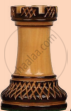
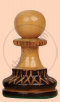
Have you played chess or watched the game carefully?
Now identify the chess pieces and complete the table below. Discuss the role of each piece in the game.
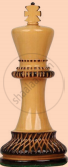 |
|
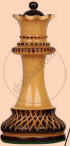 |
|
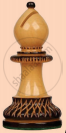 |
|
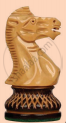 |
|
 |
|
 |
Who took the city of Ratisbon by storm?
What did the rider do when he reached Napoleon?
Read the line given below and answer the question that follow.
Legs wide, arms locked behind As if to balance the prone brow Oppressive with its mind.
- Whose action is described here?
- What is meant by prone brow?
- What is his state of mind?
Read the line given below and answer the question that follow.
A film the mother eagles eye When her bruised eaglet breathes
- Who is compared to the mother eagle in the above lines?
- Explain the comparison.
Explain the following line with reference to the context.
Then off there flung in smiling joy, And held himself erect
Explain the following line with reference to the context.
To see your flag-bird flap his vans Where I, to heart’s desire, Perched him!’
