Advertisements
Advertisements
प्रश्न
Explain the following line with reference to the context.
Brutes have been gentled where lashes failed.
Advertisements
उत्तर
- Reference: These lines are from the poem “A Father to his Son” written by Carl August Sandburg.
- Context and Explanation: The poet highlights the importance of a soft but firm will to melt even hardened criminals. Love can transform even criminals. Harsh punishment may harden them but gentleness and love may bring about a change of heart.
APPEARS IN
संबंधित प्रश्न
Why were the soldiers in the castle fearless?
Why does the narrator say that the enemy was no threat at all?
Why did the narrator feel helpless?
Read the given line and answer the question that follow in a line or two.
| Oh then our maze of tunneled stone Grew thin and treacherous as air. The castle was lost without a groan, The famous citadel overthrown, |
- Bring out the contrast in the first two lines.
- What is the rhyme scheme of the given stanza?
How can this shameful tale be told?
Underline the alliterated word in the following line.
A little wicked wicket gate.
How does the poet spend her winter?
Does nature communicate with human beings?
Describe the reminiscences of the poet, when she sees the casuarina tree.
Describe the second stage of life as depicted by Shakespeare.
Pick out the word in ‘alliteration’ in the following line.
“And one man in his time plays many parts”
Read the given line and answer the question that follow.
And then the justice,
In fair round belly with good capon lin'd,
With eyes severe and beard of formal cut,
Full of wise saws and modern instances;
- Whom does justice refer to?
- Describe his appearance.
- How does he behave with the people around him?
- What does he do to show his wisdom?
Introduction
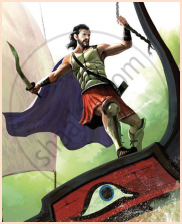
The poem ‘Ulysses’ is a dramatic monologue that contains 70 lines of blank verse. Ulysses, the King of Ithaca, gathers his men together to prepare for the journey and exhorts them not to waste their time left on earth. Ulysses has grown old, having experienced many adventures at the battle of Troy and in the seas. After returning to Ithaca, he desires to embark upon his next voyage. His inquisitive spirit is always looking forward to more and more of such adventures.
What does he think of the people of his kingdom?
What has Ulysses gained from his travel experiences?
Why did Ulysses want to hand over the kingdom to his son?
How would Telemachus transform the subjects?
What could be the possible outcomes of their travel?
Explain with reference to the context the following line.
We are not now that strength which in old days Moved earth and heaven;
Where are the final decisions taken?
Here are a few poetic device used in the poem.
Antithesis- It is a literary device that emphasises the idea of contrast.
Read the line given below and answer the question that follow.
Tell him time as a stuff can be wasted.
Tell him to be a fool every so often
- Why does the poet suggest that time can be wasted?
- Identify the figure of speech in the above line.
Pick out the alliterated words from the poem and write.
And this might stand him for the storms
Where was the narrator when the incident happened?
Why was the rider in a hurry?
When did the narrator find that the boy was badly wounded?
Read the line given below and answer the question that follow.
‘You’re wounded!’ ‘Nay’, his soldier’s pride Touched to the quick, he said:
- Why did the boy contradict Napoleon’s words?
- Why was his pride touched?
Explain the following line with reference to the context.
Then off there flung in smiling joy, And held himself erect
Explain the following line with reference to the context.
‘I’m killed, Sire!’ And, his Chief beside, Smiling, the boy fell dead.
What is the role of the young soldier in the victory of the French at Ratisbon?
