Advertisements
Advertisements
प्रश्न
Explain the following line with reference to the context.
He will be lonely enough
to have time for the work
Advertisements
उत्तर
- Reference: These lines are from the poem ‘A Father to his Son” written by Carl August Sandburg.
- Context and Explanation: The poet says these words to explain how creative thinkers and those who strive to bring about changes are left alone to fend for themselves. The poet says his son must take advantage of this loneliness to pursue his creative imagination and succeed like Shakespeare, the Wright brothers, Pasteur, Pavlov, and Faraday.
APPEARS IN
संबंधित प्रश्न
Why didn’t the narrator want to tell the tale to anybody?
They seemed no threat to us at all.
Identify the figure of speech used in the following line.
Our only enemy was gold,
What is the creeper compared to?
To whom does Toru Dutt want to consecrate the tree’s memory?
Explain the following line with reference to the context.
It is the tree’s lament, an eerie speech,…
Identify the figure of speech used in each of the extract given below and write down the answer in the space given below.
“ A creeper climbs, in whose embraces bound
No other tree could live. But gallantly
The giant wears the scarf, and flowers are hung......”
Bring out the features of the fourth stage of a man as described by the poet.
Which stage of man’s life is associated with the ‘shrunk shank’?
Why is the last stage called second childhood?
Explain the following line briefly with reference to the context.
“Is second childishness and mere oblivion;
Sans teeth, sans eyes, sans taste, sans everything.”
Pick out the word in ‘alliteration’ in the following line.
“And one man in his time plays many parts”
Complete the summary of the poem, choosing words from the list given below. Lines 1 to 32
Ulysses is (1) ______to discharge his duties as a (2) ______, as he longs for (3) ______. He is filled with an (4) ______thirst for (5) ______and wishes to live life to the (6) ______. He has travelled far and wide gaining (7) _______ of various places, cultures, men and (8) ______. He recalls with delight his experience at the battle of Troy. Enriched by his (9) ______he longs for more and his quest seems endless. Like metal which would (10) ______if unused, life without adventure is meaningless. According to him living is not merely (11) ______to stay alive. Though old but zestful, Ulysses looks at every hour as a bringer of new things and yearns to follow knowledge even if it is (12)______.
| fullest, unquenchable, unattainable, experience, knowledge, king, matters, rust, adventure, unwilling, travel, breathing |
What does Ulysses yearn for?
Identify the figure of speech employed in the following line.
Thro’ scudding drifts the rainy Hyades Vext the dim sea...
Read the set of line from the poem and answer the question that follow.
That ever with a frolic welcome took
The thunder and the sunshine, and opposed
- What do ‘thunder’ and ‘sunshine’ refer to?
- What do we infer about the attitude of the sailors?
Read the set of line from the poem and answer the question that follow.
……for my purpose holds
To sail beyond the sunset, and the baths
Of all the western stars, until I die.
- What was Ulysses’ purpose in life?
- How long would his venture last?
Explain with reference to the context the following line.
How dull it is to pause, to make an end,
To rust unburnished, not to shine in use!
Explain with reference to the context the following line.
To follow knowledge like a sinking star,
Beyond the utmost bound of human thought.
Explain with reference to the context the following line.
The long day wanes: the slow moon climbs:
the deep Moans round with many voices.
What happened to the people who wanted too much money?
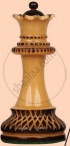
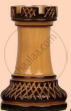
Have you played chess or watched the game carefully?
Now identify the chess pieces and complete the table below. Discuss the role of each piece in the game.
 |
|
 |
|
 |
|
 |
|
 |
|
 |
Where was Napoleon standing on the day of attack on the city of Ratisbon?
Who came galloping on a horse to Napoleon?
What did the rider do when he reached Napoleon?
What was Napoleon’s reaction on hearing the news of victory?
Why did Napoleon’s eyes become soft as a mother eagle’s eyes?
Literary Devices
Mark the rhyme scheme of the poem. The rhyme scheme for the first stanza is as follows.
| With neck out-thrust, you fancy how, | a |
| Legs wide, arms locked behind, | b |
| As if to balance the prone brow | a |
| Oppressive with its mind. | b |
Napoleon was a great source of inspiration to his army. Justify.
