Advertisements
Advertisements
प्रश्न
What were the lessons of life learnt in her younger days that Kumudini carried into her adult life?
Advertisements
उत्तर
During her younger days Kumudini learnt many lessons that she carried into her adult life. She relates one incident when she used to stay in Delhi in a sprawling house allotted to her engineer father. Liaquat Ali(later Prime Minister of Pakistan) used to be their neighbour. When one day she saw and her brother were caught by his gardener picking guavas from his tree, Liaquat Ali did not punish them but gave an open invitation to pick the fruits whenever they wished. The author says that it was one of her first lessons in the games that politicians play.
In Queen Mary's college in Lahore, she could learn the value of discipline. She believes that discipline in one's daily routine does bring discipline in thinking. When her mother died she could learn the pangs of hunger. This shows up in her work. She could understand the nature of conflict which she dealt with in a play called Duvidha.
Kumudini could learn to differentiate between sensitivity and sentimentality. In her adult days she created a piece called Panch Paras, the five senses, to explore this realm. Kumudini relates how she learnt a lesson from Ram Gopal that before one begins to experiment, one need to perfect the technique with one experiment.
Kumudini could learn about her own personality touring with Ram Gopal.
APPEARS IN
संबंधित प्रश्न
Answer any four of the following questions in 30 - 40 words each:
(a) What does the poet's smile in the poem, 'My Mother at Sixty-six' show?
(b) Listening to them, I see two distinct worlds ... ." In the context of Mukesh, the bangle maker's son, which two worlds is Anees Jung referring to ?
(c) Though the sharecroppers of Champaran received only one-fourth of the compensation, how can the Champaran struggle still be termed a huge success and victory?
(d) Which article in McLeery's suitcase played perhaps the most significant role in Evans' escape and how?
(e) Why does Derry’s mother not want him to go back to visit Mr. Lamb?
(f) What considerations influenced the Tiger King to get married?
Answer any four of the following questions in 30-40 words each:
(a) Why did Franz not want to go to school that day?
(b) What was Sophie's ambition in life? How did she hope to achieve that?
(c) What kind of pain does Kamala Das feel in 'My Mother at Sixty-six'?
(d) How can 'mighty dead' be things of beauty?
(e) Why was the Maharaja once in danger of losing his kingdom?
(f) What was the basic plot of each story told by Jack?
What does “this circumstance” refer to?
Give reasons for the following statement.
The author thought that his positive thinking strategy worked well after all.
Why did the narrator of the story want to forget the address?
The Cloud ‘fuses together a creative myth, a scientific monograph, and a gay picaresque tale of cloud adventure': explain.
Why does Ruskin feel that reading the work of a good author is a painstaking task?
Discuss the importance of time in the narration of a story.
Qua story’: what does the word mean? Find other expressions using the word qua.
Read the following statement and mark those that apply to you.
I wish to be friends with someone but my friendship is rejected.
Write down in your own words the way Laurie confirmed the names of the March sisters.
Read the extract and state whether the following statement is true or false. Correct the false statement.
Newer hybrid crops have a great appetite for chemicals.
Find from the story one word for the following.
any animal that catches mice ______
Answer in your own words.
How did Revathi prove to the organisers of the competition, that the plants truly belonged to her?
Write a short autobiography of any bird or animal of your choice.
Read the given words and share with your friend what comes to your mind.

Explain the following statement with reference to the context.
And it's by no means the small sacrifice the town will have to make.
Have you seen how wheels move on different surfaces like sand, gravel, grass, or a proper road? What are the differences you see?
What does the poet pray for? Why?
Who is the speaker in the poem?
Think and answer:
Is the poet talking about heavy rains in the rainy season or rain that has come after a long time?
Prepare similar word chains using the following ideas.
sunshine - warm ________________.
Correct the following sentence using facts from the passage.
The great heroes avoided one another.
Write the following:
The sights seen through a railway carriage mentioned in the first stanza.
Mention the various places that the brook flows past.
Read: ‘The Psalm of Life’- a poem by H. W. Longfellow.
List and say whether the following statement agrees with the passage or not.
When you want to make a speech, there’s no need to think about it in advance.
List all the words and phrases in this story that indicate 'time'.
List the words or phrases related with computers or the Internet.
Guess the meaning of on the wing.
Who am I?
Who Am I? is a guessing game where players use ‘yes’ or ‘no’ questions to guess the identity of a famous person. Questions are based upon the traits and characteristics of a person everyone will be able to identify.
Divide the class into groups. One group should decide the personality while the other group should ask ‘yes’ or ‘no’ type questions. To win the game, a team needs to find out the person within 10 clues.
Sample questions to ask. Answers must be ‘yes’ or ‘no’ only
- Are you a male (female)?
- Are you a famous personality?
- Are you a singer (dancer, actor)?
- Are you a historical figure?
- Are you young (old)?
- Are you alive now?
- Does your name start with ‘___’?
- Is he/she ____ ?
Read the story again and write how these character reacted in these situation:
You’re both quite mistaken.
Dr. Krishnan ........…………………….
Mrs. Krishnan……....…………………
Write the names of the characters in this story.
1. ______ 2. ______ 3. ______
Look at the number pattern. Fill the blank in the middle of the series or end of the series.
QPO, NML, KJI, ______, EDC
Give a picturesque view through which the train travels.
Mithali’s mother tongue is Telugu.
Why did the girls snigger?
Gulliver took the small creatures in his hand and crushed them.
Why don’t we use chemicals?
How was he honoured by the Indian government?
Jaswant was captured alive.
Vicky decided to______ the robot at the end.
What does it sing?
Where was the old man sleeping?
Write the correct form for the present perfect tense.
They ______ (start) playing.
Some words sound the same but their spelling and meaning are different. Such words are called homophones. There are many homophones.
Answer using Yes or No and pick sentence from the story to support your answer.
Do cannibals eat people?
What did the five friends call themselves?
Write a paragraph on the topic ‘Park’.
Kamali gave her savings to______.
Write the rhyming word.
larder- ______.
Write the word with same meaning.

dustbin- ______.
Write the word with same meaning.

Torch
Why was Chris worried?
What is the main idea of the story?
Write the correct word.
| rooster, king, hen, tiger, queen, tigress. |
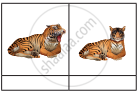
Replace the bold word/words with a word from the quiver and re-write the sentence –
The teacher said something about his good handwriting. He felt very happy.
Where did the rabbit go?
What did the boy wonder about?
Arrange a ‘Jokes’ session in the classroom where each student tells a joke. The jokes must be told in English.
