Advertisements
Advertisements
प्रश्न
State whether the following statement is true or false. Correct the false statement.
Liberty cannot be divorced from equality.
विकल्प
True
False
Advertisements
उत्तर
Liberty cannot be divorced from equality - True.
APPEARS IN
संबंधित प्रश्न
Write an e-mail to the Principal of a neighbouring school requesting him/her to send a team of three members to participate in the Quiz Competition.
In the following items, sentence A is complete, while sentence B is not. Complete sentence B, making it as similar as possible to sentence A. Write sentence B.
(A) He is forgetful as well as careless with his work.
(B) Besides .............................................................................
Fill in the blank with the suitable word.
The burglars broke _____________ the house when the family was away.
Explain how diction is important in the poem with the help of an example.
What is the advice of the poet? Is there any relevance of this advice to our present day?
The caged bird sings with
A fearful trill of things unknown
But longed for still and his
Tune is heard on the distant hill
For the caged bird sings of freedom.
Read the above lines and answer the question that follow.
Explain, ‘stands on the grave of dreams / his shadow shouts on a nightmare scream’.
Thus I entered, and thus I go!
In triumphs, people have dropped down dead,
"Paid by the world, what dost thou owe
Me? "....God might question; now instead,
'Tis God shall repay: I am safer so.
Read the above lines and amswer the question that follow.
Can one see the faith of humans in God in the poem?
Explain ‘may his tribe increase.’
The eight other runners pulled up on their heels
The ones who had trained for so long to complete
one by one they all turned around and went back to help him
And brought the young boy to his feet.
Then all the nine runners joined hands and continued
The hundred-yard dash now reduced to a walk
And a banner above that said (Special Olympics)
Could not have been more on the mark.
That's how the race ended, with nine gold medals
They came to the finish line holding hands still
And a standing ovation and nine beaming faces
Said more than these words ever will.
Read the lines given above and answer the following question:
Explain with reference to context.
Fill in the blank with an appropriate word :
Sheila's grandmother found it difficult to climb __________ the steep staircase.
Write a composition (350 - 400 words) on the following:
Write an original short story that begins with the words : “The day started off well enough, whoever thought it would ……….”
How does G. K. Chesterton in his essay On Running after one's Hat, romanticize difficult situations by dwelling on the notion that "An inconvenience is only an adventure wrongly considered'"?
Join the following sentence to make one complete sentence without using and, but or so.
The child helped her mother to make breakfast. She washed the tomatoes.
Re-write the following sentence according to the instructions are given. Make other changes that may be necessary, but do not change the meaning of the sentence.
As soon as the function got over. The crowd dispersed.
(Begin: Hardly had……….)
Read the extract given below and answer the questions that follow:
NEXT MORNING, I HAD AN IDEA. IT WAS nothing clear cut, merely speculative, But I considered it all the way to school. Then, after assembly, as soon as they were quiet I waded in. This might be a bit rough, I thought, but here goes.
“I am your teacher, and I think it right and proper that I should let you know something of my plans-for this class.”
(i) Who is ‘I’ in the above lines? Where is he? In what mood was he when he entered the class?
(ii) What did the narrator expect from his students at this moment?
(iii) Who entered soon after this? What did she do that made the narrator angry? What challenges did he give her?
(iv) What was the effect of the challenge on her? What plan did the narrator have in mind regarding the conduct of the young ladies? Whose help did he seek for this?
(v) What did the narrator expect from the boy? What was the reaction of the children when they heard the narrator’s expectations?
Do you think it is important to preserve languages?
Words which describe ‘sleek’, ‘alert’, and ‘abrupt’
The following common words are used in more than one sense.
-
panel
studio
brush
essence
material
Examine the following sets of sentences to find out what the words, ‘panel’ and ‘essence’ mean in different contexts.
1. (i) The masks from Bawa village in Mali look like long panels of decorated wood.
(ii) Judge H. Hobart Grooms told the jury panel he had heard the reports.
(iii)The panel is laying the groundwork for an international treaty.
(iv)The glass panels of the window were broken.
(v) Through the many round tables, workshops and panel discussions, a consensus was reached.
(vi)The sink in the hinged panel above the bunk drains into the head.
2. (i) Their repetitive structure must have taught the people around the great composer the essence of music.
(ii) Part of the answer is in the proposition; but the essence is in the meaning.
(iii)The implications of these schools of thought are of practical essence for the teacher.
(iv) They had added vanilla essence to the pudding.
How is the cyclic movement of rain brought out in the poem? Compare it with what you have learned in science.
How does Mammachi stand out as an independent resilient woman in the text?
1. Given below is a page from a dictionary. Look at it carefully an
(i) find a word which means the same as ghastly. Write down the word and its two meanings.
(ii) find a word meaning a part of the school year.
(iii) find a word that means examination.

2. Now make lists of
(i) all the words on the page (plus any more that you can think of) that begin with terr-
(ii) five words that may follow the last word on the page, that.
(iii) write down your own meaning of the word thank. Then write down the meaning given in the dictionary.
Give reasons, for us being reluctant to make friends with some strangers, but being comfortable with some, even after meeting them for the first time.
Glance through the text again and explain the qualities of Tenzing Norgay. Pick lines that show his unique qualities. One is done for you.
| Sr No. | Qualities | Lines |
| 1. | Patriotic | I told Colonel Hunt that I was carrying the Indian flag with me and I would like it to be on the top with other flags. |
|
2. |
||
| 3. | ||
| 4. |
'Organic farming is the need of the time'. Write your views in favour of and against the statement.
| Views | Counterviews |
| 1. | |
| 2. | |
| 3. | |
| 4. |
Write your views/opinions in brief on the following topic.
Liberty, equality, and fraternity lead to an ideal nation.
Write your views/opinions in brief on the following topic.
Role of youth in creating social awareness.
Discuss with your partner and describe the atmosphere in the woods when Peter Crouch didn’t knock before entering Mrs. Adis’s house.
The reason was -
- _________________________
- _________________________
- _________________________
Refer to a standard dictionary and find out the meaning of the following word:
Reporter
‘Even small things in nature play a big role. So protect nature!’
Frame some slogans based on the above topic.
The cherry tree is a narrative poem. Features that make it a narrative poem are given below. Justify them with proper examples.
Different places are mentioned.
Write an appreciation of the sonnet. Refer to the points to be covered for appreciation.
- About the poem/poet/title
- Theme
- Poetic devices, language, style
- Special features/novelties/focusing elements
- Values, message
- Your opinion about the poem
Compose two lines of your own on any sensory organ.
Is an educated person the same as a degree holder?
Make a list of the behaviours in educated people that you find unacceptable:
- ___________________
- ___________________
- ___________________
- ___________________
Read the following note from a school girl’s diary:
|
Miss Fernandes is our new class teacher. She is slim and fit even at the age of 50. With her grey hair, spectacles, and plain formal clothes, she looks so strict! But we discovered that her classes can be great fun. We begin each class with a simple two-minute game or activity. Today we had to write as many words beginning with 'a' as we could, within 60 seconds. I wrote 50! I got a pot on my back for making 'the best effort'! I feel on top of the world. |
Write diary entries for the interesting or important events that take place in your school. Write at least 3 entries.
Think and write in your own words.
Why do you think, birds greet the autumn season gladly?
Write your name in Bold Capitals.
- Now, within 3 minutes trying to make as many words as you can using the letters in your name. You cannot use the same letter twice in a word unless it is so in your name.
- You may use the above idea to devise a game with your friends.
Listen carefully and write the word in the appropriate column.
| Positive Feelings | Negative Feelings |
Teacher: hopeful, lonely, happy, jealous, surprised, shy, loving, proud, cheerful, anxious, nervous, excited, embarrassed, scared, silly, comfortable, peaceful, depressed, enthusiastic, motivated, inspired, threatened, crushed, angry.
What is the meaning of ‘intellectual rubbish’?
Write a report of the following event in about 100-120 words.
You are the School Pupil Leader. You have been asked to write a report on the Inaugural Ceremony of English Literary Association of your school which was held recently. Write a report on the same in not more than 120 words.
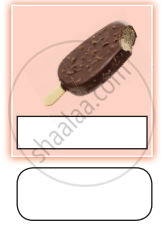
Look at the image of the familiar advertisement given below. Identify the product and try to frame your own slogan.
Draft Letter for the following.
You are Raja. The street lights of your area do not work properly. As a responsible citizen, write a letter to the newspaper enlightening them about the problem and also suggest ways to brighten the area.
Work in groups and write a paragraph on “Laughter is the best medicine.”
Write a narrative paragraph on Kamarajar, using the given information and add more information on your own.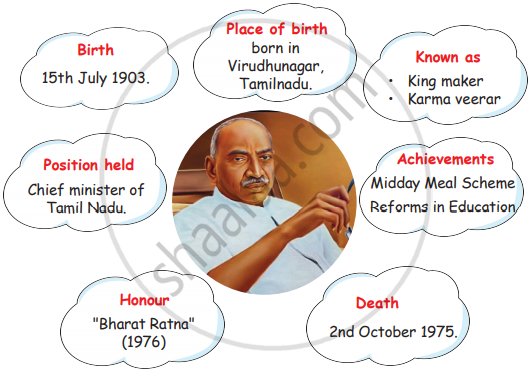
Do you want to try to write your own paragraph now?
Write a paragraph on Palm tree.

- ______
- ______
- ______
- ______
- ______
Alice follows the strange rabbit because she wants to know a number of things. Re-arrange the words to make the questions that Alice has in her mind, and put a question mark (?).
read he can time the
Look for words in the poem which sound like the words given below.
- are ______
- there ______
- flour ______
- where ______
- son ______
- threw ______
Make naming words by adding ness, ity, ty at the end of the words given below. One has been done for you.
| public | publicity |
| forgive | |
| kind | |
| polite | |
| moral | |
| stupid | stupidity |
| blind | |
| cruel | |
| swift | |
| solid |
Add ‘–er’ or ‘–r’ to the doing words below to make new words.
- stiff - ______
- fight - ______
- juggle - ______
- speak - ______
- write - ______
- strange - ______
- dance - ______
- ride - ______
- use - ______
- joke - ______
State whether the following statement are true or false
The friends could not keep in touch because they lost each other’s phone numbers.
What made her feel confident about the competitive players? Explain.
Why did the photographer feel happy after taking the photograph?
‘Just one more installment and BABY’S REALLY OURS!’ This tells us that the couple
The poet immortalizes the tree. Elucidate.
What was the blue bead?
Suppose one of your parents or an older relative wants to know about online shopping and you are explaining how to do it. Write a conversation between you and your parent/relative about it.
You want to convince the customer to buy your product. Prepare a conversation between you and the customer about it.
What’s the difference between ‘hear’ and ‘listen?
Divide the students into groups of five. They sit in a circle. They choose one object of daily use such as a bag, wallet, box, etc. The group leader writes four sentences about it.
- I have found a ______
- It’s (colour)
- It’s (shape)
- It has a ______
- I found it (place where it was found)
Others, too, write four sentences each.
- • I’ve lost a ______
- It’s (colour)
- It’s (shape)
- It has a ______
- • I lost it (place where it was lost)
They all open read their lines, beginning with the group leader. The player whose description matches the group leader’s the most gets the object.
Using the given informal letter as a model, write a letter about the topic given below.
Write letter to your father asking permission to go on a educational tour.
