Advertisements
Advertisements
प्रश्न
Briefly explain the following statement from the text.
“You have passed through a fantastic experience: or more correctly, a catastrophic experience.”
Advertisements
उत्तर
This statement was made by Rajendra to Prof. Gaitonde in the text The Adventure by Jayant Vishnu Narlikar. Rajendra made this statement in the context of Prof. Gaitonde experiencing a different version of the outcome of the Battle of Panipat. Prof Gaitonde was a historian and he was invited to a seminar to speak on the Battle of Panipat. He was to make a point that if in the battle of Panipat the Marathas emerged victorious then what would have happened. Interestingly, Prof. Gaitonde happened to experience the very hypothesis as reality. He entered a different level of consciousness and was witnessing events like the Battle of Panipat in an altogether different version. In the History books, the Marathas are mentioned as being a loser in the battle but in his experience, the Marathas emerged victoriously. Prof. Gaitonde was unable to understand this phenomenon. It is in this context, Rajendra tried to offer a scientific explanation to rationalise Prof. Gaitonde's experience. He meant to say that what Prof. Gaitonde experienced was not imaginative or fantastic but was also real. He tried to explain this in light of the catastrophic theory. According to this theory, there can be many alternative realities simultaneously existing. An observer sees only one of the alternatives. By applying this theory, Rajendra tried to explain the outcome of the Battle of Panipat as revealed to Prof. Gaitonde. The catastrophic theory has been developed by observing the outcome of experiments on small systems like atom and their constituent particles. The behaviour of these systems cannot be predicted definitely even if all the physical laws governing those systems are known.
APPEARS IN
संबंधित प्रश्न
Describe the progress made by Helen Keller during the two years she spent at Wright-Humason School for the Deaf in New York City.
Answer the following question in 120-150 words :
Nancy Lammeter is a typical country girl. Comment.
To what end have humans used their superior intelligence ?
Read the following extract carefully and complete the activities given below :
A1 Complete the following :
(i) Books were found on the _____________ and ____________.
(ii) The tales are described as ______________ and __________.
|
Have you forgotten? Don't you know?
We'll say it very loud and slow:
THEY ... USED ... TO ... READ! They'd READ and READ,
AND READ and READ, and then proceed
To READ some more. Great Scott! Gadzooks!
One-half of their lives was reading books!
The nursery shelves held books galore!
Books cluttered up the nursery floor!
And in the bedroom, by the bed,
More books were waiting to be read!
Such wondrous, fine, fantastic tales
Of dragons, gypsies, queens, and whales
And treasure isles, and distant shores
Where smugglers rowed with muffled oars,
And pirates wearing purple pants,
And sailing ships and elephants,
And cannibals crouching 'round the pot,
Stirring away at something hot.
(It smells so good, what can it be?
Good gracious, it's Penelope.)
|
Read the following passage and do the activities:
B1 Match:
Match the areas given in Column ‘A’ with the description of Mehendi design given in Column ‘B’:
| 'A' | 'B" | ||
| (i) | North African | (a) | A mix of Indo-Pakistani and Arabic design |
| (ii) | Indian | (b) | Delicate loops and curves, paisleys, teardrops |
| (iii) | Arabic | (c) | Geometrical images |
| (iv) | South Asian | (d) | Local textiles, paintings, and architecture |
Henna comes from the leaves of the plant Lawsonia inertias. The plant grows in hot and dry climes and is native to North Africa, the Indian subcontinent and the Middle East. The leaves of the plant are dried and crushed to powder. Various additives such as coffee decoction, tea, lime juice, Mehendi and eucalyptus oil are mixed with the henna powder to increase the potency of the dry, this also helps to bind the powder to a paste-like consistency. The mixture is applied through cones in intricate patterns depending on the region of use.
Album of Patterns
Four major styles can be found in the vast dictionary of Mehendi designs. Earlier the application was restricted to hand and feet, but the adoption of Mehendi by different cultures throughout the world has seen experimentation on different body parts including the neck naval and back.
North African patterns rely on geometrical images to trace the shape of hands and feet, Arabic designs borrow heavily from local textiles, paintings, and architecture. These are more spaced out, to allow the design to stand out boldly from the skin parts left untouched by henna. The Indian style comprises of delicate loops and curves, paisleys, teardrops and flowers that give a dainty filigreed glow-like effect. Though intricate patterning is the name of the game today, this trend took off in India only during the 20th century. The patterns preferred by the South Asian countries are mixed with Indo-Pakistani and Arabic design schemes. Chinese and Celtic symbols now find a place in the vast repertoire of Mehendi designs as well.
B2 Complete:
Complete the following and write:
(i) The procedure before applying henna _______
(ii) The reasons for using additives _______
(iii) The suitable climatic conditions for the henna plant _______
(iv) Mehendi is used on _______
B3 Find words:
Look at the following description and find out proper words from the passage and write:
(i) Existing naturally in the place : - n _______
(ii) Consist of something: - c _______
(iii) Delicate decoration made from gold, silver and copper wire: - f _______
(iv) Substance that is added in small quantity : - a _______
B4 Language study:
Fill in the blanks with suitable subordinators given in the box:
| as well as, so that, however, which |
(i) The mixture is applied through cones in intricate patterns _______ depend on the region of use.
(ii) The intricate pattern is the name of the game of today _______, this trend took off in India, recently.
(iii) North African pattern relies on geometrical images ______ they can trace the shape of hands and feet.
(iv) The patterns preferred by the South Asian countries are mixed with Indo-Pakistani _______ Arabic design schemes.
B5 Personal Response:
Which Mehendi design do you like? Why?
Describe the mental condition of the voyagers on 4 and 5 January.
Read the play out in parts. Enact the play on a suitable occasion.
Nouveau riche and bourgeoise are French words. Collect from newspapers, magazines, and other sources some more French words or expressions that are commonly used in English.
We 'draw up a deed'. Complete the following phrase with an appropriate word.
________ends meet
What do you infer from Darwin's comment on his indifference to literature as he advanced in years?
The power of poetry lies in suggestion and understatement. Discuss this with reference to the poem.
What quality of 'beauty' and 'love' does the poem highlight?
Read the extract 'Being Neighborly' and complete the following statement:
To Jo, the fine house seemed like ______.
Name the world-famous personality who reached great heights despite of humble circumstances.
Read the story and complete the following.
When Revathi played her favourite raga, the plants began to move because, ____________.
Find evidence from the lesson and write in your own words.
India has many amazing success stories.
Answer the given question in your own words.
Why was the Prince sad?
Which two sayings about God are conveyed through the poem 'The Plate of Gold'?
- God helps those, who help themselves.
- God loves those, who love their fellow beings.
- God loves those, who give away their wealth, to please Him.
- Service to mankind is service to God.
Discuss in your class.
Are robots truly useful to human beings? Why? Why not?
Expand the idea inherent in the following proverb :
If winter comes, can spring be far behind? - Shelley
Human beings can learn from honey bees ______.
With the help of the internet and other sources, obtain more information about the critically endangered birds and animals in India. Find the names of their sanctuaries.
Write in short about what your parents/guardians feel when they send you to school.
Read the following sentence carefully and choose the correct meaning.
Fine feathers don’t make fine birds.
Can you name different types of fabrics? Which is the most expensive fabric you know? Talk to your parents or to a textile shop assistant. Collect samples of as many types as you can and paste them into your scrapbook. Name each type.
The consequences of Oberon’s jealousy for Titania are comic rather than tragic. Comment.
Are there any stories/legends about the moon or special names for the moon in your language? Talk to your friends and family members and collect this information.
What two basic rules were followed in the Science Fair?
Does the poet expect anything in return? What is the poet’s reward?
List the lines that begin with 'Here' or 'And here'.
Also, list the sentences or phrases that begin with ‘And there’.
These phrases and sentences tell us about things that appear one after the other as the carriage moves. Can we tell which ones are closer to the train and which ones are at a distance? How?
List the adverbs/adverbial phrases used in the passage.
Did Gopal Bhand have a field?
Write what the following do, with the help of the poem.
ripples
Guess the meaning of dreary.
Guess the meaning of on the wing.
Read the following passage and answer the questions that follow.
BUNGEE-JUMPING
Bungee jumping is an activity that involves jumping from a tall structure while connected to a long elastic cord. The tall structure is usually a fixed object, such as a building, bridge or crane; but it is also possible to jump from a movable object, such as a hot-air-balloon or helicopter, that has the ability to hover above the ground. The thrill comes from the freefalling and the rebound. When the person jumps, the cord stretches, and the jumper flies upwards again as the cord recoils and continues to oscillate up and down until all the kinetic energy is dissipated.
Jumping Heights, located in Mohan Chatti village, in Rishikesh has been rated as one of the most preferred bungee jumping destinations in India at a height of 83 meters. It is the only place in India where bungee jumping can be done from a fixed platform. This is also India’s only fixed platform Bungee- performed from a professional cantilever, to separate it from entertainment parks, and create instead, an extreme adventure zone. The Bungee has been designed by David Allardice of New Zealand.
The Cantilever platform is built over a rocky cliff over-looking the river Hall, a tributary of River Ganges. Bungee-ing amidst the vastness of nature lends the experience an absolutely breathtaking quality. Jumping heights is well known for its safety measures and experienced staff. It costs around Rs 2500 per jump, a bit expensive, but totally worth the experience. The Bungee jumping experience has been set amidst the astoundingly stunning landscape of Rishikesh. To Bungee jump, one must be at least 12 years and should weigh between 40-110 kg.
Questions
- What is Bungee Jumping?
- Can Bungee be performed from a movable object? How?
- When do you think Bungee becomes thrilling?
- What is the experience when one falls off the platform?
- Where is the Bungee jumping point located in India?
- What is the minimum age to Bungee jump?
What woke up the mother?
What happened when Somu left Zigzag with the Krishnans?
When and where was the first ATM installed?
Write the name of the toys against each picture.

Write the name of the toys against each picture.

Why did Granny scold Hamid?
Discuss with your partner and complete the table.
| S.No. | Question | Who asked this? | Who answered? | What was the answer? |
|
1. |
Shall we run back together? | |||
| 2. | Can you see something behind the wall? | |||
| 3. | Who said good bye? | |||
| 4 | Was it just the wind? |
They may have______ in______.
- soft
- vain
- fear
- joy
- love
- heard
- toiled
- mild
- good
- sand
- life
- harsh
Read the line and answer the question.
And the wheel’s kick and the winds song and the white sail’s shaking
What according to the poet are the pleasures of sailing?
How is water produced in Mars?
What did Nilavan see through the window?
| Mr. Murugan is a farmer. He has a small piece of land and two bulls. He takes good care of his bulls as they help him in farming. Every morning, he takes the bulls for grazing. When it rains he ploughs the land with the bulls. As he has no one to help he starts sowing the seed before sunrise. He irrigates the crop till it grows. He reaps and binds the crop then takes it to thrash the paddy. Finally, with the help of the bulls, he takes the paddy to his house. |
Name the actions of Murugan.
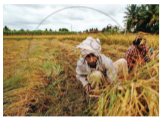 |
|
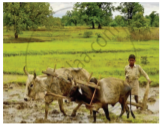 |
|
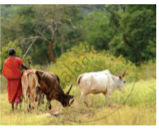 |
Did Tabaqui receive a warm welcome from the pack of wolves? How do you know?
Choose the odd one out.
Look at the picture and Choose the correct word.

Who was Akilan’s inspiration?
Divide the following word.
man
Number the pictures in the correct order of the story.

Are you the first to protect the nature?
What did Helen learn when the teacher put her hand into running water?
What secrets did he learn about beasts?
What are the details not to be revealed in public domain?
