Advertisements
Advertisements
प्रश्न
Briefly explain the following statement from the text.
Gangadharpant could not help comparing the country he knew with what he was witnessing around him.
Advertisements
उत्तर
The given statement is in the text The Adventure by Jayant Vishnu Narlikar. The statement is in the context of Gangadharpant experiencing a different historical view of India after the Battle of Panipat. According to this perspective of Indian history, the Marathas emerged victorious in the said battle and extended influence over the entire country till the end of the twentieth century. They were gradually replaced by democratically elected bodies. The country Gangadharpant was witnessing around him had always been strong and self-respecting. He could not help comparing it with the country that he knew. The two versions of the historical reality of India indeed were perplexing to him and he started comparing the two in order to understand the phenomenon. This was later explained by Rajendra in the light of catastrophic theory, according to which, there could be alternative realities existing side by side out of which any one of the alternatives is revealed to an observer. This is what happened with Gangadharpant in that he was witnessing an altogether different version of Indian history. This induced him to compare the two versions of India as mentioned in the History textbooks and another revealed to him.
APPEARS IN
संबंधित प्रश्न
B1. Complete the following statements:
(i) The poet is talking about............................. .
(ii) As a nation weare missing our .................................... .
(iii) Old people havekeys ........................... .
(iv) The elderly remember .......................... .
"Oh the value of the elderly! How could anyone not know? They hold so many keys, so many
things they can show.
We all will read the other side this I firmly believe.
And the elderly are closest oh what clues we could retrieve.
For their characters are closest to how we'll be on high.
They are the ones most developed, you can see it if you try.
They've let go of the frivolous and kept things that are dear.
The memories of so sweet, of loved ones that were near.
As a nation we are missing our greatest true resource,
To get to know our elders and let them guide our course."
B2 Express
State what the underlined words mean:
(i) Oh the value of the elderly! State the value ............. .
(ii) They are the ones most developed. 'They' stand for ............. .
B3: Match the words in Column A with their rhyming word in Column B:
| Column A | Column B |
| (i) Course | (a) Show |
| (ii) Believe | (b) resource |
| - | (c) retrieve |
Read the passage given below and answer the questions that follow:
1. Air pollution is an issue which concerns us all alike. One can willingly choose or reject a food, a drink or a life comfort, but unfortunately there is little choice for the air we breathe. All, what is there in the air is inhaled by one and all living in those surroundings.
2. Air pollutant is defined as a substance which is present while normally it is not there or present in an amount exceeding the normal concentrations. It could either be gaseous or a particulate matter. The important and harmful polluting gases are carbon monoxide, carbon dioxide, ozone and oxides of sulphur and nitrogen. The common particulate pollutants are the dusts of various inorganic or organic origins. Although we often talk of the outdoor air pollutions caused by industrial and vehicular exhausts, the indoor pollution may prove to be as or a more important cause of health problems.
3. Recognition of air pollution is relatively recent. It is not uncommon to experience a feeling of 'suffocation' in a closed environment. It is often ascribed to the lack of oxygen. Fortunately, however, the composition of air is remarkably constant all over the world. There is about 79 per cent nitrogen and 21 per cent oxygen in the air − the other gases forming a very small fraction. It is true that carbon dioxide exhaled out of lungs may accumulate in a closed and over-crowded place. But such an increase is usually small and temporary unless the room is really air-tight. Exposure to poisonous gases such as carbon monoxide may occur in a closed room, heated by burning coal inside. This may also prove to be fatal.
4. What is more common in a poorly ventilated home is a vague constellation of symptoms described as the sick-building syndrome. It is characterized by a general feeling of malaise, head-ache, dizziness and irritation of mucous membranes. It may also be accompanied by nausea, itching, aches, pains and depression. Sick building syndrome is getting commoner in big cities with the small houses, which are generally over-furnished. Some of the important pollutants whose indoor concentrations exceed those of the outdoors include gases such as carbon monoxide, carbon dioxide, oxides of nitrogen and organic substances like spores, formaldehydes, hydrocarbon aerosols and allergens. The sources are attributed to a variety of construction materials, insulations, furnishings, adhesives, cosmetics, house dusts, fungi and other indoor products.
5. By-products of fuel combustion are important in houses with indoor kitchens. It is not only the brining of dried dung and fuelwood which is responsible, but also kerosene and liquid petroleum gas. Oxides of both nitrogen and sulphur are released from their combustion.
6. Smoking of tobacco in the closed environment is an important source of indoor pollution. It may not be high quantitatively, but significantly hazardous for health. It is because of the fact that there are over 3000 chemical constituents in tobacco smoke, which have been identified. These are harmful for human health.
7. Micro-organisms and allergens are of special significance in the causation and spread of diseases. Most of the infective illnesses may involve more persons of a family living in common indoor environment. These include viral and bacterial diseases like tuberculosis.
8. Besides infections, allergic and hypersensitivity disorders are spreading fast. Although asthma is the most common form of respiratory allergic disorders, pneumonias are not uncommon, but more persistent and serious. These are attributed to exposures to allergens from various fungi, molds, hay and other organic materials. Indoor air ventilation systems, coolers, air-conditioners, dampness, decay, pet animals, production or handling of the causative items are responsible for these hypersensitivity − diseases.
9. Obviously, the spectrum of pollution is very wide and our options are limited. Indoor pollution may be handled relatively easily by an individual. Moreover, the good work must start from one’s own house
(Extracted from the Tribune)
(a) (i) What is an air pollutant? (1)
(ii) In what forms are the air pollutants present? (2)
(iii) Why do we feel suffocated in a closed environment? (1)
(iv) What is sick building syndrome? How is it increasing? (2)
(v) How is indoor smoking very hazardous? (1)
(vi) How can one overcome the dangers of indoor air pollution? (2)
(b) Find the words from the above passage which mean the same as the following: (3)
(i) giddiness (para 4)
(ii) constant (para 8)
(iii) humidity (para 8)
How does a black kite spread wildfire ?
Discuss in groups of four.
The accounts of exotic places in legends and the reality.
What do you think are the reasons for the references made to the English people and the British monarchy?
What are the cues that signal the presence of the peacock in the vicinity?
What, according to Ruskin, are the limitations of the good book of the hour?
Why have the words, 'pretended' and 'seemed' been used in the lines:
...Pretended to believe every single word
of what the tiger king said.
And seemed to be taken in by all the lies.
How does the sense of these lines connect with the line 'Ajamil wasn't a fool'?
Think and write down how the following creature can be useful:
Dragon fly:
Read the story and choose the appropriate meaning.
Wielded the brush ____________.
A bridge connects people on either side of a river or valleys in cities or villages. Discuss with your partner the importance of a bridge to both the cities and the villages and complete the table.
| Cities | Villages |
Given below are some words from legal terminology used in court affairs. Discuss and complete the table accordingly.
| Sr. No | Legal Terminology | Description |
| 1. | Affidavit | A written statement confirmed by oath or affirmation for use as evidence in court. |
| 2. | Argument | |
| 3. | Consent | |
| 4. | Counsel | |
| 5. | Judgement | |
| 6. | Trial | |
| 7. | Verdict | |
| 8. | Contempt of Court | |
| 9. | Notice | |
| 10. | Stay order |
Discuss in your class.
What are the advantages of learning science?
Fill in the gap, choosing a word from the bracket to make an appropriate comparison.
(tall / quiet / humble / merry / busy / slippery / fast / sly / slow / big)
as ______ as a fox
What is described in the poem?
What do restive horses do?
Complete the following sentence using your idea:
I can ______.
Visit a library:
Find stories about hosts and guests. Share them with the class. Classify the stories into funny and serious stories.
Write a short note on the following:
Utilization of animal by-products in the ancient world.
Form pairs. Complete the following table through discussions.
| Occupation | Necessary Qualities | Reasons |
| Student | ||
| Teacher | ||
| Housewife | ||
| Sportsman | ||
| Artist | ||
| Singer | ||
| Author | ||
| Umpire | ||
| Actor | ||
| Scientist |
Visit a library: Find poems about animals. Copy them and recite them to your friends.
Hold a mock trial for the following offence. There should be a complainant, a defendant, and lawyers to argue the case on behalf of them. The whole class can vote to pass the judgment. On what occasions will you plead for justice? What punishment will you suggest? When will you plead for mercy?
A very poor and honest servant has broken a vase while cleaning it. The vase was valuable and the employer liked it very much.
An activity:
Speak fast, think faster ! Form groups of 4-6. Discuss each of the following topics. Then each person in the group should choose a topic and speak about it for one minute. Try to say as many sentences as you can in that time.
What may happen...
I may study... A bird may fly into the classroom. The Principal may call me... It may rain... A dog may chase a cat... A king may lose his kingdom... My friend may give me a storybook to read... Mother may make idlis today...’ etc.
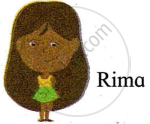
Write about Malti and Rima using the following points:
 |
 |
| Appearance... | Appearance... |
| Studies... | Studies... |
| Singing... | Singing... |
| Attitude to others... | Attitude to others... |
| Weak points... | Weak points... |
Use details from the story and your own imagination when you write the above descriptions.
Pick out words from the poem that describe the following. List them in Column ‘A’. Substitute each of those describing words with another word/phrase of the same meaning.
| A (Poetic words) | B (Your own words) | |
| the ‘Autumn’ | a maiden fair | |
| stars | ||
| moonlight | ||
| cooing of birds |
Answer the following question and write in short, why the parody sounds funny.
Is the bee a gentle creature? Is the crocodile gentle?
Where does the brook join the river?
Pick out the line that means:
Sing in such a manner:
Say whether you agree or disagree.
The children showed disinterest even in the bachelor’s story-telling, throughout.
Why did Marouckla’s stepmother hate her?
Describe the following with the help of the (The Twelve Months) story.
Springtime
List and say whether the following statement agrees with the passage or not.
You should try to talk most of the time whenever there is a discussion.
What did Ahmad tell Kasim when he dug a channel and began to draw water?
Draw a diagram to explain the idea of Internet.
What happened to the young seagull when it landed on the green sea?
Read the following line from the poem and answer the question that follow.
Let me but live my life from year to year, With forward face and unreluctant soul; Not hurrying to, nor turning from the goal; Not mourning for the things that disappear.
Identify the rhyme scheme of the given lines.
And whether their station be high or humble,…
Pick out the alliteration from the above line.
At dawn, the______ began to sing.
Write down the word that alliterate in the poetic line below
That spreads treasures on a tree.
What did Raj buy?
Why does the child clamber and scramble?
The boar slept until the fading sun told him it was time to get up. What does the phrase until the fading sun mean?
Amuthan locked the door behind him.
How do we work?
Find the rhyming word from the poem.
alike – _________
Read scene I of the play carefully and answer the question below.
Who is about to go on a hunt? Do the wolves panic on his arrival? Explain.
It never takes ______ and ______.
Choose the correct option from the given homophones.
You should never ______ to your parents.
Fortune knocks with its best who _______ for their guest.
Choose what the elephant did.
Guess how would the sparrow pull the elephant and the crocodile.
______always stays to the last in our needs.
Why was the teacher annoyed?
Anbu was a ________ old boy.
What did the leader see on the river?
What should we vow for?
Name the animal and sound it makes.
Why did Bala go to Chennai with his father?
Finally, ______, he got permission to study Science.
Write the compound words from the picture.
 |
 |
| ______ | |
