Advertisements
Advertisements
प्रश्न
The peacock is a colourful bird. How does the poem capture the various colours that its plumage displays?
Advertisements
उत्तर
An Asian bird, the peacock is one of the most colourful known birds. Its plumage is a myriad of colours. Sujata Bhatt has detailed the tail of numerous colours with such finesse that it is not hard to visualise the blue and golden of the peacock. In the very beginning when she tells the reader of the presence of a peacock in the vicinity she talks of the turquoise flashed in the peepal tree, a vibrant reflection of the turquoise colour, which is most dominating in its feathers, forms an image in the reader's mind. Even when the peacock makes a spectacle, the poet talks of its dark glowing eyes (in feathers), describing them “violet fringed with golden amber”. It creates vivid imagery of a widespread plumage of the peacock with all the vibrant colours reflecting the flamboyance.
APPEARS IN
संबंधित प्रश्न
Mention the three phases of the author’s relationship with his grandmother before he left the country to study abroad.
Mention the way in which the sparrows expressed their sorrow when the author’s grandmother died.
Why do you think Professor Gaitonde decided never to preside over meetings again?
Considering that this is an excerpt from a lecture, how does the commentary provided by the speaker string the arguments together?
While tribal communities may not seem to possess the scientific temper,there are many ideas from tribal conventions that could enrich modern societies.
Comment on the symbols used in ‘A Munda Song’. What aspect of the tribal worldview do they reflect?
How is the idyllic juxtaposed with the pedestrian in the poem?
The poem is a satire against the present political class. How effectively does it convey the anger and anguish of the common man trapped in the system?
Read the extract 'Being Neighborly' and complete the following statement:
Jo entered the old stone house carrying _______________.
Name the world-famous personality who reached great heights despite of humble circumstances.

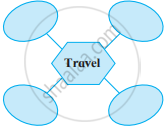
Pick out words from the poem to fill in the web diagram. They should be related to the theme in the web.
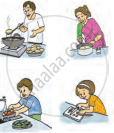
Now write what you observe in the following two pictures.

Think and write down how the following creature can be useful:
Dragon fly:
State whether the following statement is True or False. Correct the false statement by finding evidence from the poem to support your remark.
Birds and insects were benefitted from the tree.
Life is an amalgam of happy and sad moments. Think of such moments in your life, pair with your classmate, and share both the aspects of life.
| Happy Moments | Sad Moments |
| 1. Winning the first prize in a competition | Losing your mobile, bicycle, or wallet |
| 2. | |
| 3. |
Suggest what you would do in the following situation:
You are going through a crisis that is making you short-tempered and impatient, due to which you end up causing harm to your family and friends. They have started complaining about it quite often.
Go through the following web that highlights the essential qualities of a compere. Discuss with your partner the essential qualities and also the precautions that a compere should take while compering a program.

Precautions to be taken :
- __________________________
- __________________________
- __________________________
- __________________________
State the difference between drama and novel.
Read the story and write about the following in short.
Bushi Kiyo
Divide the story into different sections to show the different events and time periods in it. Give a suitable title to each section.
Who was Shalihotra?
Portia had many brothers and sisters.
Hold a mock trial for the following offence. There should be a complainant, a defendant, and lawyers to argue the case on behalf of them. The whole class can vote to pass the judgment. On what occasions will you plead for justice? What punishment will you suggest? When will you plead for mercy?
A very poor and honest servant has broken a vase while cleaning it. The vase was valuable and the employer liked it very much.
Complete the following sentence with reference to the passage:
The king was determined to prevent his beloved son from ____________.
Write the symbol that is used in the poem to represent the following idea.
Choice of two options.
Who is the speaker in this poem?
Write slogans for the cleanliness drive in your area.
List all the words and phrases in this story that indicate 'time'.
The second human being that Miranda saw on the island was __________________.
Identify the character or speaker
He repented and implored his brother’s forgiveness.
Read the incident again and answer the following question.
What is the humour element in the above incident?
How did Zigzag communicate with the Krishnans?
Write the name of the toys against each picture.

When are we in a state of trance?
Role play
Put students in pairs to role-play a conversation between:
- Alice and her sister.
- Alice and White Rabbit.
Which mode of transport did Fogg choose?
If you are a flight attendant how will you deal with the hijackers?
Identify the speaker/character.
Don't worry, Madam, it's only a warning.
Grandfather felt planting trees would help the forest because______.
Narrate the story based on the story map
Name the tools the farmer brought out. What did he do with them?
The poor farmer’s crop was______.
What did Nilavan see through the window?
A country should have inner boundaries. Justify.
Kaliyan worked in a ______.
Name the character or speaker.
“Believe yourself.”
What party is that?
Choose the correct answer.

The official's family visited the rehabilitation centre for ______ years.
Kani took Teddy out for a ____.
Fill in the blank with rhyming word.
tunnels- ______
Fill in the blank with rhyming word.
larder- ______
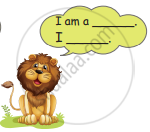
Name the animal and sound it makes.
Which problem do you think you can solve with art? How?
Where did the naughty boy go?
What did the animals do when they saw the blue jackal?
Complete the dialogue.
| Anil: | Which is your favourite book? |
| Sunil: | ________________________ |
| Anil: | What type of book is it? |
| Sunil: | ________________________ |
Based on the poet’s idea of true success, think of four people in your surroundings - your family, neighbours, friends, teachers, classmates, etc. who have achieved true success. Write, in short, what makes them successful.
