Advertisements
Advertisements
प्रश्न
How does the poem capture the elusive nature of the peacock?
Advertisements
उत्तर
The peacock, as the poet narrates, is not so easy to find. Its elusive nature makes one work really hard to get a glimpse of it. The poet says that she was told that one has to sit in the veranda and read a book, preferably a favourite one, with great concentration. The moment the person begins to live inside the book and forgets about the surroundings, the peacock descends casting a blue shadow over the person. The steady humming of the bees in the nearby bushes will stop, the cat will awaken and stretch. The attention will brake and then one has to look up in time else the peacock will disappear again somewhere for it is evanescent. Even when one gets to see it once, the peacock runs out of sight quickly gathering its tail.
APPEARS IN
संबंधित प्रश्न
Answer any four of the following questions in 30-40 words each:
(a) What did Franz wonder about when he entered the class that day?
(b) What shocking experience did Douglas have at YMCA pool?
(c) Why does Kamala Das compare her mother to 'a pale winter's moon'?
(d) What rich bountry has the heaven given us? (A Thing of Beauty)
(e) Why did the Maharaja have to pay a bill of three lakh rupees to the British jewellers?
(f) What problem did Roger Skunk face when he went to play with his friends. How did he solve it?
In ‘The Diary of a Young Girl’ how did the Franks and others celebrate two festivals, Hanukkah and St. Nicholas Day in the Annexe ?
Chimps making their own fishing rods is an indication that
Give an example from the passage that proves the crow to be an intelligent bird.
Read the following passage and complete the activities given below:
Answer the following question in 150-200 words:
Attempt a character sketch of Mr. Gilman.
Talk to your partner about the following.
Would you agree that the author’s grandmother was a person strong in character? If yes, give instances that show this.
Notice this expression in the text. Infer its meaning from the context.
blow-by-blow account
Tick the statement that is true.
The story tries to relate history to Science.
The story is divided into pre-war and post-war times. What hardships do you think the girl underwent during these times?
'The Address' is a story of human predicament that follows war. Comment
Explain the line:
'I seemed to detect in myself a sort of sneaking fellow-feeling for the mummy in the museum, and a desire to swap news with him.
Discuss the following in pairs or in groups of four:
“Tribal arts are not specifically meant for sale.” Does this help or hamper their growth and preservation?
The power of poetry lies in suggestion and understatement. Discuss this with reference to the poem.
How does Forster trace the human interest in the story to primitive times?
Study the Note to Aspects of the Novel given at the end. Discuss the features that mark the piece as a talk as distinguished from a critical essay.
Identify the words that help you understand the nature of the poet's father.
Using a dictionary/internet note down the main difference between our strengths and our achievements.
Find evidence from the lesson and write in your own words.
India has many amazing success stories.
State whether the following statement is True or False. Correct the false statement by finding evidence from the poem to support your remark.
Birds and insects were benefitted from the tree.
Answer the given question in your own words.
Why was the Prince sad?
Think and answer in your own words.
Why does the poet call our life ‘poor’?
Say WHY. . . . . .
Mother agreed to send Ramanujan to England.
Name any four periods of History of British Drama.
Enact the ad by playing the roles of Didi and her relatives. One more child acts as the salesman of ‘Hemagauri’ and presents the text given in white letters in pink bubbles.
Discuss and write 1-2 lines about the following,
Yonamine’s ideas about marriage.
Write the following in short:
The story of the three caskets.
Hold a mock trial for the following offence. There should be a complainant, a defendant, and lawyers to argue the case on behalf of them. The whole class can vote to pass the judgment. On what occasions will you plead for justice? What punishment will you suggest? When will you plead for mercy?
A young man was injured in a road accident due to another man’s careless driving.
Guess the meaning of the following from the context.
The meadow is wrapped in shadow.
Read the passage and answer the following:
Why is the tollbooth called a ‘phantom’ tollbooth?
What changes do we see in the life of human beings when the season changes? Write with reference to their celebrations.
What did the husband want to buy?
Discuss the following in group.
Do people admit that they have bad habits?
What examples of plentiful things does the poet give?
What does a farmer need most for his fields?
Identify the character or speaker.
I was Duke of Milan, and you were a princess.
Answer the following question in about 80-120 word.
If you were to live in the Complaining Street, how would you deal with the people who grumble?
Pick out the other examples for alliteration from the poem.
Read the data below and answer the following question.
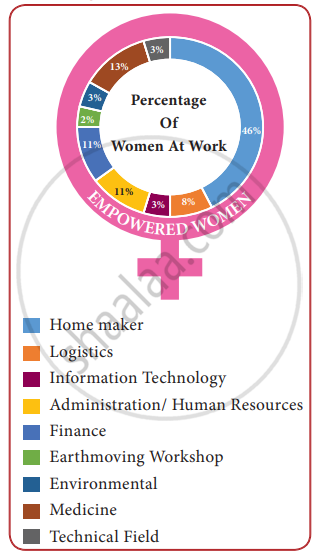
Choose the correct answer.
What is the data about?
Hamid’s friends are ______
What scared Usha during the dark rainy night?
What do you need to learn to live a good life in this world?
He woke up very late in the morning.
Read the “Story of Self Sacrifice and Bravery” once again and complete the flow chart.
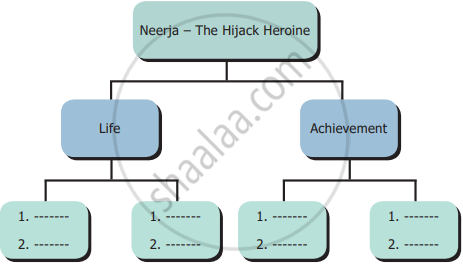
Narrate the story based on the story map
Fill in the blanks to complete the summary.
Ever since their introduction, ______, and their unique rhythms have ______ poets. In this poem the poet shares his experience ______ with us. He presents natural scenes seen from ______ a railway carriage. The ______ is regular and steady but ______ from the window of the train is constantly changing. The poem’s rhythm and phrases bring ______ of a railway journey. The poet looks out of the window at the ______ images outside. Every line we see here is a quick account of something seen for ______. The line that best sums up is the final one: "Each a glimpse and gone forever!"
What was the girl determined to do? Why?
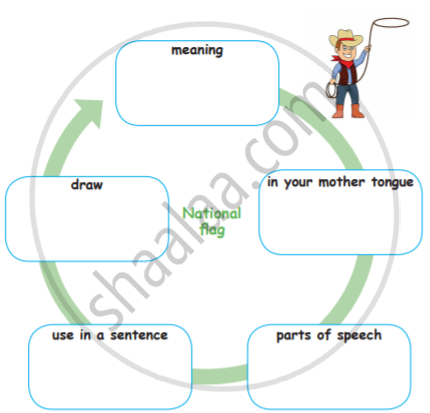
Try your own.
The robot did not obey his master.
Look at the picture and Choose the correct word.

Circle and write the adverbs.
We will leave today. ______
Why did Meena call the official 'Appa'? Do you think we need to be a family to care for others?
Find and write the clues.
Clue for blind eye ______
Moles dig ______ to catch earth worms.
Fill in the blank with rhyming word.
larder- ______
Name the animal and sound it makes.
Write the word with same meaning.

chips- ______
What does the earth do when the day is over?
Read the passage carefully and complete the activities:
A1. Complete the following sentences. [2]
- Female sparrows lay ______.
- Sparrows build their nest out of ______.
- The eggs are ______.
- In cities, sparrows build their nest in ______.
|
A sparrow is a small bird which is found throughout the world. There are many different species of sparrows. Sparrows are only about four to six inches in length. Many people appreciate their beautiful songs. Sparrows prefer to build their nests in low places-usually on the ground clumps of grass low trees and low bushes. In cities, they build their nests in building nooks or holes. They rarely build their nests in high places. They build their nests out of twigs grasses and plant fibers. Their nests are usually small and well-built structures. Female sparrows lay four to six eggs at a time. The eggs are white with reddish-brown spots. They hatch within eleven to fourteen days. Both the male and female parents care for the young. Insects are fed to the young after hatching. The large feet of the sparrows are used for scratching seeds. Adult sparrows mainly eat seeds. Sparrows can be found almost everywhere where there are humans. Many people throughout the world enjoy these delightful birds. The sparrows are some of the few birds that engage in dust bathing. Sparrows will first scratch a hole in the ground with their feet then lie in it and fling dirt or sand over their bodies with flicks of their wings. They will also bathe in water or in dry or melting snow. Water bathing is similar to dust bathing with the sparrow standing in shallow water and flicking water over its back with its wings also ducking its head under the water. Both activities are social with up to a hundred birds participating at once and are followed by preening and sometimes group singing. |
A2. How do sparrows take a bath? [2]
A3. Find out adjectives for the following nouns from the passage. [2]
- ______ Song
- ______ Water
- ______ Bird
- ______ species
A4. Do as directed. [2]
- A sparrow is a small bird which is found throughout the world.
(Underline the subordinate clause) - Female sparrows lay four to six eggs at a time.
(Frame a ‘wh’ type question to get the underlined part as an answer.)
A5. ‘We have to save the birds.’ Do you agree with this statement? Why? [2]
