Advertisements
Advertisements
Question
The peacock is a colourful bird. How does the poem capture the various colours that its plumage displays?
Advertisements
Solution
An Asian bird, the peacock is one of the most colourful known birds. Its plumage is a myriad of colours. Sujata Bhatt has detailed the tail of numerous colours with such finesse that it is not hard to visualise the blue and golden of the peacock. In the very beginning when she tells the reader of the presence of a peacock in the vicinity she talks of the turquoise flashed in the peepal tree, a vibrant reflection of the turquoise colour, which is most dominating in its feathers, forms an image in the reader's mind. Even when the peacock makes a spectacle, the poet talks of its dark glowing eyes (in feathers), describing them “violet fringed with golden amber”. It creates vivid imagery of a widespread plumage of the peacock with all the vibrant colours reflecting the flamboyance.
APPEARS IN
RELATED QUESTIONS
Write a character sketch of Mrs. Van Daan.
Answer the following in 30-40 words each:
(a) Why do you think the booking clerk refused to accept the money? Why did the narrator get out so fast?
(b) Why could the Russian research vessel, ‘The Akademik Shokaskiy’ not move any further? What did the captain decide then?
(c) What sort of hunts did the Maharaja offer to organize for the high-ranking British officer? What trait of the officer does it reveal?
(d) What did Jo want the wizard to do when Mommy Skunk approached him?
When and how did the people of Iping grow suspicious of the invisible man ?
Discuss the following in pairs or in small groups.
What were the voices that Paul heard? Did they lead him to success in the real sense?
Study each of the following sentences and notice the balance between its parts. Pick out other sentences in the text that reflect this kind of balance
a. It is right that a false Latin quantity should excite a smile in the House of Commons; but it is wrong that a false English meaning should not excite a frown there.
b. Let the accent of words be watched, by all means, but let the meaning be watched more closely still, and fewer will do the work.
Rearrange the following events as they occur in the story. Put the correct number in the boxes.
| (a) | Mr Fitzwarren provided shelter to Dick. | |
| (b) | A carter gave Dick a lift to London. | |
| (c) | A cat sailed to the African coast. | |
| (d) | The captain sold the cat for a very high amount of money. | |
| (e) | Dick left his village on foot, to go to London. | |
| (f) | Dick became rich, and later, the Mayor of London. | |
| (g) | Dick was homeless, helpless, cold and hungry. | |
| (h) | Dick bought a cat to get rid of the mice. | |
| (i) | The rats and mice ate up all the dinner, laid for the king and queen. |
Read the poem below and fill in the gaps, choosing appropriate pairs of rhyming words, to make them meaningful.
|
Little things Little drops of water, Thus the little minutes, Little deeds of kindness, |
(love - above / sand - land / be - eternity)
Imagine that you are the peasant. Compose a short prayer to God, after having received the plate of gold. Write it using stylish handwriting.
Behrman was a hard-hearted person.
Think and answer in your own words.
What could have inspired the poet to compose this poem? Do you think it relates to our present-day life? Defend your choice.
Where do we find all types of wild animals in urban areas?
Who gives medicine/treatment to sick animals and birds?
Fill in the gaps in the table of Degrees of Comparison.
| Positive | Comparative | Superlative | |
| (1) | ____________ | ____________ | oldest |
| (2) | ____________ | healthier | ____________ |
| (3) | near | ____________ | ____________ |
| (4) | ____________ | finer | ____________ |
| (5) | ____________ | ____________ | earliest |
| (6) | small | ____________ | ____________ |
| (7) | ____________ | faster | ____________ |
| (8) | high | ____________ | ____________ |
Human beings can learn from honey bees ______.
Do as directed. (Make sure you do not change the meaning and tense of the sentence).
I am proud of you. (Rewrite using the noun form of the underlined word).
Guess the meaning of the following words and phrases:
untold wealth, closest to the Emperor’s heart, grave offence, banish.
Complete the following web diagram.

Read and prepare a small presentation in about 100 to 150 words on the ideas of any two philosophers given below.
- Sant Dnyaneshwar
- Gautam Buddha
- Aurobindo Ghosh
- Kahlil Gibran
- Socrates.
State whether the following statement is True or False:
Lysander and Demetrius fall in love with Helena as a result of the love potion.
Find the meaning of ‘Charity begins at home’. Find other sayings which have a similar meaning.
Read the following sentence aloud. Write who said it and to whom.
“You have nothing else?”
Prepare similar word chains using the following ideas.
waterbody - pool ____________.
Think and answer:
Does the last line make you happy or sad? Why?
Complete the following sentence with reference to the passage.
It is believed that _________ Homer, who __________ and who ________ to all who __________________.
Explain the use of the following property in the development of the play.
An envelope containing the letter
What changes do we see in the life of human beings when the season changes? Write with reference to their celebrations.
Present these points in the form of a review, and give it a suitable title.
Answer in your own words.
What excuses did Neel give to avoid cleaning his room?
Does Marouckla get any of the things she brings?
List and say whether the following statement agrees with the passage or not.
You should always speak softly but clearly.
The following thing is mentioned in the poem.
Classify it as a happy and sad thing.
flowers - falling leaves
How do we come to know that Kasim was a generous man?
Write what the lark does.
Give two reasons why Miranda was so concerned about Ferdinand.
What were the various sounds the brothers heard when they went downstairs?
How did Hamid’s friends show that they enjoyed eating the sweets?
How did Hamid’s friends enjoy the games in the fair?
Identify the speaker/character.
He'll have to be given artificial respiration and kept warm.
The hatchlings use a tiny egg-tooth to come out of the eggs.
What does the tamarind give?
How did Santhosh spend his time in the river?
How should we treat everyone?
Look at the picture and Choose the correct word.

What was the dish served to the old man?
Identify the character/speaker.
He set the fish free.
Answer the following yes or no question.
Did all visit the waterfall?
Which is as important as our health?
How are we divided in real world?
Recite any 4 lines of the poem with intonation.
Why did Jana have a nightmare?
Fill in the blank
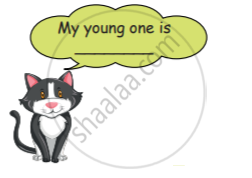
Name the things that good merchant offered for the plate
Why did Bala go to Chennai with his father?
List three questions that the little boy asks.
- ______
- ______
- ______
Who said – “Oh, my ears and whiskers? How late it’s getting!”
Read the poem.
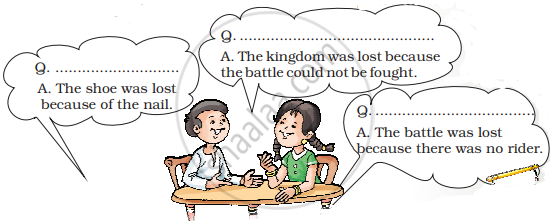
For Want of a Nail
For want of a nail, the shoe was lost,
For want of a shoe the horse was lost,
For want of a horse, the rider was lost,
For want of a rider, the battle was lost,
For want of a battle, the kingdom was lost,
And all for the want of a horseshoe nail!
[traditional rhyme]
Now form questions for the answers given in the speech bubbles.
Circle the words where you get a zzzzz sound. One is done for you.
| honeybees | |||
| price | prize | maze | face |
| rice | rise | blaze | fizz |
| lazy | lacy | busy | racy |
| raise | rays | race | ace |
| chase | this | these | frosty |
What are the details not to be revealed in public domain?
What should parents do to ensure cyber safety for their wards? (Any three points)
Why is it not advisable to play online games?
