Advertisements
Advertisements
Question
This short story revolves around a single important event. Discuss how the narrative is woven around this central fact.
Advertisements
Solution
The story has a simple plot and revolves around it. Iona Potapov, an aging man, a poor Russian cab driver lost his dear son earlier week. A load that he carries, weighing his heart, Iona wishes to speak and share his grief desperately with someone. Thus, on finding no companion or friend to mourn over his grief he tries to share it with everyone he comes across. He tries to share it with the passengers that board his sled only to find how disinterested everyone is in his story. His agony grows and he is thrown into despair. All the while there is one thing that remains constant in the story, the loss Iona suffers, and his attempt to overcome it. So, overwhelmed is the old father that he finally decides to go on and talk his heart out to his horse. The horse proves to be a true companion and listens to Iona's story patiently while munching hay.
APPEARS IN
RELATED QUESTIONS
Read the passage given below and answer the questions that follow:
1. Air pollution is an issue which concerns us all alike. One can willingly choose or reject a food, a drink or a life comfort, but unfortunately there is little choice for the air we breathe. All, what is there in the air is inhaled by one and all living in those surroundings.
2. Air pollutant is defined as a substance which is present while normally it is not there or present in an amount exceeding the normal concentrations. It could either be gaseous or a particulate matter. The important and harmful polluting gases are carbon monoxide, carbon dioxide, ozone and oxides of sulphur and nitrogen. The common particulate pollutants are the dusts of various inorganic or organic origins. Although we often talk of the outdoor air pollutions caused by industrial and vehicular exhausts, the indoor pollution may prove to be as or a more important cause of health problems.
3. Recognition of air pollution is relatively recent. It is not uncommon to experience a feeling of 'suffocation' in a closed environment. It is often ascribed to the lack of oxygen. Fortunately, however, the composition of air is remarkably constant all over the world. There is about 79 per cent nitrogen and 21 per cent oxygen in the air − the other gases forming a very small fraction. It is true that carbon dioxide exhaled out of lungs may accumulate in a closed and over-crowded place. But such an increase is usually small and temporary unless the room is really air-tight. Exposure to poisonous gases such as carbon monoxide may occur in a closed room, heated by burning coal inside. This may also prove to be fatal.
4. What is more common in a poorly ventilated home is a vague constellation of symptoms described as the sick-building syndrome. It is characterized by a general feeling of malaise, head-ache, dizziness and irritation of mucous membranes. It may also be accompanied by nausea, itching, aches, pains and depression. Sick building syndrome is getting commoner in big cities with the small houses, which are generally over-furnished. Some of the important pollutants whose indoor concentrations exceed those of the outdoors include gases such as carbon monoxide, carbon dioxide, oxides of nitrogen and organic substances like spores, formaldehydes, hydrocarbon aerosols and allergens. The sources are attributed to a variety of construction materials, insulations, furnishings, adhesives, cosmetics, house dusts, fungi and other indoor products.
5. By-products of fuel combustion are important in houses with indoor kitchens. It is not only the brining of dried dung and fuelwood which is responsible, but also kerosene and liquid petroleum gas. Oxides of both nitrogen and sulphur are released from their combustion.
6. Smoking of tobacco in the closed environment is an important source of indoor pollution. It may not be high quantitatively, but significantly hazardous for health. It is because of the fact that there are over 3000 chemical constituents in tobacco smoke, which have been identified. These are harmful for human health.
7. Micro-organisms and allergens are of special significance in the causation and spread of diseases. Most of the infective illnesses may involve more persons of a family living in common indoor environment. These include viral and bacterial diseases like tuberculosis.
8. Besides infections, allergic and hypersensitivity disorders are spreading fast. Although asthma is the most common form of respiratory allergic disorders, pneumonias are not uncommon, but more persistent and serious. These are attributed to exposures to allergens from various fungi, molds, hay and other organic materials. Indoor air ventilation systems, coolers, air-conditioners, dampness, decay, pet animals, production or handling of the causative items are responsible for these hypersensitivity − diseases.
9. Obviously, the spectrum of pollution is very wide and our options are limited. Indoor pollution may be handled relatively easily by an individual. Moreover, the good work must start from one’s own house
(Extracted from the Tribune)
(a) (i) What is an air pollutant? (1)
(ii) In what forms are the air pollutants present? (2)
(iii) Why do we feel suffocated in a closed environment? (1)
(iv) What is sick building syndrome? How is it increasing? (2)
(v) How is indoor smoking very hazardous? (1)
(vi) How can one overcome the dangers of indoor air pollution? (2)
(b) Find the words from the above passage which mean the same as the following: (3)
(i) giddiness (para 4)
(ii) constant (para 8)
(iii) humidity (para 8)
Answer the following in 30-40 words each:
(a) Why do you think the booking clerk refused to accept the money? Why did the narrator get out so fast?
(b) Why could the Russian research vessel, ‘The Akademik Shokaskiy’ not move any further? What did the captain decide then?
(c) What sort of hunts did the Maharaja offer to organize for the high-ranking British officer? What trait of the officer does it reveal?
(d) What did Jo want the wizard to do when Mommy Skunk approached him?
On the basis of your understanding of the above passage, make notes on it using headings and subheadings. Use recognizable abbreviations (wherever necessary – minimum four) and a format you consider suitable. Also supply an appropriate title to it.
Read the extract and do the following activities:
A1 Complete :
| Night |
Morning |
| (i) | (i) |
| (ii) | (ii) |
There was a roaring in the wind all night;
The rain came heavily and fell in floods;
But now the sun is rising calm and bright,
The birds are singing in the distant woods;
Over his own sweet voice the Stock-dove broods;
The Jay makes answer as the Magpie chatters;
And all the air is filled with pleasant noise of waters
All things that love the sun are out of doors;
The sky rejoices in the morning’s birth;
The grass is bright with raindrops-on the moors
The hare is running races in her mirth;
And with her feet she from the plashy earth
Raises a mist; that, glittering in the sun,
Runs with her all the way, wherever she doth run.
A2 What do the different birds do? Discuss.
A3 The sky rejoices in the morning’s birth. (Name and explain the figure of speech)
Answer the following question in 150-200 words:
How did Miss Sullivan help Helen Keller when she was studying at Cambridge School?
We 'draw up a deed'. Complete the following phrase with an appropriate word.
________ends meet
Discuss the following in pairs or in small groups.
Although Paul’s mother liked to be rich she did not approve of betting on horses.
What is the poetic technique used by the poet to convey the plaintive theme of the poem?
Answer in your own words.
How did the plants react to the fast rhythmic music?
Study the pictures below and note down the differences.


Find proof from the poem for the following.
The poet’s minute observations of the steady growth of the cherry tree.
The mother was working, when the Swallow brought the yellow jewel.
Behrman was a hard-hearted person.
The last leaf fell off during the rain.
Correct the following statement.
Behrman was a very heartless person.
Say where the image from nature given in the poem exists.
AIR / LAND / WATER
beneath the boughs
Choose the proper alternatives from the statements given below which would explain why town planning is essential - _______________.
- To develop the city according to the guidelines.
- To get the ‘Best City Award’.
- To attract tourists.
- To use and develop the land available in the city for the interest of the citizens.
Read 'The City Planners' by Margaret Atwood.
Answer the following question in short.
What was Pundit Shahane’s claim as a scholar?
Answer the following question in short.
On what condition did Tenali Raman agree to take up the challenge?
Form groups and discuss the following statements, in the context of the extract.
‘If he is indeed wise, he does not bid you to enter the house of his wisdom, but rather leads you to the threshold of your own mind’ Kahlil Gibran.
State the difference between poetry and drama.
Describe in your own words the incident when Hovstad's real intention to help Dr. Stockmann is exposed.
Guess the meaning of the following from the context.
The meadow is wrapped in shadow.
Discuss:
In the story, human settlements are mentioned but not cities or villages. Why is it so?
Choose the appropriate phrase to insert in the gap, to make the sentence meaningful. Use the appropriate form of the verb.
Before we do the experiment in the Laboratory, let me ______ you all about it.
Say whether you agree or disagree.
The bachelor had narrated an improper story to the children.
Fill in the blank choosing the appropriate word/idiom from the lesson.
The ______ solved the mysterious crime.
Find out how the following game is played.
Kho-Kho
Find out how the following game is played.
Hockey
Form a group of 4 or 5. Make a ‘storyboard’ for the story ‘Three Sacks of Rice’.
Arrange the story in the form of a sequence of pictures.
Decide what you will show in each picture; what words/lines you will write with each picture to explain what happens in it.
You can also add ‘speech balloons’ for the people in the pictures.
Read the word. Write the words that combine to make it.
snowwhite
Guess the meaning of the following word.
beautify
Read the data below and answer the following question.
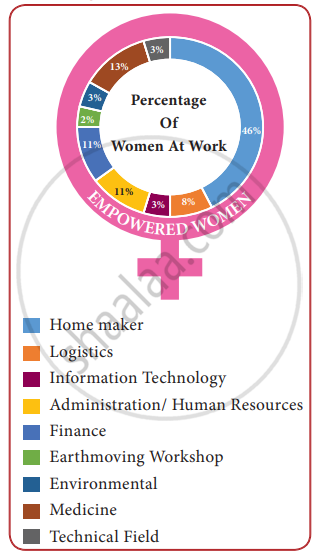
Choose the correct answer.
What is the data about?
What values did the child learn?
If you are a flight attendant how will you deal with the hijackers?
Read the following article about the amazing similarities between the assassination of John F. Kennedy and Abraham Lincoln; then underline the passive forms.
Abraham Lincoln was elected to Congress in 1846. Voters elected John F. Kennedy to Congress in 1946.
Lincoln was elected president in 1860. Voters elected Kennedy president in 1960.
Both men were particularly concerned with civil rights.
Both wives lost their children while living in the White House.
Lincoln was shot on a Friday. Someone shot Kennedy on a Friday.
Lincoln was shot in the head. The gunman shot Kennedy in the head.
Lincoln’s secretary was called Kennedy. Kennedy’s secretary was called Lincoln.
Lincoln was assassinated by a Southerner. A Southerner assassinated Kennedy.
Lincoln was succeeded by a Southerner named Johnson. A Southerner named Johnson succeeded Kennedy.
Andrew Johnson, who succeeded Lincoln, was born in 1808.
Lyndon Johnson, who succeeded Kennedy, was born in 1908.
John Wilkes Booth, who assassinated Lincoln, was born in 1839. Lee Harvey Oswald, who assassinated Kennedy, was born in 1939.
Both assassins were known by their three names and both names are composed of fifteen letters.
Lincoln was shot at a theatre named “Ford”. The gunman shot Kennedy in a car called a “Lincoln” that the company Ford made.
Booth ran from the theatre and was caught in a warehouse. Oswald ran from a warehouse and the police caught him in a theatre.
Booth was assassinated before his trial. Someone assassinated Oswald before his trial.
Why did the author leave town?
How does the coconut tree grow?
The boy was so inspired by Mithali that he was happy for his sister to play cricket.
Mithali Raj was not encouraged to play cricket by her family members.
How can you balance your academic goals and your passion for sports or arts?
Fill in the blanks to complete the summary.
Ever since their introduction, ______, and their unique rhythms have ______ poets. In this poem the poet shares his experience ______ with us. He presents natural scenes seen from ______ a railway carriage. The ______ is regular and steady but ______ from the window of the train is constantly changing. The poem’s rhythm and phrases bring ______ of a railway journey. The poet looks out of the window at the ______ images outside. Every line we see here is a quick account of something seen for ______. The line that best sums up is the final one: "Each a glimpse and gone forever!"
Imagine you are the girl and give a different ending to the story.
Jaswant decided to stay in his post.
A robot advised her to______.
What are the three parts of a robot
The hen-pigeon got dry _______ for the bird catcher.
Choose what the elephant did.
Answer using Yes or No and pick sentence from the story to support your answer.
Was Robinson interested in sea adventures?
______was with Robinson.
Why did Jana chase the squirrel?
Who made the tree become a monster?
Nithin had many ______toys.
What would you like to learn in school? why?
Write the word with same meaning.

queue- ______
How did Mugund’s mother die?
Match the rhyming words.
| 1. | earn | day |
| 2. | fend | learn |
| 3. | glow | end |
| 4. | play | slow |
How was the stump of the tree useful?
Read the passage and write the summary of it. Suggest a suitable title to your summary.
|
King Krishnadeva Raya would perform heavy exercises every morning. He regularly applied oil on his body and thereafter worked out till all the oil came out with the sweat. This was followed by a long ride on his horse. Once the king started leading a sedentary lifestyle, and he stopped exercising. He no longer went horse-riding either. The king overate and as a result grew fat and heavy. The king‟s temperament also underwent a sea change. Noticing this, the royal physicians cautioned the king against the ill effects of overeating and explained to him the risks posed by obesity. They advised the king to regulate his diet, exercise, and take care of his health. The repeated advice he got from the physicians to eat less made him so angry that one day he announced a reward for anyone who could find him an easy cure. But there was one condition: those who failed would have their heads off. None dared to advise the king in this regard. The situation became precarious and as usual Tenali Raman was approached by the courtiers for a remedy. Tenali heard the problem and assured the courtiers of a viable solution. The next day, an astrologer predicted that the king had only a month left to live. When the king came to know of this, he was furious. The astrologer was ordered by the king to be imprisoned for a month so that his prediction could be put to test and so the hapless forecaster was sent to prison. |
